
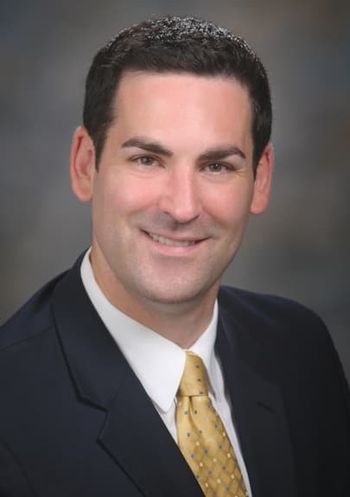
The approval of Blue Earth Diagnostics' Posluma (flotufolastat F 18) is a significant step forward for PSMA PET imaging, but will it actually help improve patient outcomes?
The approval of Blue Earth Diagnostics' Posluma (flotufolastat F 18) is a significant step forward for PSMA PET imaging, but will it actually help improve patient outcomes?
In an interview at the recent Society of Nuclear Medicine and Molecular Imaging (SNMMI) conference in Chicago, Jeremie Calais, M.D., MSc discussed promising research findings for the use of the positron emission tomography (PET) imaging agent 89ZR-DFO-girentuximab for diagnosing clear cell renal cell carcinoma.
In a recent interview at the Society of Nuclear Medicine and Molecular Imaging (SNMMI) conference in Chicago, Phillip Kuo, M.D., Ph.D, F.A.C.R., discussed the potential impact of urinary activity with positron emission tomography (PET) radiopharmaceuticals, and new phase 3 study data that found low urinary activity with the use of the flotufolastat F 18 injectable agent in patients with prostate cancer.
Dr. Nadel was announced as president of SNMMI for the 2023-2024 term at the 2023 SNMMI annual meeting taking place in Chicago.
In a recent video interview from the Society for Imaging Informatics in Medicine (SIIM) conference, Ali Tejani, M.D., discussed pertinent insights on leveraging the value of adjunctive artificial intelligence (AI)-enabled triage software for computed tomography (CT) scans with radiology workflow improvements to achieve “clinically meaningful change” for patients with incidental pulmonary emboli findings.
In a recent video interview, Stephen Rose, M.D., reviewed a variety of factors that can impact interpretation of breast imaging for women with breast implants and discussed recent research showing a 22 percent reduction in cancer detection rate for this population in comparison to women without breast implants.
In a recent interview, Rajesh Bhayana, M.D., shared insights from new research that compared the abilities of ChatGPT-3.5 and ChatGPT-4 to answer text-based questions akin to those found on a radiology board examination.
In a recent video interview, David Ouyang, M.D., shared insights from two recent studies he co-authored on the use of artificial intelligence (AI) to improve initial assessment of left ventricular ejection fraction (LVEF) on echocardiography and ascertain cardiac risks associated with changes in the left ventricle sphericity index seen on magnetic resonance imaging (MRI).
In a recent video interview from the American Urological Association (AUA) 2023 Annual Meeting, Brian Helfand, M.D., discussed emerging research that shows the potential viability of the agent F18-rhPSMA-7.3 for enhancing the detection of prostate cancer recurrence and facilitating earlier intervention for patients with low prostate-specific antigen (PSA) levels.
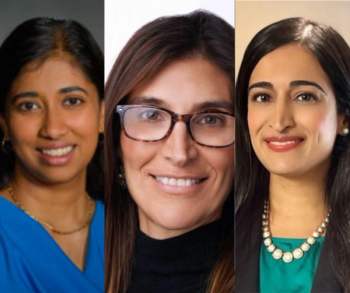
In recent video interviews, Tessa Cook, MD, PhD, Nina Kottler, MD, MS, and Sonia Gupta, MD shared their insights and perspective on potential benefits and drawbacks of ChatGPT in radiology.
In a recent video interview, Amy Patel, M.D., shared her perspective on forthcoming national beast density notification in mammography reporting, emphasized the importance of educating primary care providers on breast density risks, and discussed the ongoing need for coverage of supplemental options for breast cancer screening.
In a recent video interview, Emily Conant, M.D., discussed findings from a large multicenter study highlighting the benefits of digital breast tomosynthesis (DBT) in breast cancer screening.
In a recent video interview, Wendie Berg, M.D., Ph.D., discussed the newly issued final rule from the Food and Drug Administration (FDA) requiring a national standard for breast density notification (starting on September 10, 2024) as well as its potential impact in mammography reporting and facilitating supplemental screening for patients with dense breasts.
In a video interview from the recent American Society of Clinical Oncology Genitourinary Cancers (ASCO GU) Symposium, Brian Chapin, MD, discussed emerging research that demonstrated the ability of the positron emission tomography (PET) agent 18F-rhPSMA-7.3 to diagnose distant M1 lesions prior to surgery for patients with intermediate to high-risk prostate cancer.
In a recent video interview, radiologist Jonathon Lee, MD, shared insights from his experience on the insidious nature of burnout, emphasized the link between work-life balance and productivity, and discussed a recent partnership between the teleradiology service provider vRad and the behavioral health consultancy VITAL WorkLife to help promote well-being for vRad teleradiologists.
In a recent video interview, Sonia Gupta, MD discussed a number of ongoing developments with artificial intelligence (AI) in radiology, ranging from market consolidation of AI vendors to maximizing automation and efficiency with patient triage, reporting and follow-up of incidental findings.

In a video interview at the recent Radiological Society of North America (RSNA) conference, Wayne Dell, M.D., discussed retrospective research that examined the use of hyperlinked multimedia radiology reports across modality and subspecialty five years after initial implementation of the technology at the University of Virginia.
In a recent video interview, Amar Kishan, M.D., discussed a new study that demonstrated significant side effect reduction when utilizing magnetic resonance imaging (MRI) guidance instead of computed tomography (CT) guidance for stereotactic body radiation therapy (SBRT) to treat localized prostate cancer.
In the second part of a recent interview, Nina Kottler, M.D., M.S., discussed keys to evaluating the potential value of artificial intelligence (AI) systems and emerging developments with AI that were discussed at the recent Radiological Society of North America (RSNA) conference.
In a recent interview from the Radiological Society of North America (RSNA) conference, Mary Yamashita, M.D. discussed a variety of findings from a survey of over 8,000 women about breast density awareness, challenges with current breast density notification after mammography exams, and the ongoing need to educate patients as well as referring providers on breast density awareness.
In a video interview discussing one of her recent lectures at the Radiological Society for North America (RSNA) conference, Nina Kottler, M.D., M.S., noted how the combination of artificial intelligence (AI) and radiologist experience can help mitigate bias limitations with the development of AI algorithms as well as educational biases inherent to a radiologist’s training and experience.
In an interview at the recent Radiological Society of North America (RSNA) conference, Alex Pozdnyakov, M.D. discussed findings from a new meta-analysis, which revealed that prostate-specific membrane antigen/positron emission tomography (PSMA PET) imaging in patients with prostate cancer recurrence led to treatment changes that resulted in a pooled 60.2 percent rate of prostate cancer-free survival at 20 months.
In a recent interview at the Radiological Society of North America (RSNA) conference, Eliot Siegel, M.D., discussed a variety of potential benefits with cloud-based image management in radiology, ranging from enhanced data security and economies of scale to improved access to a variety of artificial intelligence (AI) solutions to increase efficiency.

In a recent video interview from the Radiological Society of North America (RSNA) conference, Tessa Cook, MD, PhD discussed new research on automated de-identification in radiology reports and the potential of artificial intelligence (AI) and natural language processing (NLP) to help address time-consuming challenges in the radiology workflow.
In a recent video interview, Susan Holley, MD discussed key findings from a large retrospective longitudinal study, presented at the recent Radiological Society of North America (RSNA) conference, which found that an emerging artificial intelligence (AI) model was over 24 percent more consistent than radiologist assessment of breast density.

In a recent video interview, Raymond Y. Kwong, MD, discussed his clinical experience with the Vista.ai (formerly HeartVista) One Click MRI software and recent research, presented at the Radiological Society of North America (RSNA) conference, that revealed a 31 percent decrease in cardiac MRI scan times for patients with cardiomyopathy or structural heart disease.
In a recent video interview, Thomas Marini, MD discussed the need for ultrasound access to facilitate breast cancer screening in underserved populations and the potential utility of volume sweep imaging, a handheld ultrasound technique that requires minimal training and has a high rate of agreement with conventional ultrasound on BI-RADS assessments.
In a recent video interview from the American Society for Radiation Oncology (ASTRO) Annual Meeting, Benjamin Lowentritt, MD discussed the challenges of conventional imaging in diagnosing prostate cancer recurrence and the potential of an emerging high affinity, radiohybrid prostate-specific membrane antigen/positron emission tomography (PSMA/PET) imaging agent.
In a recent video interview, Andrew Trout, MD discussed key attributes and efficiencies in utilizing the Discovery MI Gen 2 digital positron emission tomography/computed tomography (PET/CT) system at the Cincinnati Children’s Hospital Medical Center.
In a wide-ranging video interview, Wendie Berg, MD, PhD, discussed her family history with breast cancer, the founding of DenseBreast-info.org, emerging research with contrast-enhanced mammography and the need for a national standard on breast density notifications.