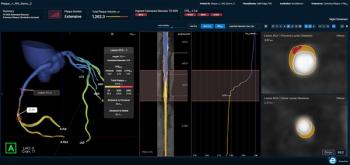
Newly published preclinical research signals a substantial conceptual shift with a potential role of photon-counting CT in targeting specific biological processes.
Coronary CT angiography is a useful tool in detecting prevalence and type of coronary artery fistulas.
Coronary CT angiography (CTA) is a useful, noninvasive imaging modality for the detection of coronary artery fistula (CAF), according to an article published in the
Researchers from South Korea undertook a retrospective study to determine if the prevalence and type of CAF could be determined through coronary CTA.
The study comprised 6,341 patients (3,461 men and 2,880 women). The patients had a mean age of 59. All had undergone ECG-gated coronary CTA at the researchers’ institution between March 2009 and November 2011. The researchers evaluated the prevalence of CAF and they analyzed the morphologic features, including vessel of origin, drainage site, size and presence of an aneurysmal sac. Cardiac and pulmonary findings were included in the analysis.
The results showed that of the 6,341 patients, 56 (0.9 percent) had CAF.
The findings also showed that lung parenchymal or vascular anomaly was more frequently found in coronary to bronchial artery fistulas, combined coronary to pulmonary and coronary to bronchial artery fistulas, and coronary artery to superior vena cava fistulas than in coronary to pulmonary artery and coronary artery to cardiac chamber fistulas.
“The prevalence of CAF at coronary CTA was 0.9 percent, which is higher than the known prevalence based on conventional angiographic findings (0.05–0.25 percent),” the authors wrote. “Coronary CTA is a useful, noninvasive imaging modality for the detection of CAF.”