


Catch up on the top radiology content of the past week.
Catch up on the top radiology content of the past week.
In the third of a three-part podcast episode, Wendie Berg, MD, PhD, FACR, FSBI, Manisha Bahl, MD, and Amy Patel, MD discuss recent developments with autonomous AI in breast imaging and share their perspective on the overall potential of AI to help mitigate the radiologist shortage.
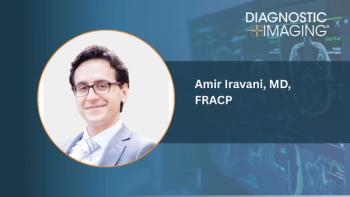
In a recent interview, Amir Iravani, MD, FRACP, discussed the radiotherapeutic agent 177Lu-edotreotide and new dosimetry data from the COMPETE trial that was recently presented at the ASTRO conference.
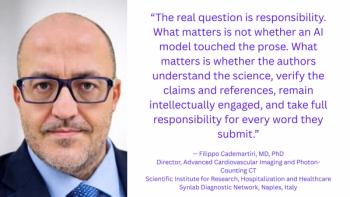
While AI offers the lure of efficiency and cleaner writing in scientific research, maintaining the principles of authorship and intellectual engagement is perhaps more important than ever before.
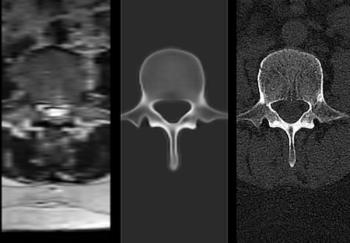
The cloud-based NextMR platform reportedly provides automated 3D bone images of conventional spine MRI images in less than 60 seconds.
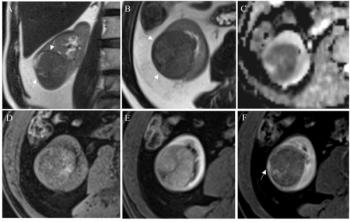
Incorporation of pseudocapsule presence into a modified Clear Cell Likelihood Score (m-ccLS) was associated with a greater than 11 percent higher AUC in differentiating benign and malignant renal masses on mpMRI, according to a new study.
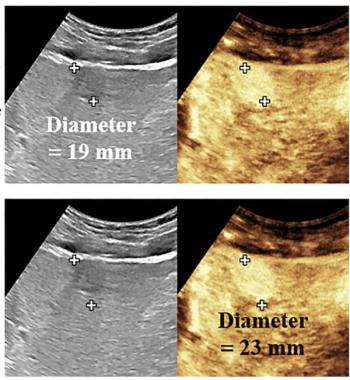
For patients with hepatocellular carcinoma (HCC), perfusion beyond tumor margin on contrast-enhanced ultrasound that exceeds gray-scale ultrasound tumor measurement by 5 mm is associated with a 76 percent higher risk of worse recurrence-free survival, according to newly published research.
In the latest episode of his “Interventional Radiology in Focus” series, Mina Makary, MD, discusses the utility of prostatic artery embolization for treating benign prostatic hyperplasia, key imaging considerations and pertinent technique pearls to help facilitate optimal outcomes.
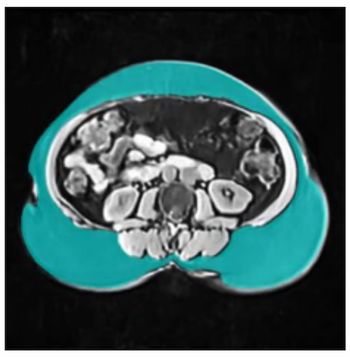
The AI-powered SwiftSight Body Composition software reportedly provides automated quantification of muscle and adipose tissue after a brief MRI scan.
In the second of a three-part podcast episode, Wendie Berg, MD, PhD, FACR, FSBI, Manisha Bahl, MD, and Amy Patel, MD discuss how to handle disagreements with adjunctive AI in breast imaging, whether to include AI assessments in PACS, and whether patients should pay for the use of adjunctive AI.

Has the barrage of passwords, PINs and authenticator apps gone around the bend to a point where it hampers efficiency and productivity?
Catch up on the top radiology content of the past week.
Catch up on key neuroradiology news and research from the past month, including recently published studies involving white matter hyperintensity findings on brain MRI, MRI-enhanced amyloid PET and the newly FDA-approved PET agent floretyrosine F18 for glioma imaging.
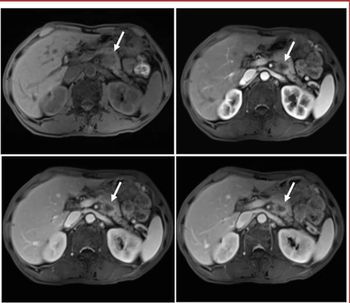
Magnetic resonance imaging offered a 29 percent higher sensitivity than CT for differentiating liver metastases, but CT provided 12 percent higher sensitivity than MRI for assessing vascular invasion, according to a new 40-study meta-analysis.
In a recent interview with Diagnostic Imaging, Joseph Cavallo, MD, MBA, offered insights on post-deployment monitoring with AI, the potential for improved workflow efficiency and the ongoing challenge of balancing essential clinical skills and AI literacy in the training of radiology residents and fellows.
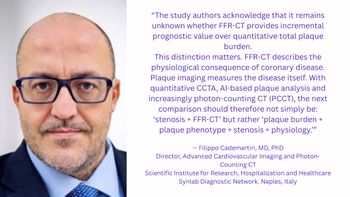
Does fractional flow reserve (FFR) or quantitative plaque burden from CCTA provide greater prognostic insight into coronary disease?
In the first of a three-part podcast episode, Wendie Berg, MD, PhD, FACR, FSBI, Manisha Bahl, MD, and Amy Patel, MD share insights on the utility of AI in breast imaging with respect to potential advantages, current concerns and future directions.
Catch up on the most-well viewed radiology content in September 2026.

The BiPASS program, which combines 68Ga PSMA PET imaging with prostate MRI prior to the use of prostate biopsy, is slated to be evaluated in an impending phase 3 trial.
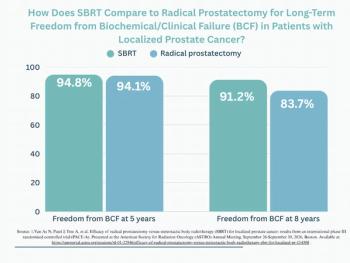
For patients with localized prostate cancer, stereotactic body radiotherapy (SBRT) offered comparable freedom from biochemical/clinical failure at eight years and nearly 40 percent lower urinary incontinence in comparison to radical prostatectomy, according to research presented at the ASTRO conference.
Catch up on the most well-viewed video interviews from Diagnostic Imaging in September 2026.
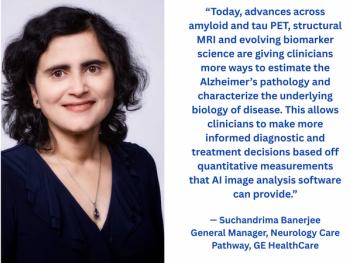
Given the increasing prevalence of Alzheimer’s disease and a staggering number of people with dementia who are undiagnosed, this author discusses five essential keys for radiologists and their colleagues to facilitate earlier detection, precision care treatment and monitoring to help ensure timely care and intervention.
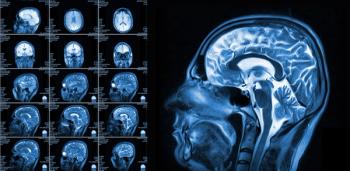
For patients with small cell lung cancer (SCLC), there was a 40 percent improvement in cognitive failure-free survival (CFFS) with brain MRI alone in comparison to the combination of brain MRI and prophylactic cranial irradiation (PCI), according to research presented at the ASTRO conference.
Constant grumbling from an attending radiologist about the road ahead may be a sign that his or her best teaching years may be in the rear-view mirror.
Catch up on a variety of FDA news in radiology from the past week.
Catch up on the top radiology content of the past week.
In a recent interview, Shadpour Demehri, MD, discussed new research examining connections between deep learning assessment of bone mineral density on chest CT, brain MRI data and the potential for enhanced risk stratification in patients with diabetes.
Catch up on the top AI-related news and research in radiology over the past month.
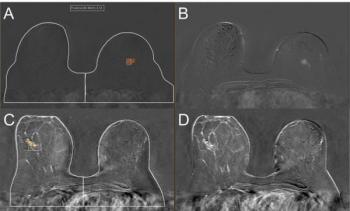
A deep learning model developed for predicting BI-RADS assessments from dynamic contrast-enhanced (DCE) breast MRI had over a 14 percent lower AUC than radiologist evaluation in external validation testing.
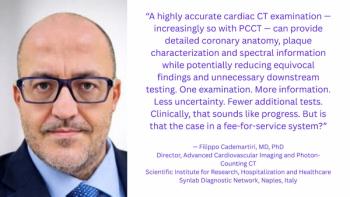
While better imaging may reduce the need for additional diagnostic tests, it may also eliminate the reimbursement that comes with those additional tests.