

Newly published preclinical research signals a substantial conceptual shift with a potential role of photon-counting CT in targeting specific biological processes.
Newly published preclinical research signals a substantial conceptual shift with a potential role of photon-counting CT in targeting specific biological processes.
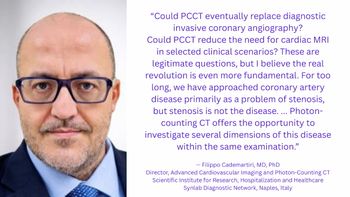
While a new article raises provocative questions about the capability of photon-counting CT (PCCT) to perhaps replace diagnostic ICA, the real revolution with this modality is going beyond stenosis measurement to a renewed focus on the disease of atherosclerosis.
While the allure of partnership or a hierarchical promotion system for those who paid their dues once sounded promising, the current reality amid declining reimbursements, thinning practice margins and private equity acquisitions is going after the gig with the most optimal lifestyle and paycheck.
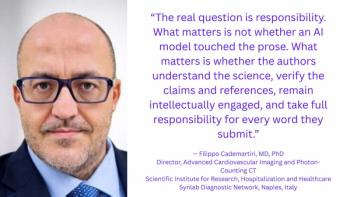
While AI offers the lure of efficiency and cleaner writing in scientific research, maintaining the principles of authorship and intellectual engagement is perhaps more important than ever before.

Has the barrage of passwords, PINs and authenticator apps gone around the bend to a point where it hampers efficiency and productivity?
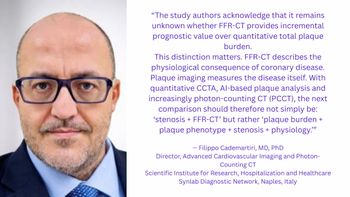
Does fractional flow reserve (FFR) or quantitative plaque burden from CCTA provide greater prognostic insight into coronary disease?
Constant grumbling from an attending radiologist about the road ahead may be a sign that his or her best teaching years may be in the rear-view mirror.
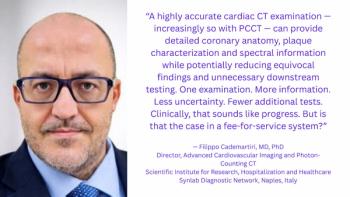
While better imaging may reduce the need for additional diagnostic tests, it may also eliminate the reimbursement that comes with those additional tests.
Could a la carte pricing be a consideration in improving revenue for radiologists in private practice?
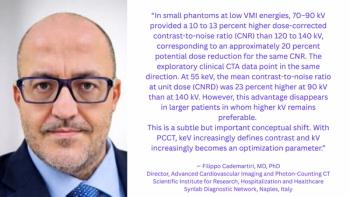
Emerging research demonstrates the increasing stability of attenuation on clinically relevant VMIs with photon-counting CT and a redefined role of kV that may have implications for longitudinal quantitative CT.

Amid the explosion of imaging volume, an emerging silver lining is increasing recognition from referring clinicians of the time and value radiologists provide to facilitate patient care.
While AI tools abound in radiology, how many AI-enabled software products have incorporated insights from clinical radiologists?
Where does radiology fit in the ever-shifting revenue puzzle at hospitals and other health-care facilities?
A new study shows that even small plaque volume may be associated with significantly higher risk for cardiovascular events, making the enhanced spatial resolution available with advanced imaging even more critical in risk stratification.

To what degree does your work setting and employer preferences affect your accuracy and approach to defensive medicine?
Having perspective on what constitutes bad luck, human error or a legitimate beef can prevent a lot of wasted energy on negativity inside and outside of the reading room.
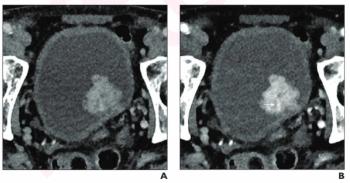
Reducing false positives in evaluation of muscle invasion in bladder cancer cases that can occur with conventional imaging, spectral information with photon-counting CT may offer significantly improved accuracy and specificity in local staging.

While maintenance of certification requires participation in peer review, a collegial ethos enables us to provide assessment of another radiologist’s work without crossing the line into odious expert witness cash grabs.
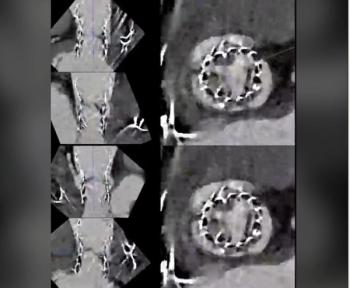
The high-resolution temporal and spatial imaging with photon-counting CT bolster our understanding of the connections between anatomy and function in structural heart imaging.
Catch up on the latest blogs from Filippo Cademartiri, MD, PhD, who discusses topics ranging from CCTA scan acquisition and photon-counting CT to artificial intelligence and assessment of current plaque as a biomarker for evaluating MACE risk.
Getting caught up in the numbers of cases we’re reviewing may increase stress and inhibit our productivity.
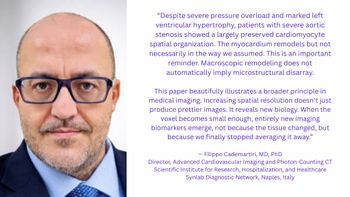
Smaller voxel size may offer insights into biology we could never access with conventional resolution.
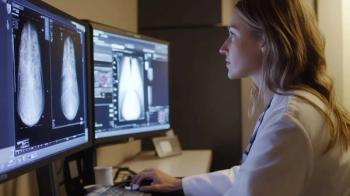
While the vague “R/O pathology” has become pervasive filler for clinical history on requests for imaging, a new wave of clinical histories offer a word salad approach that offers equally little insight into the possible ailment of the patient.
In the face of consistent shortcomings from referring clinicians, the consistency of our resolve and perspective may be our best recourse.
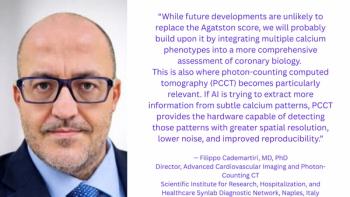
Advanced imaging with photon-counting CT and AI detection of subtle calcification may lead to a reevaluation of the power of zero with coronary artery calcium (CAC) scoring.

This veteran teleradiologist examines who thrives working from home in radiology and who doesn't, based on 15 years of WFH experience.
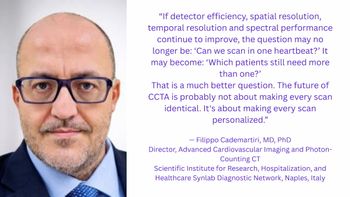
In the age of advanced CCTA imaging, a one-size-fits-all approach to image acquisition is a disservice to patients.
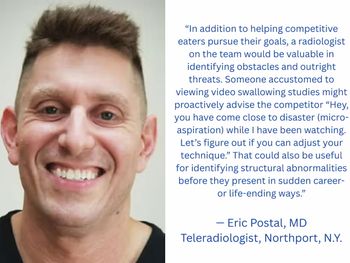
Amid the variety of specialty areas in radiology, perhaps we’ve been overlooking the opportunity to interpret the scans of competitive eaters.
In an amusing take on the subject, this author suggests that having a colleague with dedicated expertise in curtailing unnecessary imaging requests could have an impact in reducing burgeoning worklists.
The words you say, how you say them and the tone in which you say them may impact perceptions of your credibility.