



Facility Management
Latest News
Advertisement
Latest Videos


Shorts
0:49
Could AI Deepen the Disparities with Breast Imaging Access?
4 days ago
by
Amy Patel, MD

0:57
Keys to Post-Deployment AI Monitoring in Radiology
4 days ago
by
Joseph Cavallo, MD, MBA

0:29
The Multi-Stakeholder Dilemma with Assessing Value and Costs of AI Integration
14 days ago
by
Christoph Wald, MD, PhD, MBA, FACR, Hon FRCP(Glasg)

0:34
Where We Are Seeing Traction with AI Reimbursement for Quantitative Algorithms
20 days ago
by
Lauren Nicola, MD

0:39
The Emerging Impact of AI-Powered Quantitative Analysis in Radiology
25 days ago
by
Christoph Wald, MD, PhD, MBA, FACR, Hon FRCP(Glasg)
0:59
Why CMS Won't Pay for AI Lung Nodule Detection on CT
a month ago
by
Lauren Nicola, MD
0:53
How AI-Enabled Triage Helps Navigate Weekend Call Duties in Radiology
a month ago
by
Raza Mushtaq, MD

0:39
The Urgent Need for Efficiency AI in Radiology
2 months ago
by
Nina Kottler, MD, MS
0:29
Emphasizing Post-Deployment Analysis of AI Tools in Radiology
2 months ago
by
Seena Dehkharghani, MD, FAHA

0:45
The Shift from Efficiency AI to Opportunity AI in Radiology
3 months ago
by
Nina Kottler, MD, MS
Podcasts





Advertisement
More News
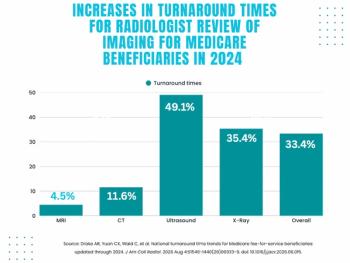
In comparison to 2023 statistics, the authors of a new study noted an approximately 49 percent increase in radiology turnaround time for ultrasound interpretation and over a 35 percent increase in turnaround time for X-ray assessments.
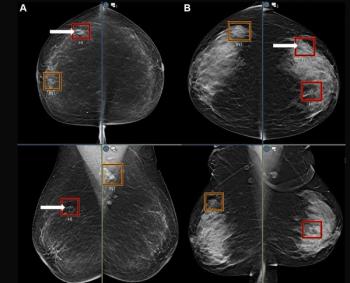
General radiologist assessment of mammograms with adjunctive AI led to a significant increase in cancer detection rate akin to that of breast imaging specialists, according to new research.

Can the newly launched MIM Anyware platform bolster imaging access and multidisciplinary collaboration?
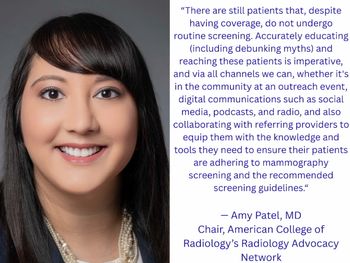
In a recent interview, Amy Patel, MD, discussed recent research on breast cancer screening, pertinent obstacles and keys to facilitating improved adherence with mammography screening.
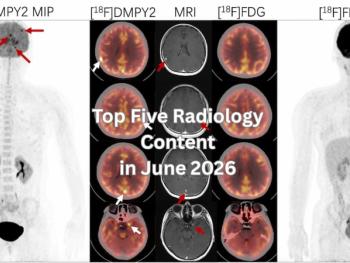
Catch up on the most-well viewed radiology content in June 2026.
Catch up on the most well-viewed video interviews from Diagnostic Imaging in June 2026.
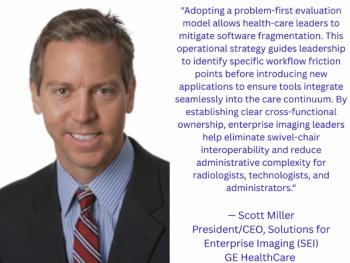
In order to fully take advantage of the capabilities of AI, this author emphasizes key principles and a framework for converting isolated technology solutions into reliable components of radiology workflows and operations.
Catch up on a variety of FDA news in radiology from the past week.
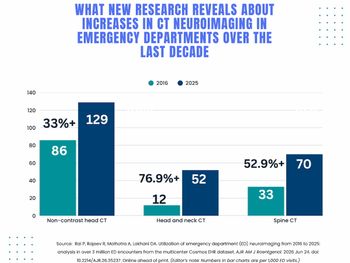
Researchers found that non-contrast head CT exams, head and neck CT exams and spine CT imaging increased by 33 percent, 76.9 percent and 52.9 percent, respectively, per 1,000 emergency department encounters over the last decade.
Catch up on the top AI-related news and research in radiology over the past month.
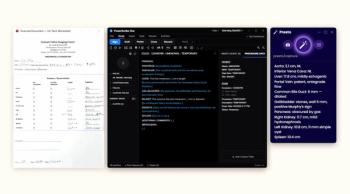
The newly launched HOPPR Presto Agent reporting platform can be integrated into existing radiology systems and AI models without the need for new software.
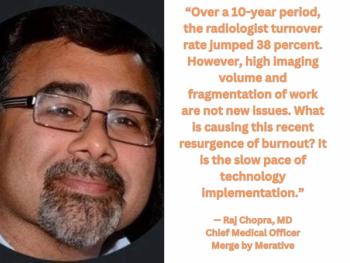
Noting that frustration over slow implementation of technological advances may be contributing to mounting radiologist frustration and subsequent burnout, this author offers key principles for integrating technological solutions into radiology workflows.

Catch up on the top radiology content of the past week.
In a recent interview, Nina Kottler, MD, discussed the challenges with traditional radiology reporting, its impact on cognitive load and the recently launched AI-enabled platform Mosaic Reporting.
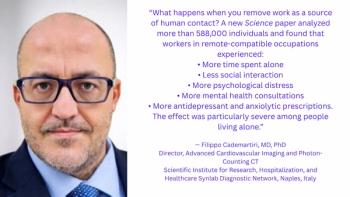
New research suggests the silent accumulated social costs of remote work are outweighing the benefits of increased flexibility and autonomy.
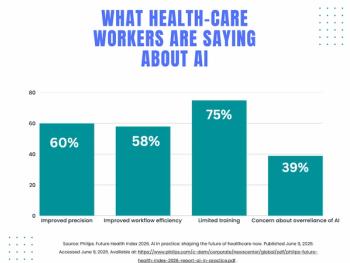
In a new survey of over 2,000 health-care professionals on AI use, respondents cited benefits ranging from improved work-life balance to preventing medical errors as well as concerns about overreliance on AI and inconsistent or limited training.
In recent interviews, Emanuel Kanal, MD, and Tobias Gilk, MRSO, MRSE, noted a lack of point-of-care safety requirements for MRI, a lack of state oversight, and a prevailing lack of minimum standards overall for MRI safety.
What radiology leaders need to know about the 2026 Medicare Physician Fee Schedule.
What's already being done with large language models in radiology practice today.
A randomized controlled trial found that combining Disney characters with soothing ambient elements for pediatric MRI reduced anxiety levels by 43 percent in children under 10 years of age.

In recent interviews, Emanuel Kanal, MD, and Tobias Gilk, MRSO, MRSE, discuss new multicenter research examining pediatric MRI safety as well as key challenges and preventive measures in this patient population.
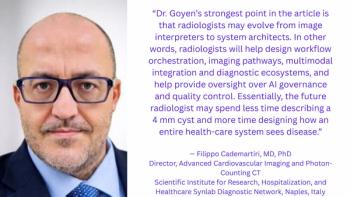
The role of the radiologist is shifting, not into obsolescence but more of an architect of AI implementation and workflow orchestration in a continuously evolving health-care system.
Catch up on the most well-viewed video interviews from Diagnostic Imaging in April 2026.
Catch up on the most-well viewed radiology content in April 2026.
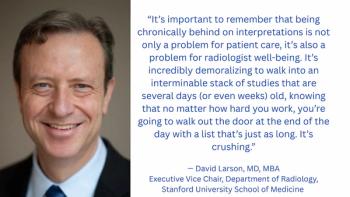
In recent interviews, Andrew Del Gaizo, MD, Nicholas Galante, MD and David Larson, MD, MBA, shared their thoughts on the rapidly increasing imaging volume in radiology, key ramifications and possible solutions.
Advertisement
Advertisement
Trending on Diagnostic Imaging
1
Diagnostic Imaging's Weekly Scan: September 27 — October 3
2
The Reading Room Podcast: Current Perspectives, Challenges and Possibilities with AI in Breast Imaging, Part 2
3
Security: A Way to Be Safe and Unproductive in Radiology
4
Emerging Research Insights and New Advances in Neuroradiology
5