





Women's Health CT
Latest News
Advertisement
Latest Videos


CME Content








Advertisement
More News
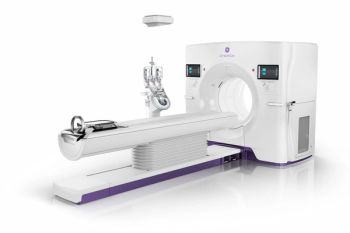
Featuring enhanced low-dose image quality with motion-free images, the Revolution Vibe CT system reportedly facilitates improved diagnostic clarity for patients with conditions ranging from in-stent restenosis to atrial fibrillation.
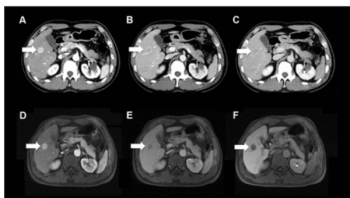
LI-RADS category 5 (LR-5) assessment had an 11 percent higher AUC for detecting hepatocellular carcinoma (HCC) in patients with non-cirrhotic chronic hepatitis C (CHC) in comparison to those with cirrhotic CHC.
Catch up on the top radiology content of the past week.
Catch up on the most-well viewed radiology content in March 2025.
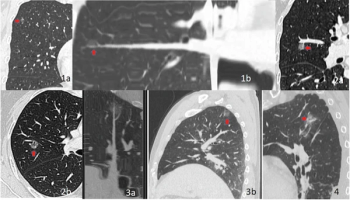
The cLung-RADS v2022 model offered a greater than 16 percent increase in the AUC in comparison to Lung-RADS 1.0 and Lung-RADS v2022 systems for predicting the invasiveness of pure ground-glass nodules.

Catch up on the top AI-related news and research in radiology over the past month.
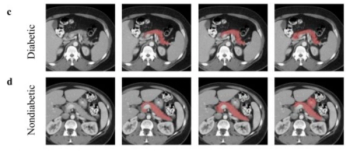
Attenuation-based biomarkers on computed tomography (CT) scans demonstrated a 93 percent interclass correlation coefficient (ICC) agreement across three pancreatic segmentation algorithms for predicting diabetes, according to a study involving over 9,700 patients.
Catch up on the top radiology content of the past week.
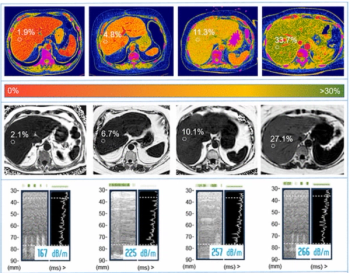
Photon-counting CT fat fraction evaluation offered a maximum sensitivity of 81 percent for detecting steatosis and had a 91 percent ICC agreement with MRI proton density fat fraction assessment, according to new prospective research.
Catch up on the top radiology content of the past week.
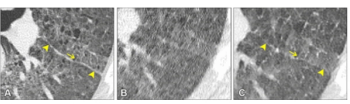
For immunocompromised individuals, denoised ultra-low-dose CT offers similar detail as normal-dose CT scans for pneumonia detection, according to a recent study.
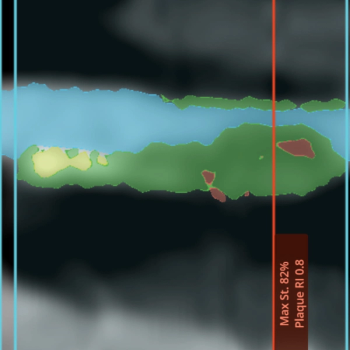
Through AI-powered assessment of coronary computed tomography angiography (CCTA) scans, the CaRi-Plaque software may provide improved clarity on the development of coronary plaques and luminal stenosis.
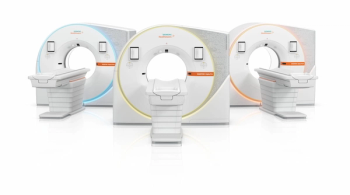
The Naeotom Alpha class of photon-counting computed tomography (PCCT) scanners emphasize significantly reduced scan times and enhanced detection of small abnormalities.
Catch up on the top radiology content of the past week.
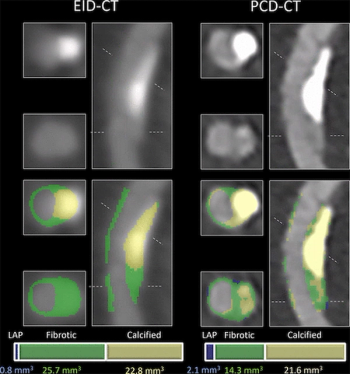
The use of ultra-high-resolution photon-counting CT in the evaluation of stable chest pain may significantly reduce follow-up tests and invasive coronary angiography (ICA) procedures, possibly resulting in millions in health-care cost savings, according to a cost-effectiveness analysis presented recently at the European Congress of Radiology.
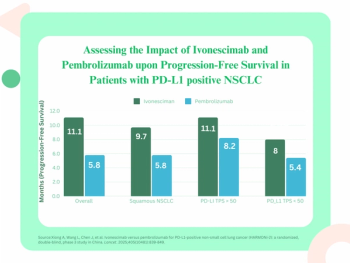
The use of ivonescimab was correlated with a median 5.3-month improvement in progression-free survival (PFS) over pembrolizumab in patients with PD-L1 positive non-small cell lung cancer, according to CT and MRI findings from a phase 3 randomized multicenter trial.
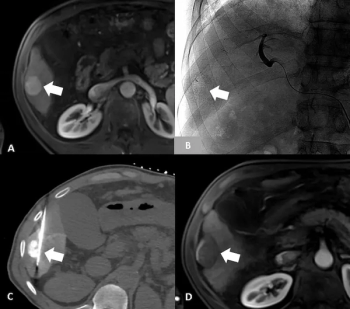
In a comparative study of staging systems for hepatocellular carcinoma, the Barcelona Clinic Liver Cancer (BCLC) system offered the highest likelihood ratio (LR) and lowest Akaike information criteria (AIC) for predicting overall survival after transarterial chemoembolization (TACE) for hepatocellular carcinoma.
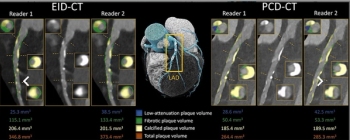
Ultra-high spatial resolution with photon-counting CT facilitated a 33 percent reduction in the assessment of median total plaque volume and a 45 percent higher inter-reader agreement for evaluation of low-attenuation plaque volume in contrast to energy-integrating detector (EID) CT.
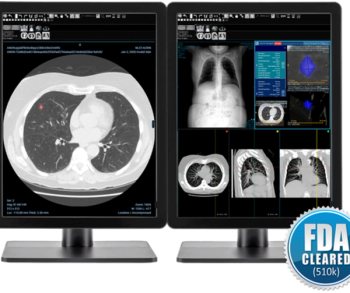
The F.A.S.T. aiCockpit CT Lung Nodule reportedly facilitates enhanced CT workflow and automated reporting for evaluation of lung nodules
Catch up on the most-well viewed radiology content in February 2025.
In a recent interview, Abhinav K. Jha, Ph.D., discussed key challenges with the use of SPECT MRI and how an emerging deep learning model may facilitate attenuation compensation without the need for an additional computed tomography (CT) scan.
Catch up on the top AI-related news and research in radiology over the past month.
Catch up on the top radiology content of the past week.
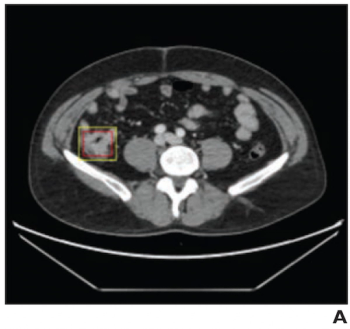
For the assessment of contrast-enhanced abdominopelvic CT exams, an artificial intelligence model demonstrated equivalent or better sensitivity than radiologist readers, and greater than 90 percent specificity for the diagnosis of colorectal cancer.
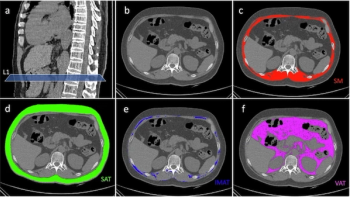
A high intermuscular adipose index has a 49 percent increased likelihood of being associated with lower overall survival in patients with resectable non-small cell lung cancer (NSCLC), according to new research.
Advertisement
Advertisement
Trending on Diagnostic Imaging
1
Leading Breast Radiologists Discuss the Recent Lancet Study on AI and Interval Breast Cancer
2
Is AI Better Than Neuroradiologists at Evaluating Aneurysm Growth on CTA and MRA Scans?
3
FDA Clears 3T MRI Device for Neonates and Infants
4
Study Shows Photon-Counting CT Reduces Radiation Exposure by 66 Percent for Patients with Lung Cancer
5