
AI Coverage
Latest News

Oct 22, 2026 | Blog
Could Photon-Counting CT Have an Impact as a Platform for Molecular Imaging?

What’s Next for AI in Radiology?: Facilitating Data Orchestration Over Fragmentation
Oct 22, 2026
The Reading Room Podcast: Emerging Concepts with AI Integration in Radiology
Oct 21, 2026
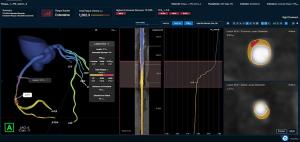
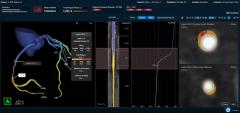
FDA Clears AI-Enabled FFR-IQ Software for Estimating Fractional Flow Reserve from CCTA
Oct 21, 2026

Can the Kaiser Score with Breast MRI Improve Clarity for BI-RADS 0 and 4 Assessments on Mammography and Ultrasound?
Oct 21, 2026






Advertisement
Shorts

0:34
Can AI Improve Clarity for PI-RADS 3 Assessments on Prostate MRI?
a day ago
by
Francesco Giganti, MD, PhD

0:47
Theranostics: 'The Biggest Advancement in Our Generation When It Comes to Oncology'
2 days ago
by
Phillip Koo, MD
0:46
Mammography-Based AI Models: Key Takeaways from New Research
4 days ago
by
Manisha Bahl, MD

0:51
How Urinary Excretion Can Facilitate Striking Differences Between PSMA PET Agents
5 days ago
by
Jack Andrews, MD

0:25
Why Prostatic Artery Embolization Should be a First-Line Treatment for Benign Prostatic Hyperplasia
8 days ago
by
Mina S. Makary, MD

0:34
Could Autonomous AI Lead to 'Dramatic Shifts in Compensation' for Breast Radiologists?
10 days ago
by
Wendie Berg, MD, PhD

0:41
Could Future Research Lead to Personalized Treatment with 177Lu-Edotreotide for GEP-NETs?
11 days ago
by
Amir Iravani, MD, FRACP
0:30
Saving AI Output from Mammography Exams Without Causing Unnecessary Patient Worry
14 days ago
by
Manisha Bahl, MD
0:54
Emerging Insights on Embolic Agents for Prostatic Artery Embolization
15 days ago
by
Mina S. Makary, MD

1:01
Balancing 'Ironclad' Clinical Skills with AI Literacy in Radiology Residency Training
16 days ago
by
Joseph Cavallo, MD, MBA
Podcasts
Videos














All News
Advertisement
Advertisement

In a recent interview, Francesco Giganti, MD, PhD, discussed findings from a recent multicenter study demonstrating the ability of an AI software to provide significant clarity to initial PI-RADS 3 assessments on MRI and facilitate a nearly 19 percent reduction in unnecessary prostate biopsies.
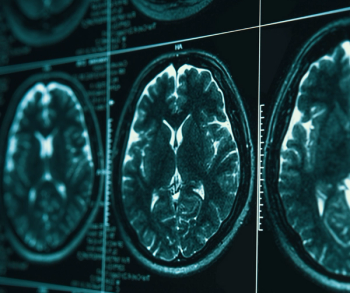
The NEXT-Cue AI software, which incorporates analysis of brain MRI scans, reportedly facilitates prognostic assessments of potential progression from mild cognitive impairment (MCI) to Alzheimer’s disease within five years.
In a new podcast episode, Amir Iravani, MD, FRACP, discusses emerging dosimetry data from the COMPETE trial for 177Lu-edotreotide and how it may help facilitate more personalized treatment for patients with gastroenteropancreatic neuroendocrine tumors (GEP-NETs).

In a recent interview, Phillip Koo, MD, discussed emerging trends with AI, theranostics and empowered patients, and how these developments may lead to challenges and potential opportunities for radiologists and nuclear medicine physicians.

AI has to do more than show potential. It has to deliver measurable results.The Rad AI Outcomes and Market Impact Compendium brings together real-world clinical, operational and financial evidence from health systems, academic medical centers and radiology practices using Rad AI Reporting, Impressions and Continuity.Explore results including 60+ minutes saved per radiologist shift, a 47% reduction in report error rates, 70%+ patient follow-up adherence and >7x ROI — plus, case studies showing how organizations are translating AI into greater capacity, quality and financial performance.See what AI built specifically for radiology can deliver in practice.

Catch up on the top radiology content of the past week.
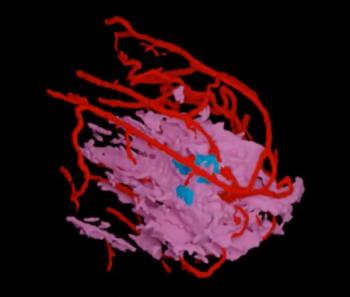
Assessing breast MRI scans, pathology and clinical data, the AI-powered TumorSight Risk software reportedly provides five- and 10-year risk for breast cancer recurrence for women with HR+, HER2-negative stage I-IIIA breast cancer.
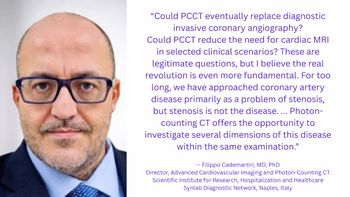
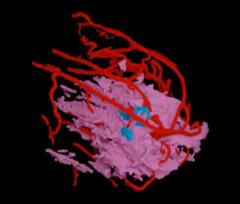
While a new article raises provocative questions about the capability of photon-counting CT (PCCT) to perhaps replace diagnostic ICA, the real revolution with this modality is going beyond stenosis measurement to a renewed focus on the disease of atherosclerosis.
Catch up on the latest imaging research presented at the recent American Society for Radiation Oncology (ASTRO) Annual Meeting.
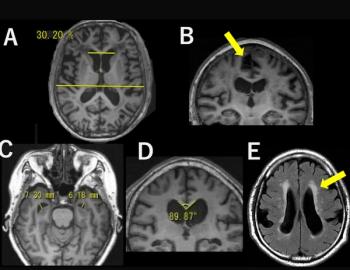
Tightness of the high-convexity sulci (THC) on brain MRI was associated with nearly threefold higher odds of cognitive decline over five to seven years of follow-up, according to a new prospective study involving over 2,100 community-dwelling senior citizens.
Advertisement
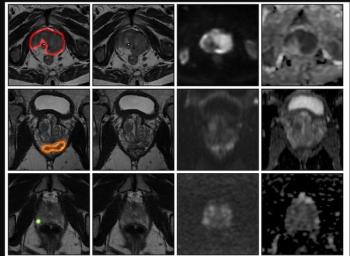
An AI model for prostate MRI offered an 89 percent AUC for prostate cancer detection in external validation testing, according to a newly published international multicenter study.

In the latest episode of her Breast Imaging in Focus series, Manisha Bahl, MD, MPH, FSBI, discusses new research comparing mammography-based AI models for breast cancer detection and short-term risk prediction.
In a recent episode of our Molecular Imaging in Focus series, Jack Andrews, MD, discussed pertinent findings from a recent intra-patient comparative study of PSMA PET agents in men with recurrent prostate cancer presented at the recent ASTRO conference.
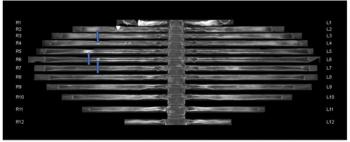
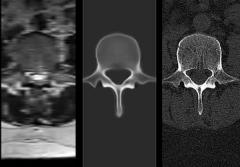
The use of adjunctive CT bone reading software in women with breast cancer detected between 8 to 22 percent more metastatic lesions for reviewing radiologists and reduced CT interpretation time by 50 percent or more, according to a new study.
Expert Radiology is a **radiologist-run teleradiology practice with 10 years of experience**, hiring teleradiologists earning **$500–$900/hr with per-dictation pay**. Work from anywhere with true flexibility, **no shifts, no call, and no weekends**. Our case mix is **predominantly outpatient and noncontrast**, with approximately **75% MRI**, plus X-ray and CT. We cover **malpractice with tail**, handle all medical licensing, and ship you a **$10K reading station with six vertical 4K monitors**. Minimum commitment is an **average of 400 cases per month**. **Book a call with Brandi Escapule, Principal, Physician Services.**
Advertisement
Advertisement
Trending on Diagnostic Imaging
1
FDA Clears MRI-Based AI Software for Prognostic Evaluation of Patients with Mild Cognitive Impairment
2
How AI, Theranostics and More Empowered Patients Have Led to Significant Changes in Radiology
3
What’s Next for AI in Radiology?: Facilitating Data Orchestration Over Fragmentation
4
Could Photon-Counting CT Have an Impact as a Platform for Molecular Imaging?
5