News|Articles|September 4, 2026

Study: Chest CT AI Software Facilitates Nearly 15 Percent Reduction in Reporting Time

Author(s)Jeff Hall

The use of adjunctive AI for pulmonary nodule assessment on chest CT exams led to over a three-minute reduction in median reporting time, according to newly reported research.

New research demonstrates that adjunctive AI may lead to significant reductions in radiologist reporting time for assessing chest computed tomography (CT) exams for pulmonary nodules.

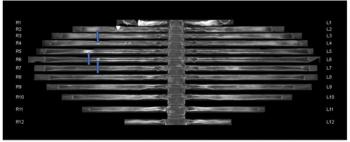
For the retrospective study, recently reported in Radiology, researchers evaluated the Veye Lung Nodules v3.24.1 software (currently known as DeepHealth Lung, DeepHealth) in a review of 39,323 chest CT exams drawn from 19,433 patients (mean age of 62). The study authors noted that 19,190 CT exams were reviewed prior to the use of AI and 20,133 CT scans were interpreted with adjunctive AI.

The researchers found that the adjunctive AI software reduced the adjusted median reporting time for chest CT exams by 14.6 percent (18.2 minutes vs. 21.3 minutes).

“These findings suggest that integrating AI into radiologic workflows has the potential to improve reporting efficiency, alleviate radiologist workload, and generate meaningful economic benefits, particularly in high-volume health care systems facing workforce shortages,” noted lead study author Jasika Paramasamy, MSc, who is affiliated with the Department of Radiology and Nuclear Medicine at Erasmus Medical Center in Rotterdam, the Netherlands, and colleagues.

Where Did Radiologists See the Greatest Reduction of Chest CT Reporting Time with Adjunctive AI?

More specifically, the study authors pointed out a nearly 12-minute reduction of reporting time when adjunctive AI was utilized for CT thorax electrocardiogram (ECG)-gated exams (16.8 minutes vs. 28.5 minutes). They also noted greater than four-minute decreases in reporting times for thoracic oncology referrals (17.8 minutes vs. 22 minutes) and pulmonology referrals (17.6 minutes vs. 21.9 minutes).

“This may reflect closer alignment between the pulmonary nodule–focused functionality of the AI tool and the primary diagnostic task in these clinical settings, in which nodule detection and characterization are often central to the reporting workflow,” added Paramasamy and colleagues.

Three Key Takeaways

• Adjunctive AI meaningfully cuts reporting time for chest CT nodule assessment. There was a 14.6 percent median reduction overall (18.2 vs. 21.3 minutes) with the largest gains in CT thorax ECG-gated exams (~12 minutes saved) and in thoracic oncology and pulmonology referrals (4+ minutes saved), likely reflecting closer alignment between the AI's nodule-focused function and those workflows.

• Time savings are highly reader-dependent. Thoracic radiologists saw a 25 percent reduction in reporting time versus just 2.6 percent for general radiologists. This suggests that subspecialty familiarity and effective workflow integration drive the benefit as much as the algorithm itself.

• Efficiency gains may translate to broader system-level benefits. Beyond individual reporting speed, the authors suggest these results point to potential relief for radiologist workload and economic benefits, particularly for high-volume health systems dealing with workforce shortages.

What Was the Big Time Savings Difference Between Thoracic Radiologists and General Radiologists with AI for Chest CT?

While thoracic radiologists achieved a 25 percent reduction in reporting times with the AI software, the study authors pointed out a smaller 2.6 percent reduction in reporting time for general radiologists.

“These observations may suggest that the operational benefit of AI depends not only on algorithm availability but also on effective workflow integration and user familiarity, underscoring the importance of implementation strategies that support consistent adoption across reader groups,” posited Paramasamy and colleagues.

Final Notes

(Editor’s note: For related content, see “Emerging Insights, Research and Trends in Computed Tomography,” “Can AI-Enabled Intratumoral CT Threshold Segmentation Help Predict Visceral Pleural Invasion in Lung Cancer Patients?” and “Comparative Radiology Study Reveals ‘Significant Variability’ with AI CXR Software for Lung Cancer Detection.”)

In regard to study limitations, the authors acknowledged the likelihood of interrupted workflows and that the PACS log data utilized in the study offers indirect approximations of time for active CT assessment. The researchers also noted possible variability in overall adherence with the AI software as well as utilization of the different features with the software. Scan complexity and diagnostic accuracy of the AI software were not evaluated, according to the study.