

Cardiac CT
Latest News
Advertisement
Latest Videos

Shorts
0:43
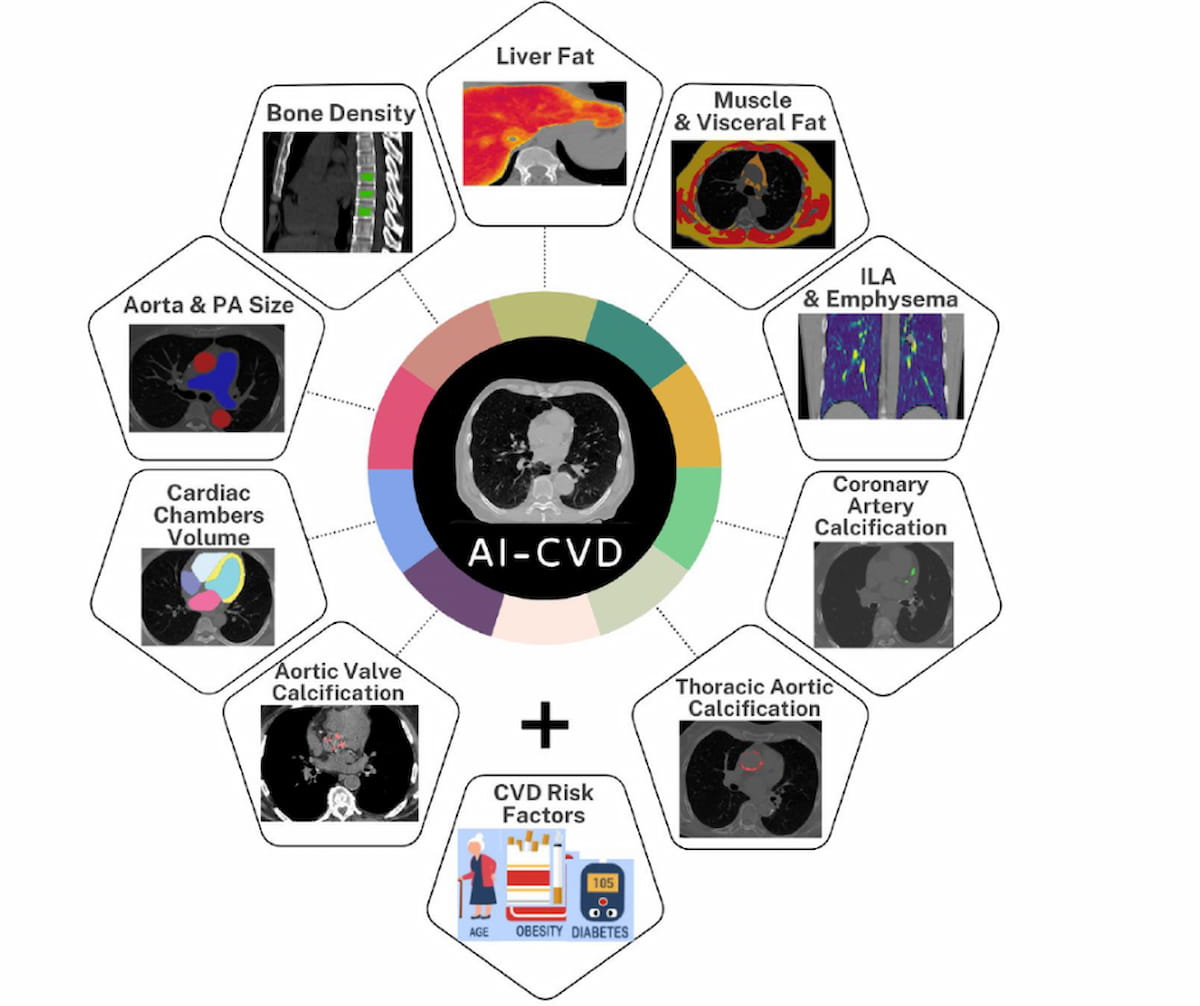
The Potential of Multisystem Screening with CT-Based AI
4 days ago
by
David Yankelevitz, MD

0:33
Can AI Plaque Quantification with CCTA Facilitate Personalized Medicine?
17 days ago
by
Ron Blankstein, MD

0:38
Is AI Better than Radiologists at Assessing Non-Calcified Plaque Volume on CT?
a month ago
by
Tyler Coombes, MD
0:41
Can AI Improve Coronary Plaque Quantification on CT for Patients Deemed to be at Low Risk?
3 months ago
by
Ibrahim Danad, MD, PhD
0:34
Emphasizing AI Plaque Quantification on CCTA
3 months ago
by
Fatima Rodriguez, MD
Podcasts
CME Content








Advertisement
More News

Catch up on the most popular radiology podcasts from 2025.
Catch up on the most well-viewed video interviews in December 2025.
Catch up on the most well-viewed radiology content from 2025.
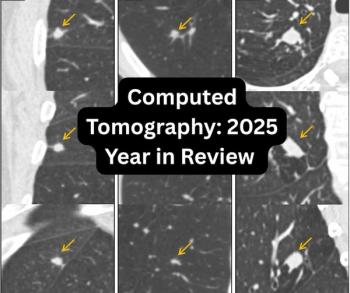
From controversial research on radiation-induced long-term cancer risks with computed tomography (CT) scans and the emerging prognostic value of AI-enabled plaque quantification to the potential impact of deep learning and AI-enhanced radiomics in thoracic radiology, here is a look back at the most well-viewed CT content from 2025.
Catch up on the top AI-related news and research in radiology over the past month.
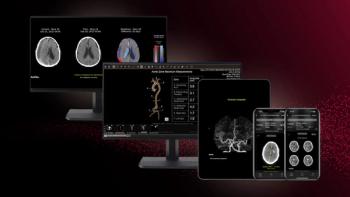
The new FDA 510(k) clearances for RapidAI include Rapid LMVO, which facilitates assessment of ischemic stroke, and Rapid MLS, which aids in the quantification of midline shifts with potential brain injuries.
Catch up on the top AI-related news and research in radiology over the past month.
Catch up on the top radiology content of the past week.
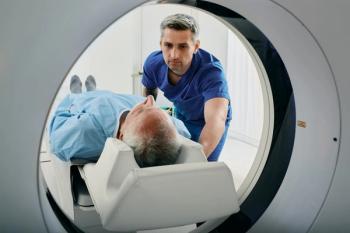
Comparing annual emergency department encounters that involved a head CT in 2007 and 2022, researchers noted a 51 percent increase and also found significant disparities in access to head CTs for Black patients, those on Medicaid and patients in rural hospital settings.
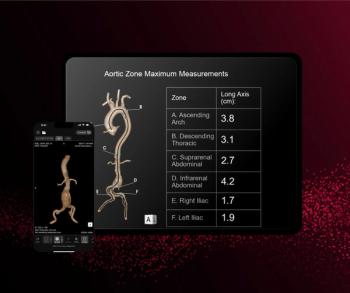
Along with the capability of automated measurements and 3D reconstructions of the aorta, Rapid Aortic may facilitate earlier detection of aortic aneurysms and dissections on computed tomography exams.
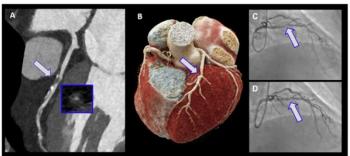
Photon-counting computed tomography demonstrated over 20 percent accuracy at the patient level and nearly 14 percent higher accuracy level at the vessel level in comparison to energy-integrating detector CT for detecting > 70 percent stenosis, according to a newly published study.
Catch up on the top radiology content of the past week.
In a recent interview, Ibrahim Danad, M.D., Ph.D., discussed new research findings from the multicenter CONFIRM2 trial and use of the AI-CT software to obtain automated quantification of plaque burden based off coronary computed tomography angiography (CCTA) scans.
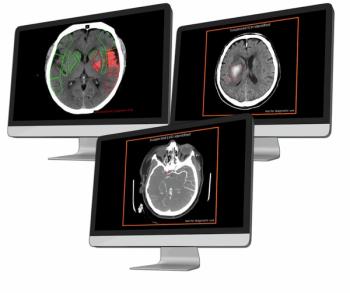
The launch of the AVI imaging platform reportedly facilitates direct integration into PACS and RS systems, and automated access to adjunctive CT-based AI applications for a variety of conditions including pulmonary embolism, intracranial hemorrhage and large vessel occlusion
In a recent interview, Timothy Fairbairn, Ph.D., and Fatima Rodiguez, M.D., discussed new research findings, recently presented at the American Heart Association (AHA) conference, showing the value of AI-powered quantification of plaque burden from CCTA exams for predicting adverse cardiovascular outcomes.
Catch up on the top radiology content of the past week.
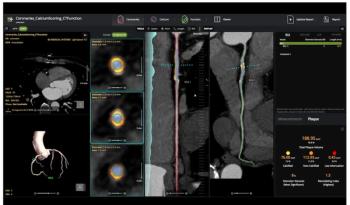
The AI-powered cvi42 | Plaque software enables adjunctive on-site interpretation of coronary CT angiography (CCTA) scans for plaque quantification.
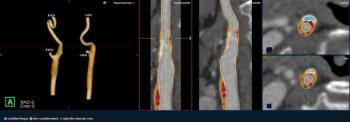
The newly launched PlaqueIQ™ image analysis modality is reportedly the first CT-based software indicated for the quantification and classification of plaque morphology in the carotid arteries.
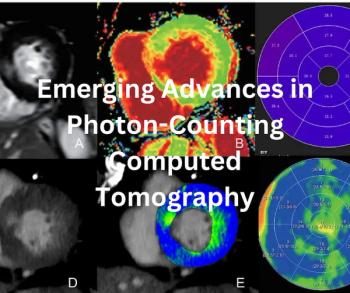
New research on photon-counting computed tomography in 2025 reveals increasing capabilities of the technology to enhance CT visualization and characterization with significant reductions in radiation dosing in cardiovascular imaging, abdominal imaging and other diagnostic applications.
Catch up on the top radiology content of the past week.
Catch up on the top AI-related news and research in radiology over the past month.
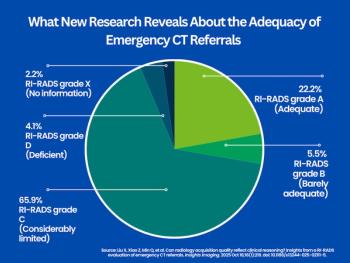
In a review of nearly 1,300 emergency referrals for computed tomography (CT) scans, approximately 28 percent were deemed to have adequate requisition quality according to a RI-RADS analysis.
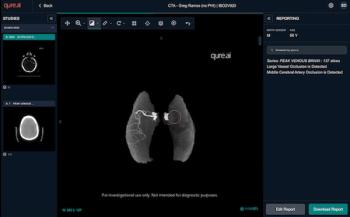
Facilitating timely triage, the qER-CTA software enables AI assessment of the internal carotid artery and M1 segment of the middle cerebral artery for possible large vessel occlusions (LVOs).
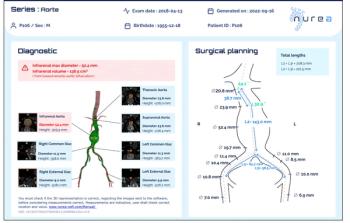
Facilitating timely detection and follow-up management of patients with aortic aneurysms, the PRAEVAorta2 software reportedly enables automated measurement of aortic diameters on computed tomography (CT) scans.
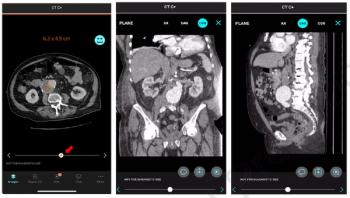
In a study involving over 500 patients, researchers noted that the CT-based AI software led to a 24 percent increase of evaluations for aortic abdominal aneurysms within six months of detection.
Advertisement
Advertisement
Trending on Diagnostic Imaging
1
Leading Breast Radiologists Discuss the Recent Lancet Study on AI and Interval Breast Cancer
2
Is AI Better Than Neuroradiologists at Evaluating Aneurysm Growth on CTA and MRA Scans?
3
Radiology Roundup of New FDA Clearances — February 1 — February 7
4
FDA Clears AI-Powered Triage Platform for Digital Breast Tomosynthesis
5