










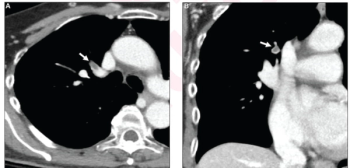
Artificial intelligence facilitated a 96.2 percent sensitivity rate for incidental pulmonary embolism (IPE) on contrast-enhanced CT chest or abdomen exams, according to new prospective research involving over 4,300 patients.
Artificial intelligence facilitated a 96.2 percent sensitivity rate for incidental pulmonary embolism (IPE) on contrast-enhanced CT chest or abdomen exams, according to new prospective research involving over 4,300 patients.
Catch up on the top radiology content of the past week.
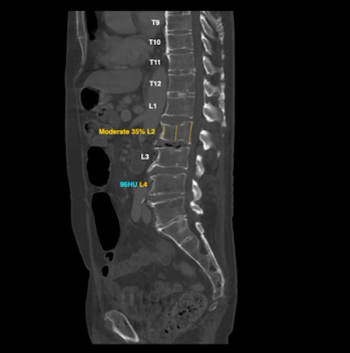
Facilitating additional consultation on chest and abdominal CT scans, the Second Opinions teleradiology platform now features FDA-cleared AI tools for cardiac, bone and liver assessments.
An AI algorithm that incorporates scoring of coronary inflammation based on coronary CT angiography (CCTA) may enhance long-term cardiovascular risk stratification beyond conventional risk factor and imaging assessments, even in patients without obstructive CAD.
Catch up on the top radiology content of the past week.
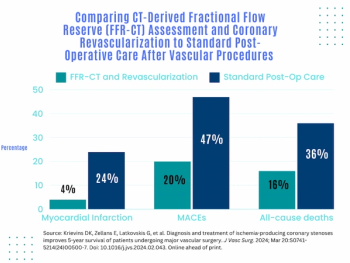
For patients with no history of coronary artery disease (CAD), new research shows the use of CT-derived fractional flow reserve (FFR-CT) guided revascularizations after elective vascular surgery reduced myocardial infarction and all-cause death by 20 percent in comparison to standard care.
Catch up on the top radiology content of the past week.
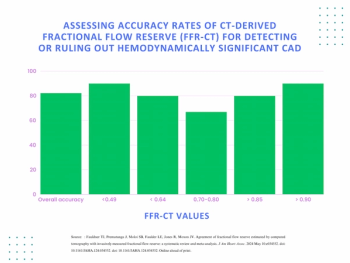
While acknowledging variable accuracy overall with CT-derived fractional flow reserve (FFR-CT) values, researchers found that the accuracy rate increased to 90 percent for FFR-CT values greater > 0.90 and < 0.49.
Catch up on the top radiology content of the past week.
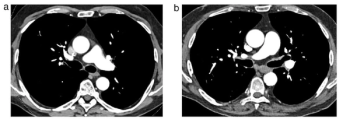
In comparison to energy-integrating detector CT for the workup of suspected acute pulmonary embolism, the use of photon-counting detector CT reduced radiation dosing by 48 percent, according to newly published research.
Catch up on the top radiology content of the past week.
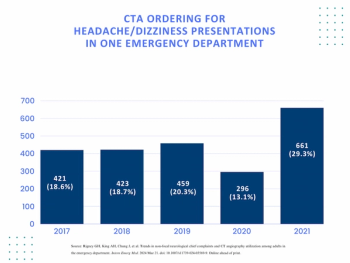
Researchers noted a 67.4 percent increase in head and neck CT angiography and a 38 percent reduction in findings of acute pathology in a recent comparison of 2017 and 2021 statistics for headache and/or dizziness presentations at the emergency department of an urban academic medical center.
Catch up on the top radiology content of the past week.
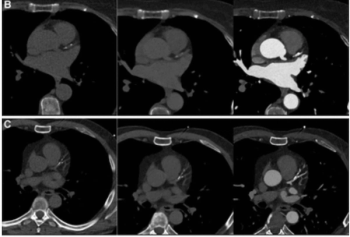
Emerging research on coronary artery calcium scoring for the assessment of coronary artery disease (CAD) suggests the use of virtual non-contrast images from photon-counting CT may lead to a nearly 20 percent reduction in radiation dosing.
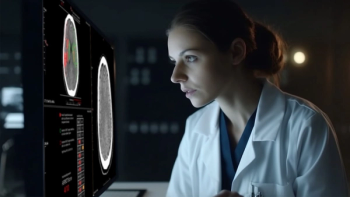
The artificial intelligence (AI) modalities CINA-iPE and CINA-ASPECTS may facilitate improved detection of incidental pulmonary embolism and stroke evaluation, respectively, based on computed tomography (CT) scans.

The multimodality system nCommand Lite reportedly facilitates real-time remote imaging guidance on scanning parameters and procedure assessments to licensed technologists for a variety of imaging modalities including CT and MRI.
Catch up on the top AI-related news and research in radiology over the past month.
Catch up on the top radiology content of the past week.
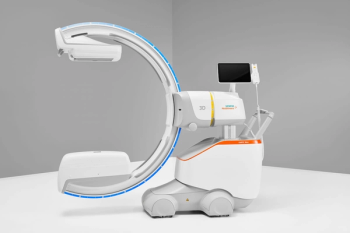
Offering ease of mobility and self-driving capabilities, the Ciartic Move C-arm device reportedly reduces the stress and potential for error associated with manual repositioning during intraoperative imaging with computed tomography and fluoroscopy.
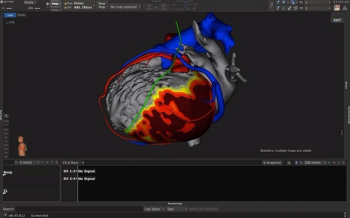
Three-dimensional interactive heart models created with AI-enabled segmentation of CT scans may reduce ventricular tachycardia ablation procedure times by 60 percent.
Catch up on the top radiology content of the past week.
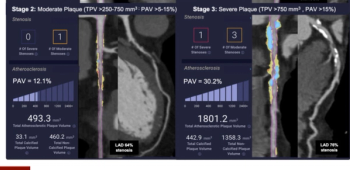
Employing quantitative computed tomography, the staging system’s insights on stenosis, ischemia and coronary atherosclerosis may facilitate individualized assessments of heart disease risk.
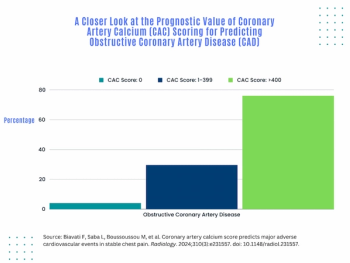
Computed tomography (CT) findings from over 1,700 patients with stable chest pain reveal that coronary artery calcium (CAC) scores of 0 are associated with a 4.1 percent prevalence of obstructive coronary artery disease (CAD) whereas CAC scores of 400 or higher are linked to a 76.1 percent incidence of obstructive CAD, according to research from a multinational study.
Catch up on the top AI-related news and research in radiology over the past month.
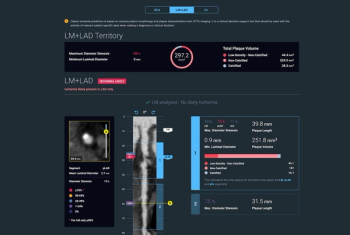
Clinicians can bill Category 1 CPT Code 75580 for adjunctive use of the artificial intelligence (AI)-powered Cleerly Ischemia software for fractional flow reserve estimates based on coronary computed tomography angiography (CCTA) scans.