






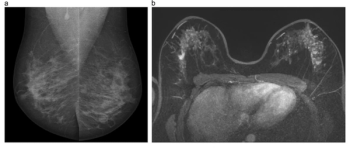
One of the recommendations from the European Society of Breast Imaging (EUSOBI) is annual breast MRI exams starting at 25 years of age for women deemed to be at high risk for breast cancer.
One of the recommendations from the European Society of Breast Imaging (EUSOBI) is annual breast MRI exams starting at 25 years of age for women deemed to be at high risk for breast cancer.
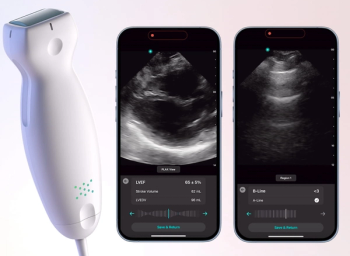
The artificial intelligence (AI)-powered applications reportedly allow clinicians to diagnose pulmonary edema and measure left ventricle ejection fraction within seconds.
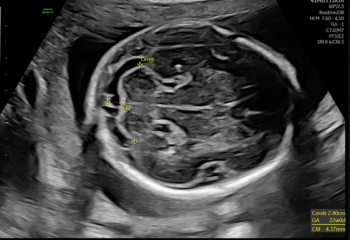
One of the features on the new Voluson Signature 20 and 18 ultrasound devices reportedly uses automated AI tools to facilitate a 40 percent reduction in the time it takes to perform second trimester exams.
Catch up on the top radiology content of the past week.
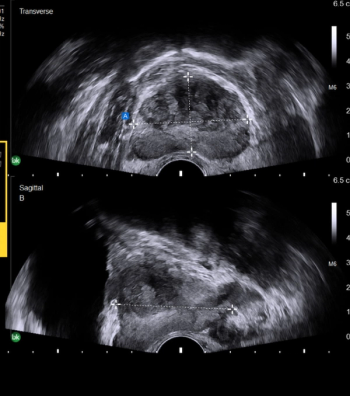
Featuring automated one-click functionality for capturing prostate volume, the AI-enabled software may help shorten workflows for prostate imaging, biopsies, and ultrasound-guided procedures.
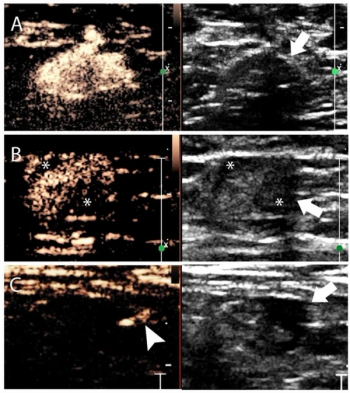
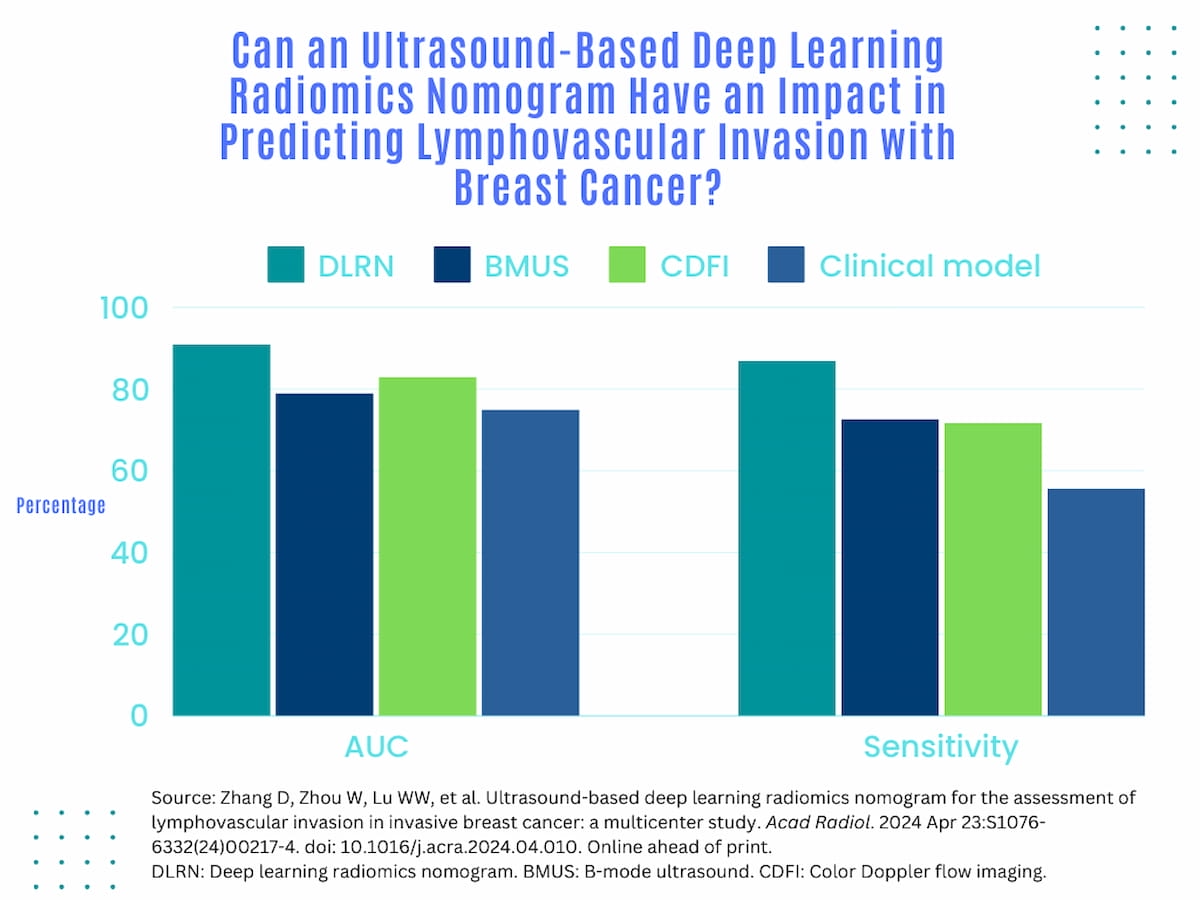
A nomogram that combines contrast-enhanced lymphatic ultrasound and grayscale ultrasound findings had an 88 percent AUC for prediction of three or more metastatic axillary lymph nodes in women with early breast cancer.
Catch up on the top AI-related news and research in radiology over the past month.
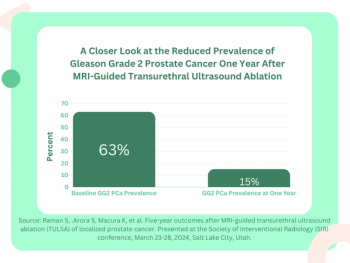
For men with prostate cancer, the use of MRI-guided transurethral ultrasound ablation (TULSA) led to a 92 percent decrease in median prostate volume at one year, according to new research recently presented at Society of Interventional Radiology (SIR) conference.
Catch up on the top radiology content of the past week.
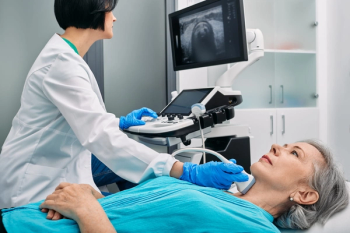
In a comparison of image-to-text large language models (LLMs), ChatGPT 4.0 offered a 95 percent sensitivity rate and an 83 percent AUC that were comparable to that of two senior radiologists and one junior radiologist interacting with LLM to differentiate between malignant and benign thyroid nodules on ultrasound.
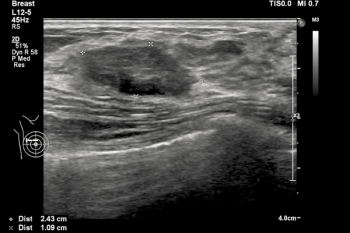
While adjunctive use of AI led to significantly higher specificity and accuracy rates in detecting cancer on breast ultrasound exams in comparison to unassisted reading by breast radiologists, researchers noted that 12 of 13 BI-RADS 3 lesions upgraded by AI were ultimately benign, according to research presented at the European Congress of Radiology.
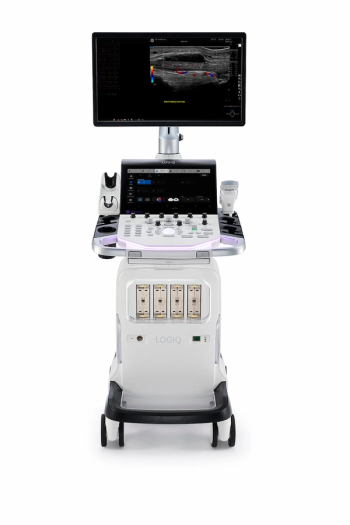
Designed for full-body imaging, the new modality reportedly offers a lightweight portable design, AI-powered tools and enhanced high-resolution images.
Catch up on the most-well viewed radiology content in February 2024.
Catch up on the top AI-related news and research in radiology over the past month.
Catch up on the top radiology content of the past week.
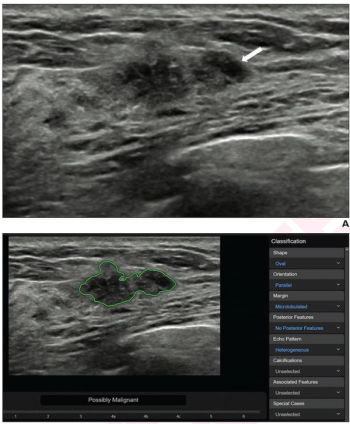
What does the current evidence reveal for four FDA-cleared AI software modalities for breast ultrasound? Leading researchers review the study findings in a recently published literature review.
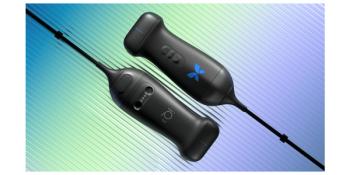
Recently cleared by the FDA, the iQ3 point-of-care ultrasound system reportedly offers new advances in 3D imaging capabilities.
Catch up on the top radiology content of the past week.
Catch up on the top AI-related news and research in radiology over the past month.
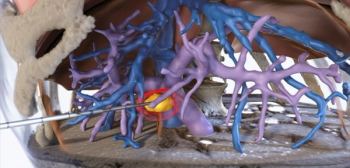
The BioTraceIO software reportedly facilitates visualization of liver tumor ablation procedures based on real-time ultrasound imaging and provides superior post-op estimates of ablation zone volume in comparison to computed tomography.
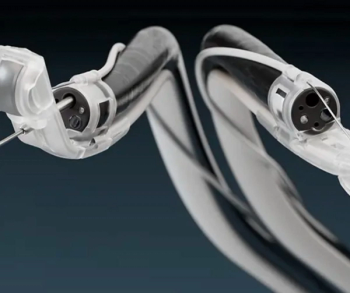
The EndoSound Vision System reportedly enables providers to convert existing upper gastrointestinal endoscopes into endoscopic ultrasound modalities.
Catch up on the top AI-related news and research in radiology over the past month.
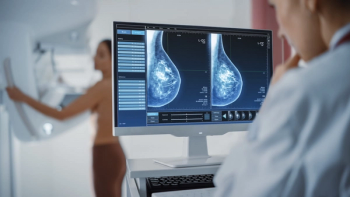
In a study examining the potential of the large language models ChatGPT-4 and Bard to follow ACR Appropriateness Criteria for breast cancer, lung cancer, ovarian cancer and colorectal cancer screening, researchers noted “impressive accuracy in making radiologic clinical decisions.”
Catch up on the most well-read ultrasound articles from 2023.
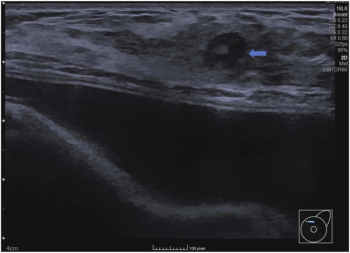
Emerging research suggests that stand-alone artificial intelligence (AI) assessment of breast ultrasound exams could eliminate over 45 percent of unnecessary follow-up exams.