









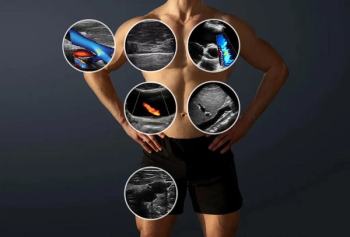
Combining phased and linear arrays on a single head, the Clarius PAL HD3 ultrasound device was unveiled at the recent American College of Emergency Physicians (ACEP) Scientific Assembly conference.
Combining phased and linear arrays on a single head, the Clarius PAL HD3 ultrasound device was unveiled at the recent American College of Emergency Physicians (ACEP) Scientific Assembly conference.
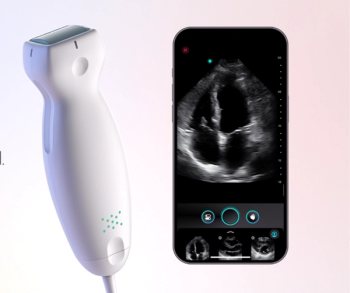
The Exo Iris reportedly combines advanced silicon technology with imaging, workflow software and artificial intelligence (AI) to facilitate multidisciplinary use of point-of-care ultrasound.
Catch up on the top AI-related news and research in radiology over the past month.
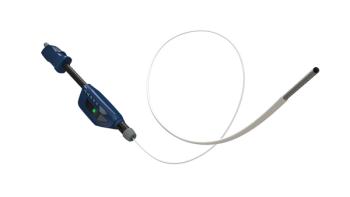
The Precision GI™ Endoscopic Ultrasound Biopsy Device reportedly provides a more efficient and less traumatic method of obtaining biopsy tissue for suspected gastrointestinal cancers.
Catch up on the top radiology content of the past week.
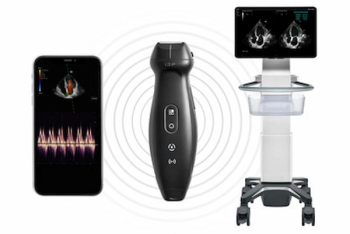
The TE Air is reportedly the first handheld ultrasound device to offer dual connectivity to mobile devices or touch-based ultrasound systems.
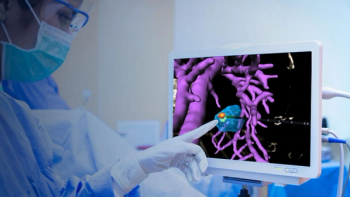
Through the use of artificial intelligence (AI) and imaging modalities such as ultrasound, CT, and MRI, the newly FDA-cleared VisAble.IO software reportedly enhances planning and real-time assessment for liver tumor ablation procedures.
Catch up on the top radiology content of the past week.

Catch up on the top AI-related news and research from the past month.
Catch up on the top radiology content of the past week.
In a recent video interview, Stephen Rose, M.D., reviewed a variety of factors that can impact interpretation of breast imaging for women with breast implants and discussed recent research showing a 22 percent reduction in cancer detection rate for this population in comparison to women without breast implants.
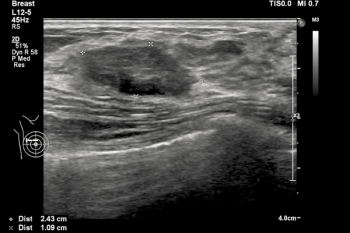
In a new study involving over 400,000 women, researchers found that ultrasound screening was performed for 95.3 percent of women with dense breasts but only 21.7 percent of women with a first-degree family history of breast cancer.
Catch up on the top radiology content of the past week.
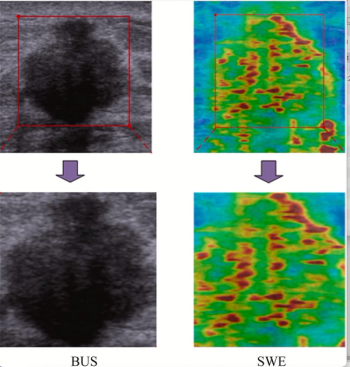
Researchers found that a deep convolutional neural network, incorporating B-mode ultrasound and shear wave elastography data, had nearly an 88 percent sensitivity rate for predicting neoadjuvant chemotherapy response in patients with breast cancer.
Catch up on the top five most viewed content at Diagnostic Imaging for the month of May 2023.
Catch up on the top AI-related news and research from the past month.
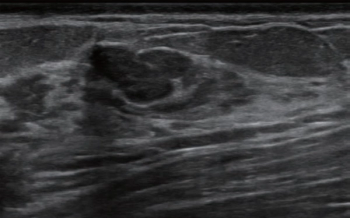
Emerging breast ultrasound research showed the use of computer-aided diagnosis (CAD), powered by deep learning, led to 24 percent and 36.9 percent improvements in accuracy and specificity, respectively, in the use of BI-RADS classifications by radiologists without breast ultrasound expertise.
Catch up on the top radiology content of the past week.
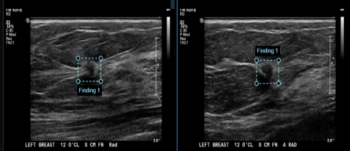
Adjunctive use of an artificial intelligence (AI) software demonstrated nearly equivalent sensitivity and over 28 percent higher accuracy in comparison to radiologist assessment of breast ultrasound images for breast lesions, according to new research presented at the recent Society of Breast Imaging (SBI) conference.
Catch up on the top AI-related news and research from the past month.

Lamenting a lack of control over imaging requests from referring clinicians, this author suggests that a more collaborative approach between referrers and radiologists may facilitate more efficient use of imaging.
Catch up on the top radiology content of the past week.
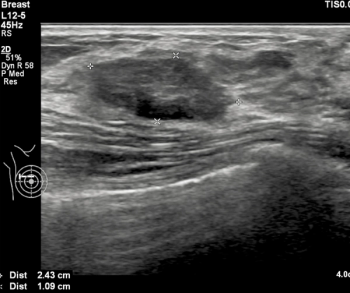
Emerging research shows the adjunctive use of automated breast ultrasound with mammography has similar sensitivity for breast cancer detection as adjunctive handheld ultrasound but may offer reduced false-positive rates in women with dense breasts.
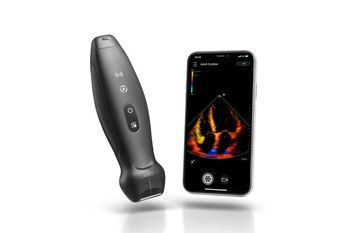
The TE Air reportedly combines enhanced point-of-care ultrasound imaging with an array of practical benefits for radiologists.
Catch up on the top radiology content of the past week.