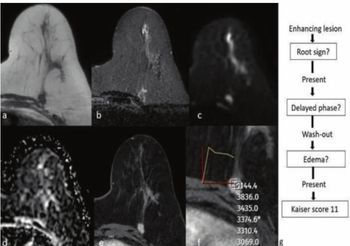
A Kaiser score > 5 with breast MRI demonstrated a 97 percent sensitivity and 87.9 percent specificity for predicting malignancy in patients with BI-RADS 0 or 4 presentations on mammography and breast ultrasound, according to a new study.
Lung ultrasounds can help clinicians identify patients with preeclampsia who have developed pulmonary edema.
Lung ultrasounds can detect both pulmonary edema and increased left ventricular end-diastolic pressure (LVEDP) in patients with severe preeclampsia, according to a study published in the journal
Researchers from Hopital Nord, in Marseille, France, undertook a prospective cohort study to assess the utility of using lung ultrasound for patients with severe preeclampsia. “Lung ultrasound is fast, safe, noninvasive, and easy to use,” lead author Marc Leone, MD, PhD, vice chair of the department of anesthesiology and critical care medicine at the hospital, said in a release. “We found it allowed us to quickly assess whether a woman with preeclampsia had pulmonary edema and confirm the severity of the condition.”
Twenty otherwise healthy adult patients with severe preeclampsia were enrolled in the study. They all underwent lung and cardiac ultrasounds before and after delivery. The researchers determined pulmonary edema using two scores: the B-pattern and the Echo Comet Score. Left ventricular end-diastolic pressures were assessed by transthoracic echocardiography.
The lung ultrasound images showed that five women (25 percent) had pulmonary edema before delivery and cardiac ultrasound found only four (20 percent) had the condition. The lung ultrasound also identified a patient with non-cardiac pulmonary edema, which had not been detected by the cardiac ultrasound.
“The striking finding of this preliminary study was that lung ultrasound detected B-pattern in 25 percent of patients with SP [severe preeclampsia],” wrote the authors. “The incidence was higher than that of clinical edema reported in the literature.”
The authors concluded that although further study is necessary, this preliminary study shows that ultrasound was an easy tool to help detect pulmonary edema and increased LVEDP in patients with severe preeclampsia.