

AI Coverage
about 15 hours ago
Top Five Radiology Video Interviews in October 20263 days ago
Advances in AI — October 2026Latest News
Oct 29, 2026 | Commentary
The Reading Room Podcast: Emerging Research and Current Perspectives on CT Radiation Dosing, Part 2
Does Photon-Counting CT Offer Bigger Advantages in Bigger Patients?
Oct 29, 2026

Top Five Radiology Video Interviews in October 2026
Oct 29, 2026
The Reading Room Podcast: Emerging Research and Current Perspectives on CT Radiation Dosing, Part 1
Oct 28, 2026

Webinar: Current Perspectives and Recommendations on Ensuring Cybersecurity
Oct 28, 2026


Advertisement
Shorts

0:39
Exploring the Potential of AI in Radiology Inside and Outside of the Reading Room
3 days ago
by
Joseph Cavallo, MD, MBA

0:29
A Challenge to Imaging Specialists on Building Predictive Models in Radiology
3 days ago
by
Phillip Koo, MD
0:49
A Simplified Dosimetry Approach for Treating GEP-NETs: What New Research Reveals
6 days ago
by
Amir Iravani, MD, FRACP

0:34
Can AI Improve Clarity for PI-RADS 3 Assessments on Prostate MRI?
7 days ago
by
Francesco Giganti, MD, PhD
0:47
Theranostics: 'The Biggest Advancement in Our Generation When It Comes to Oncology'
9 days ago
by
Phillip Koo, MD
0:46
Mammography-Based AI Models: Key Takeaways from New Research
11 days ago
by
Manisha Bahl, MD
0:51
How Urinary Excretion Can Facilitate Striking Differences Between PSMA PET Agents
11 days ago
by
Jack Andrews, MD
0:25
Why Prostatic Artery Embolization Should be a First-Line Treatment for Benign Prostatic Hyperplasia
14 days ago
by
Mina S. Makary, MD
0:34
Could Autonomous AI Lead to 'Dramatic Shifts in Compensation' for Breast Radiologists?
17 days ago
by
Wendie Berg, MD, PhD
0:41
Could Future Research Lead to Personalized Treatment with 177Lu-Edotreotide for GEP-NETs?
17 days ago
by
Amir Iravani, MD, FRACP
Podcasts
Videos






All News
Advertisement
Advertisement
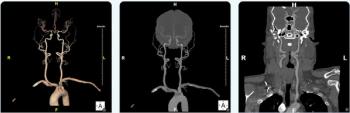
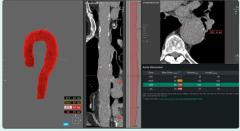
The AI-powered NeuroDR software reportedly removes bone, soft tissue and veins from CTA scans and provides subsequent 3D MIP views and curved planar reformatted views of carotid and vertebral arteries.
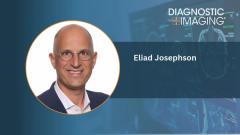
In a recent interview with Diagnostic Imaging, Eliad Josephson discussed key attributes of the HLTH USA conference, AI trends and an ongoing shift of emphasis on the development of predictive technologies with diagnostics at center stage.
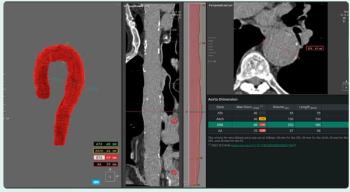
The newly cleared Aview Aorta Metrics software reportedly offers automated segmentation of aortic regions and classification of aortic zones based on chest CT images.
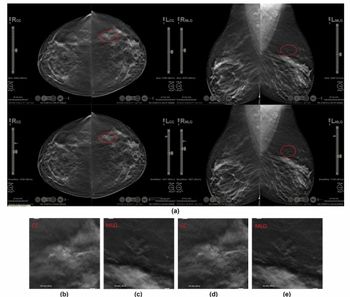
Use of the AI-enabled slab technology from reconstructed DBT imaging led to a 7.4-second mean reduction in reading time in a new study involving 391 cases and 15 reviewing radiologists.
Catch up on the top AI-related news and research in radiology over the past month.
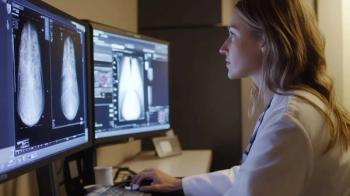
Are there certain strategies that facilitate an alter ego-esque laser focus undeterred by distraction?
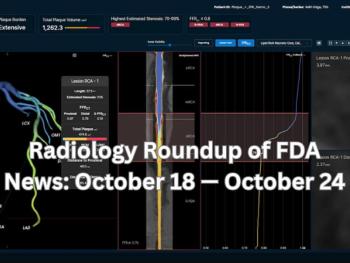
Catch up on a variety of FDA news in radiology from the past week.
Catch up on the top radiology content of the past week.
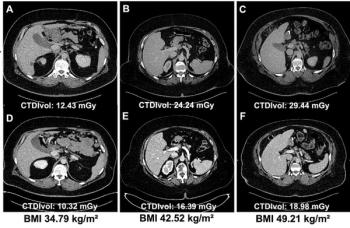
In addition to providing higher SNRs in vascular structures and parenchymal organs than energy-integrating detector CT, photon-counting CT enabled an approximately 30 percent reduction in volume CT dose index (CTDIvol) for patients with obesity, according to a new study.

Facilitating enhanced 3D visualization of skeletal anatomy, the BoneEnhance machine learning module reportedly provides automated segmentation of bone and surrounding tissues for the Accuro XV ultrasound system.
Advertisement

Newly published preclinical research signals a substantial conceptual shift with a potential role of photon-counting CT in targeting specific biological processes.
The future of AI in radiology lies in its potential capability to forge connections and enhance efficiencies for enterprise-wide workflows.
In a new podcast episode, Joseph Cavallo, MD, MBA, offered his perspective on AI integration, potential efficiency gains, navigating post-deployment monitoring and how to incorporate AI literacy into radiology resident training.
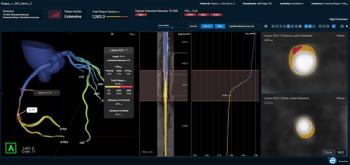
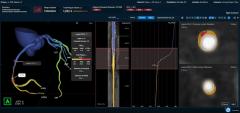
The FFR-IQ software recently demonstrated a 92.2 percent sensitivity for non-invasive estimation of fractional flow reserve (FFRC) based on coronary CT angiography (CCTA) scans.
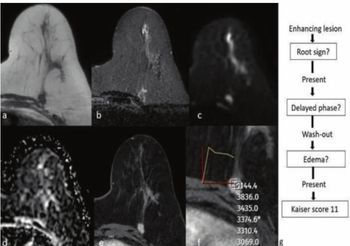
A Kaiser score > 5 with breast MRI demonstrated a 97 percent sensitivity and 87.9 percent specificity for predicting malignancy in patients with BI-RADS 0 or 4 presentations on mammography and breast ultrasound, according to a new study.
Advertisement
Advertisement
Trending on Diagnostic Imaging
1
FDA Clears CTA-Based AI Software for Enhanced Visualization of Head and Neck Arteries
2
Top Five Radiology Video Interviews in October 2026
3
The Reading Room Podcast: Emerging Research and Current Perspectives on CT Radiation Dosing, Part 1
4
How the HLTH USA Conference Facilitates an Ecosystem for Innovation in Health Care
5