Catch up on the top radiology content of the past week.
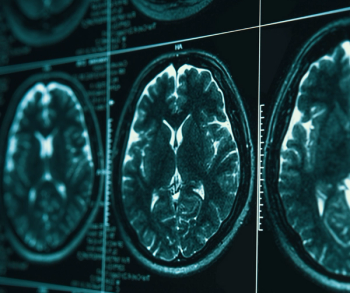
In a recent interview, Benjamin Kann, M.D., discussed new research highlighting the capability of an AI foundation model to obtain a variety of diagnostic and prognostic data from brain MRI scans.
Could an emerging AI foundation model offer an array of diagnostic and prognostic applications for brain magnetic resonance imaging (MRI)?
In a new study, recently published in
In a recent interview with Diagnostic Imaging, study co-author Benjamin Kann, M.D., discussed the impetus behind the research and the potential of AI foundation models to optimize the amount of data obtained from brain MRI scans.
“We’re getting millions of scans on these patients every year, and there's a lot of data that's being left on the table,” noted Dr. Kann, an associate professor of radiation oncology at Harvard Medical School.
“ … We felt that, as we're seeing with large language models rolling out many foundation models, there could really be a role for vision-based foundation models in the major biomedical imaging modalities such as MRI, so you could sort of teach the model to have a baseline foundational knowledge about how a brain MRI structure looks, and then take that knowledge and, with a lot fewer cases of labeled data, be able to develop a powerful model that can adapt to many different situations.”
The study authors found that the brainIAC model had the lowest mean absolute error (MAE) between predicted age and chronological age (6.55 years), the lowest MAE in time-to-stroke prediction (38.87 days) and the highest AUC (79 percent) for IDH mutation prediction in patients with low-grade gliomas.
“ … As far as clinical impact, I think when we talk about things like mutation, prediction of a brain tumor, or the prediction of the development of dementia or stroke, these are really powerful pieces of information that I think we're going to be able to provide patients just from their routine brain MRI, and really uncover a lot of data and a lot of clinical insight from these MRIs that we just could not unlock before. I think that models like BrainIAC and other foundation models are just going to lower the barrier to do that in a variety of scenarios,” maintained Dr. Kann, a faculty member of the Artificial Intelligence in Medicine Program at Mass General Brigham and Harvard Medical School.
(Editor’s note: For related content, see “