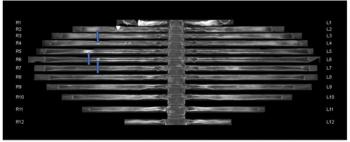
The use of adjunctive CT bone reading software in women with breast cancer detected between 8 to 22 percent more metastatic lesions for reviewing radiologists and reduced CT interpretation time by 50 percent or more, according to a new study.
Using PET or CSF assay to detect amyloid plaques in asymptomatic adults may help detect future cognitive decline.
Elevated baseline brain amyloid levels among asymptomatic adults suggest a higher likelihood of later cognitive decline consistent with Alzheimer’s disease, according to a study in
Researchers from California, Massachusetts, and Minnesota sought to characterize and quantify risk that normally cognitive adults may have if they had elevated brain amyloid levels.
The researchers analyzed longitudinal cognitive and biomarker data obtained from 445 normally cognitive adults (52% women) who were a mean age of 74, with a mean educational level of 16.4 years. Using PET or cerebrospinal fluid assay of amyloid β, the researchers found that 243 participants had normal amyloid and 202 had elevated amyloid. Participants were observed for a median of 3.1 years, with a maximum follow-up of 10.3 years, between August 23, 2005 to June 7, 2016. This was part of the Alzheimer’s Disease Neuroimaging Initiative (ADNI).
Outcomes for the study included scores on:
• Preclinical Alzheimer Cognitive Composite (PACC; a sum of 4 baseline standardized z scores, which decreases with worse performance)
• Mini-Mental State Examination (MMSE; 0 [worst] to 30 [best] points)
• Clinical Dementia Rating Sum of Boxes (CDR–Sum of Boxes; 0 [best] to 18 [worst] points)
• Logical Memory Delayed Recall (0 [worst] to 25 [best] story units)
The results showed worsening in three of four tests among patients with previously detected elevated amyloid:
The researchers concluded that elevation in baseline brain amyloid level, compared with normal brain amyloid level, was associated with higher likelihood of cognitive decline. They were unsure, however, if the findings are of uncertain clinical significance, and they recommended more research in order to assess the clinical importance of these differences and measure longer-term associations.
Stay at the forefront of radiology with the Diagnostic Imaging newsletter, delivering the latest news, clinical insights, and imaging advancements for today’s radiologists.
Subscribe