
Commentary|Videos|November 3, 2026
Interventional Radiology in Focus: Emerging Concepts with Ablation and Histotripsy in Interventional Oncology
Author(s)Mina S. Makary, MD
In the latest episode of his “Interventional Radiology in Focus” series, Mina Makary, MD, discusses the evolution, research and pearls for ablation procedures, and emerging considerations for histotripsy in the realm of interventional oncology.
Advertisement
Interventional oncology is now the fourth pillar of cancer care, and it's extremely fundamental. We can have a big impact on patients' outcomes. Within that discipline, one of the most exciting areas of development and research is ablation as a curative intent treatment. For many cancers, especially early disease, we can burn or freeze a tumor and get curative outcomes, especially in liver and kidney cancer.
Ablation is well established. It's in all the guidelines, especially for primary liver cancer, hepatocellular carcinoma (HCC), for stage A Barcelona Clinic Liver Cancer (BCLC) (Staging System) early disease, in which it has outcomes comparable to surgical resection. Many patients present with unresectable disease, especially those with portal hypertension, who are at high risk for complications with surgery, so ablation has been established as a fundamental treatment in that space.
The same is true for early renal cell carcinoma (RCC). For early disease, patients have options including partial nephrectomy and ablation as equivalent options. Depending on the counseling we offer patients and their unique needs, we may favor one versus the other.
Key Considerations with Radiofrequency Ablation, Microwave Ablation and Cryoablation
In both of those areas, there are multiple tools available. Traditionally, radiofrequency (RF) ablation was the early modality. Then microwave ablation was developed and cryoablation emerged as well. Compared to traditional RF energy, microwave is more uniform, and we can often get bigger ablation zones. There is less heat sink from adjacent blood vessels whereas RF is more susceptible to those issues. So microwave (ablation) has become the go-to heat-based modality.
Thermal ablation also includes cryoablation, in which we freeze a tumor, and that often requires multiple probes. There are pros and cons to microwave ablation and cryoablation, depending on location. With cryoablation, we can see the ice ball and know its size, so in areas where we really want to be careful with our margin, it's a great tool to have in our armamentarium against cancer.
Recovery for both procedures is very self-limited. They're usually done as outpatient procedures. We typically get a one-month follow-up scan to make sure patients have achieved the outcome we need. Early on, there may be some discomfort and pain, which can be easily managed with over-the-counter medications and sometimes short-term narcotics.
Can Histotripsy Have an Impact in Interventional Oncology?
One of the most exciting developments in this space is histotripsy. There has been one major trial, the #HOPE4LIVER trial, that established histotripsy as a safe modality, and it subsequently received FDA approval.1 There have been subsequent studies from multiple centers, and now the BOOMBOX study is collecting more data so we can understand who the optimal patients are for this procedure.
In areas where we're worried about adjacent ducts or blood vessels, I think histotripsy could play a role in the future as we study it more and understand where it's safe and where it's not. Even though the previous modalities are minimally invasive, this one is completely non-invasive, which is also a benefit. There's a lot of development in this space and a lot of exciting modalities. As we learn more and offer our patients more options, we should continue to raise awareness and participate in tumor boards and multidisciplinary discussions, so we contribute our treatment modalities in the most optimal way and help achieve better outcomes for our patients.
Pertinent Pearls for Thermal Ablation and Histotripsy
In terms of pearls for thermal ablation in particular, as with any treatment modality we offer, pre-procedural imaging is paramount. It's important for us to understand the anatomy, tumor location, disease process, stage, and the patient's goals of care.
Ablation is a curative intent modality, so the goal is to kill the tumor and get a margin, and that should always be the primary goal. In some settings, it is used to debulk or for local control. For example, in oligometastatic disease, the COLLISION trial has shown in colorectal cancer that ablation is comparable to surgical resection, with some improvements in certain settings. So it's important for us to understand that context.2
When we're planning an ablation, it's important to understand the location of the tumor. Is it peripheral or central? Central location can confer risks like bile duct injury. It's also important to understand the tumor's location relative to blood vessels because of heat sink effects. Peripheral vessels are not much of a heat sink issue, especially with microwave (ablation), where we can deposit significant energy and overcome that, but central vessels are definitely a concern.
When we're treating areas close to critical structures, we can offer adjunct techniques to separate those tissues from the target. For example, hydrodissection can be employed around the liver and the kidney to displace critical structures. Not every non-target structure can be pushed away, but many can. Another pearl is that occasionally some tumors are too large for ablation or ablation may not get the job done by itself. Having a multimodality toolbox matters here. Some patients need personalized treatment plans and may need more than ablation, such as combination therapy with ablation and catheter-directed therapies, to get good outcomes.
With histotripsy, it's important to understand the maximum size of the treatment zone, which is often different from thermal ablation, and every vendor has its own equipment specifications. Some locations may confer additional risk to vessels, and we may need to ensure anticoagulation, either prophylactically or in any situation where a thrombus develops. Again, understanding where histotripsy fits in the treatment paradigm is very important. It’s extremely important to collect data. That will help us define the role of each of these modalities and identify the patients who are likely to have the best outcomes.
Dr. Makary is a vascular and interventional radiologist. He is an associate professor of radiology at the Ohio State University Wexner Medical Center.
Advertisement
Related to this article
Facilitating enhanced 3D visualization of skeletal anatomy, the BoneEnhance machine learning module reportedly provides automated segmentation of bone and surrounding tissues for the Accuro XV ultrasound system.
A Kaiser score > 5 with breast MRI demonstrated a 97 percent sensitivity and 87.9 percent specificity for predicting malignancy in patients with BI-RADS 0 or 4 presentations on mammography and breast ultrasound, according to a new study.
New research suggests CCTA may provide salient preoperative insights into planning for percutaneous coronary intervention (PCI) while facilitating similar outcomes as intravascular ultrasound guidance for target-vessel failure.
Catch up on a variety of FDA news in radiology from the past week.
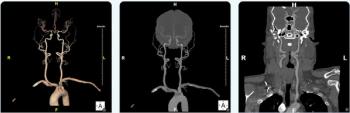
The AI-powered NeuroDR software reportedly removes bone, soft tissue and veins from CTA scans and provides subsequent 3D MIP views and curved planar reformatted views of carotid and vertebral arteries.
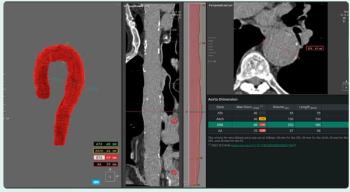
The newly cleared Aview Aorta Metrics software reportedly offers automated segmentation of aortic regions and classification of aortic zones based on chest CT images.
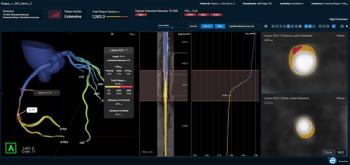
The FFR-IQ software recently demonstrated a 92.2 percent sensitivity for non-invasive estimation of fractional flow reserve (FFRC) based on coronary CT angiography (CCTA) scans.
In a recent interview, Francesco Giganti, MD, PhD, discussed findings from a recent multicenter study demonstrating the ability of an AI software to provide significant clarity to initial PI-RADS 3 assessments on MRI and facilitate a nearly 19 percent reduction in unnecessary prostate biopsies.
Advertisement
Advertisement
Trending on Diagnostic Imaging
1
Is Late Arterial Phase CT Necessary for Undifferentiated Acute Abdominal Pain?
2
Could a CCTA-Guided Approach Provide a Viable Alternative to Intravascular Ultrasound Guidance for PCI Procedures?
3
Top Five Radiology Content in October 2026
4
Key Features with EPNI on CT May More than Double Mortality Risk in Pancreatic Cancer
5