|Articles|August 20, 2003

CT simulator debuts

Philips launched a new CT simulation workstation at the 2003 annual meeting of the American Association of Physicists in Medicine held Aug. 10 to 14 in San Diego. The AcQSim3 combines simulation features of the AcQSim workstation with Philips' radiation

Philips launched a new CT simulation workstation at the 2003 annual meeting of the American Association of Physicists in Medicine held Aug. 10 to 14 in San Diego. The AcQSim3 combines simulation features of the AcQSim workstation with Philips' radiation therapy planning (RTP) system Pinnacle3, creating a single shared platform and integrated workflow. Integration of the CT simulation workstation and RTP enables access to shared patient data from other Philips oncology workstations. The new AcQSim3 connects seamlessly to the company's image fusion application, Syntegra, and intensity-modulated radiation therapy application, P3IMRT. It is compatible with Philips' multimodality imaging systems, including the AcQSim CT, Gemini PET/CT, and Panorama MRI, as well as with other vendors' DICOM-compliant imaging systems. AcQSim3 can also communicate with other vendors' RTP systems via standard DICOM and DICOM-RT transfer protocols.

Related to this article

Foundation Model-Based Chest X-Ray AI Software Gets FDA Nod
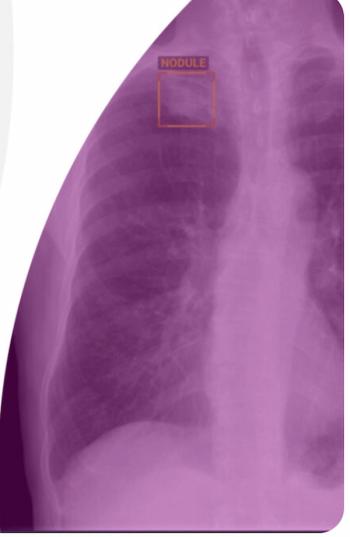
Reportedly one of the first FDA-cleared chest X-ray AI software platforms derived from a foundation model, the Chest Xray software facilitates detection and localization of lung nodules, pneumothorax, mediastinal abnormalities and other thoracic abnormalities.
Does kV Still Matter in Photon-Counting CT?
Emerging research demonstrates the increasing stability of attenuation on clinically relevant VMIs with photon-counting CT and a redefined role of kV that may have implications for longitudinal quantitative CT.
CT Radiation Dosing: Where Things Stand, Part 2
In the second of a two-part interview, Kalpana Kanal, PhD, and Mahadevappa Mahesh, MS, PhD, FAPPM, FACR, discussed future directions for research on CT radiation dosing, including the potential of indication-specific diagnostic reference levels (DRLs).