






Molecular Imaging
Latest News
Advertisement
Latest Videos



Shorts

0:41
Could Future Research Lead to Personalized Treatment with 177Lu-Edotreotide for GEP-NETs?
6 days ago
by
Amir Iravani, MD, FRACP

0:32
A Key Advantage of FET PET Over MRI for Glioma Imaging
25 days ago
by
Thomas Hope, MD
0:53
Why the PET Agent Floretyrosine F18 is a 'Huge Step Forward' for Glioma Imaging
a month ago
by
Thomas Hope, MD

0:41
Could a PET/CT Radiotracer Lead to a Single Test for Cardiac Amyloidosis Detection?
2 months ago
by
Sharmila Dorbala, MD, MPH

0:38
The Origins and Evolution of PSMA
2 months ago
by
Martin Pomper, MD, PhD

0:39
The Increased Efficiency and Quality with an Emerging Total Body PET/CT Scanner
3 months ago
by
Michael Hofman, MBBS, FRACP

0:54
The Theranostics Revolution in Nuclear Medicine
3 months ago
by
Phillip Kuo, MD, PhD

0:19
Will Next Decade of Nuclear Medicine Research Emphasize Treatment Over Detection?
3 months ago
by
Surekha Yadav, MBBS, MD

0:43
The Continued Rise of Theranostics and PET/CT in Oncology
4 months ago
by
Michael Hofman, MBBS, FRACP

0:43
Current Research Directions with PSMA PET
4 months ago
by
Jeremie Calais, MD, PhD
Podcasts











Advertisement
More News

Given the increasing prevalence of Alzheimer’s disease and a staggering number of people with dementia who are undiagnosed, this author discusses five essential keys for radiologists and their colleagues to facilitate earlier detection, precision care treatment and monitoring to help ensure timely care and intervention.

Catch up on a variety of FDA news in radiology from the past week.

Catch up on a variety of FDA news in radiology from the past week.

New research demonstrates significantly higher specificity and inter-reader agreement with MRI-guided reconstruction in comparison to standard ordered-subset expectation-maximization (OSEM) reconstruction of PET imaging for amyloid assessment.

For patients with metastatic castration-resistant prostate cancer (mCRPC), researchers found that (177Lu)Lu-PSMA-I&T led to a PSA50 response in over 44 percent of patients with no reports of grade 3 or worse renal toxicity, according to a newly published multicenter study.
Catch up on the top radiology content of the past week.

Catch up on the latest imaging research from the recent European Society of Cardiology (ESC) Congress.
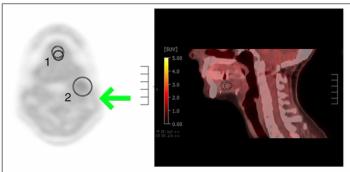
The PET radiotracer JBS-003 (18F-fluoromisonidazole) is currently being evaluated in a phase 3 randomized trial for facilitating de-escalation of radiation therapy in patients with HPV-positive oropharyngeal carcinoma.
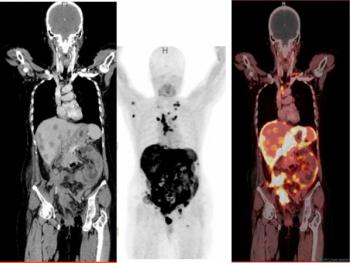
In comparison to contrast-enhanced CT, FAPI PET was associated with over 27 percent higher sensitivity for peritoneal carcinomatosis in the small bowel and 53 percent higher sensitivity in the upper abdomen, according to a new study involving 200 women with primary ovarian carcinoma.
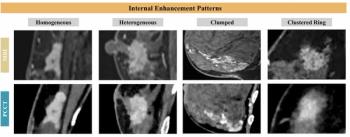
New research suggests that photon-counting CT provides comparable sensitivity to breast MRI for lesion characterization, higher accuracy than MRI for nodal metastasis and lower detection of microcalcifications in comparison to full-field digital mammography.

In a recent episode of our Molecular Imaging in Focus series, Sharmila Dorbala, MD, MPH, discusses phase 3 study findings on the use of the PET/CT radiotracer 124I- evuzamatide for overall detection of cardiac amyloidosis as well as the subtypes light-chain amyloidosis (AL) and transthyretin amyloidosis (ATTR) cardiac amyloidosis.
Catch up on the most-well viewed radiology content in August 2026.

Catch up on the top AI-related news and research in radiology over the past month.

Catch up on a variety of FDA news in radiology from the past week.
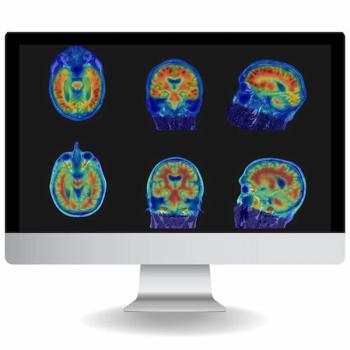
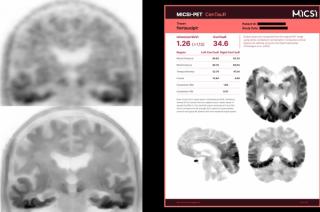
The AI-powered software NeuroQuant PET reportedly offers automated quantification and structured reporting and facilitates evaluation of brain scans with multiple amyloid PET radiotracers.
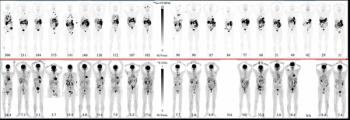
Preliminary research with the PET radiopharmaceutical 68Ga-NYM096 has demonstrated a 95.7 percent accuracy rate in patients with primary clear cell renal cell carcinoma (ccRCC) and a significantly higher mean SUVmax in the most active lesions in comparison to 18F-FDG.
Catch up on the latest contrast-enhanced mammography research, CT insights, MRI studies and FDA approvals in PET imaging with our Weekly Scan.
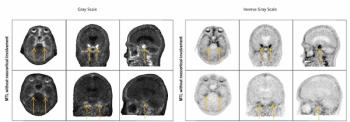
Recent positron emission tomography (PET) studies with florquinitau F 18 injection (Tauklarify) demonstrated inter-reader agreement ranging between 86 to 92 percent in evaluating patients for Alzheimer’s disease.
In a recent episode of our “Molecular Imaging in Focus” series, Martin Pomper, MD, PhD, discussed the origin of PSMA PET, shared his perspective on non-PSMA targets in prostate cancer and offered his thoughts on the potential promise of emerging theranostics.
Catch up on the top radiology content of the past week.

Based on results from the phase III PSMAddition trial, the expanded approval may nearly double the number of patients with prostate cancer who can be treated with Pluvicto.
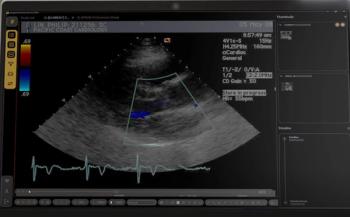
Offering rapid loading and viewing access for CT, MRI, ultrasound, PET imaging and mammograms, the ImageGrid® StreamVue platform can be integrated into existing PACS environments at hospitals and imaging centers.

Catch up on the most-well viewed radiology content in July 2026.
Catch up on the top radiology content of the past week.
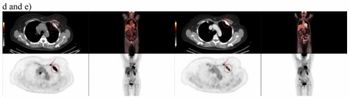
In a comparative study involving 51 women who had systemic treatment for metastatic breast cancer, researchers found that all FDG-PET scans identified measurable target lesions according to PERCIST criteria in comparison to 35 percent of CT scans as per RECIST 1.1 criteria.
Advertisement
Advertisement
Trending on Diagnostic Imaging
1
FDA Clears First MRI-Derived AI Software for Assessing Breast Cancer Recurrence Risk
2
Diagnostic Imaging's Weekly Scan: October 11 — October 17
3
What a Large Prostate MRI Study Reveals About AI and Unassisted Radiologist Assessment
4
How Photon-Counting CT Helps Us Recognize that Coronary Stenosis is Just One Piece of the Puzzle
5