Register Now: Image-Based Risk: The Next Frontier in Breast Cancer Screening
|Articles|January 22, 1997

HCFA releases IVUS payment policies

The Health Care Financing Administration has established reimbursementpolicies covering physicians for the use of intravascular ultrasound(IVUS) during therapeutic interventions, according to IVUS developerEndosonics of Rancho Cordova, CA. The policies

The Health Care Financing Administration has established reimbursementpolicies covering physicians for the use of intravascular ultrasound(IVUS) during therapeutic interventions, according to IVUS developerEndosonics of Rancho Cordova, CA. The policies became effectiveJan. 1.

While third-party payors are increasingly reimbursing for IVUS,the HCFA policies represent the first nationwide healthcare policydecision in the U.S. granting reimbursement to physicians forusing the procedure, the company said.

Under the new policies, physicians can select from six differentcodes for IVUS, such as IVUS for one vessel and then subsequentvessels. In addition, there are also codes for coronary or peripheralvessels.

Guidelines for computing physician reimbursement vary acrossthe nation based on local service cost factors. Current indicationsare that the average reimbursement levels for coronary usage willrange from $95 to $254 for the first vessel and from $74 to $180for each subsequent vessel, depending on the service location(in hospital or outpatient), according to Endosonics.


Related to this article

Key Sessions of Interest for Radiologists at the Upcoming HLTH USA Conference
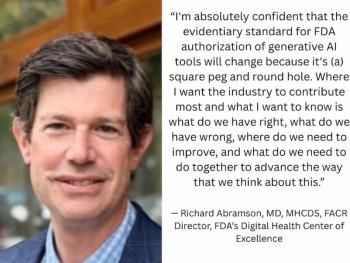
How will generative AI software be evaluated by the FDA in the future? What’s next for point-of-care ultrasound? What steps have been successful in facilitating adoption of AI applications across enterprise systems? Leaders in radiology and health care will be discussing these topics and more at the upcoming HLTH USA conference.

Current Perspectives on Integrating AI into Radiology
In a recent interview with Diagnostic Imaging, Joseph Cavallo, MD, MBA, offered insights on post-deployment monitoring with AI, the potential for improved workflow efficiency and the ongoing challenge of balancing essential clinical skills and AI literacy in the training of radiology residents and fellows.