Catch up on a variety of FDA news in radiology from the past week.
Scanner geared toward improved patient experience and image quality.
CHICAGO - Radiologists who image claustrophobic patients or those who are overweight now have a new CT scanner option that can improve patient comfort and experience without compromising image quality.
During this year’s annual meeting of the Radiological Society of North America in Chicago, Hitachi Medical Systems introduced its largest CT scanner - the SCENARIA View. The system received 510k clearance from the U.S. Food & Drug Administration in September.
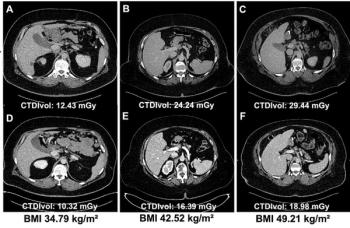
Using Hitachi’s Intelli IPV technology, the scanner offers up to an 83-percent dose reduction, as well as a significant drop in noise. It can also complete a whole-body image in less than a half-second.
According to company information, the scanner offers three unique features - an 800mm bore, a 500-pound table capacity, and an 84kw generator. These characteristics not only offer patients a more open experience, potentially decreasing their anxiety, but they also position SCENARIA View as the CT scanner of choice for patients who are overweight. The wider bore - the largest in the industry - and higher-capacity bed can accommodate larger patients, and the more powerful generator can penetrate deeper into the body for more accurate images.
In addition, the table offers a lateral shift of 10 centimeters in either direction, 200mm total. Technicians can use this feature to more easily maneuver patients to most correctly position the anatomy in the center of the scan.