Register Now: Image-Based Risk: The Next Frontier in Breast Cancer Screening
|Articles|October 5, 2011

Q&A: Maximizing Profits in Hospital-Based Radiology Practices, Part 4

In the fourth of a four-part series, Medical Management Professionals Inc.'s Jeff Fowler gives advice on selecting a revenue cycle management partner.

Increased regulations and higher fixed costs have many private radiology clinics across the U.S. choosing to affiliate with local hospitals or healthcare systems. Doing so, however, has raised new questions on the revenue side. Does it become easier or more difficult for a radiology practice to maximize its financial efficiency once it joins a larger healthcare system? What are the pitfalls - and the opportunities?

In this four-part series, representatives from Medical Management Professionals Inc., an Atlanta-based company that partners with ZirMed to provide billing services and revenue cycle management and practice management solutions to hospital-based doctors and practices, discuss operations, HIPAA 5010 and ICD-10 implementation, industry changes, and selection of an RCM partner.

Here, MMP’s Jeff Fowler talks about choosing an RCM partner.

What can a revenue cycle management partner provide that a purely in-house billing department can’t?

An RCM partner can provide overall industry expertise and depth of resources that a stand-alone practice does not have access to. It can also provide economies of scale by acquiring new technologies and looking for ways to improve efficiencies; an individual practice simply cannot afford to do that or does not have the ability to invest in it.


How does your company quantify the efficiencies that an RCM partner brings - for example, fewer denied claims and lower accounts receivables?

Historically, an RCM partner will improve revenues by at least 3 to 5 percent, net of billing costs. This is due to improvements in all phases of the billing process - from implementing extensive charge capture processes, to improved coding and faster claim submission, to advanced denial management tools, streamlined payment processing, and focused A/R follow-up, etc.

What do you tell radiology practices they should look for in an RCM partner?

Practices should seek a company with extensive radiology billing expertise that is using the latest industry standard radiology-specific billing technology. As well, an RCM partner should have professionals on staff who can provide the individual client service and feedback needed for a group to be successful. Extensive reporting tools and easy access to data are also critical in today’s environment.

Jeff Fowler is a director of client development with Medical Management Professionals, Inc. (MMP) in its East and South regions. Fowler has more than 20 years of expertise in the healthcare industry and possesses work experience in healthcare information systems and practice management services. He graduated from the University of the South (Sewanee).

Click here for Part 1 of this Q&A series on practice operations.

Click here for Part 2 of this Q&A serioes on HIPAA 5010 and ICD-10.

Click here for Part 3 of this Q&A series on changes in the imaging industry.


Related to this article

Key Sessions of Interest for Radiologists at the Upcoming HLTH USA Conference
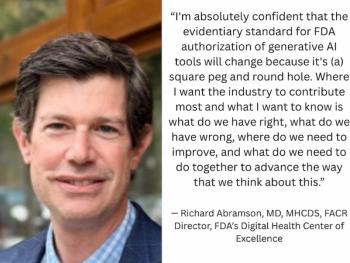
How will generative AI software be evaluated by the FDA in the future? What’s next for point-of-care ultrasound? What steps have been successful in facilitating adoption of AI applications across enterprise systems? Leaders in radiology and health care will be discussing these topics and more at the upcoming HLTH USA conference.
Current Perspectives on Integrating AI into Radiology
In a recent interview with Diagnostic Imaging, Joseph Cavallo, MD, MBA, offered insights on post-deployment monitoring with AI, the potential for improved workflow efficiency and the ongoing challenge of balancing essential clinical skills and AI literacy in the training of radiology residents and fellows.