Register Now: Image-Based Risk: The Next Frontier in Breast Cancer Screening
|Articles|May 30, 2012

Radiologists Losing Money with Incomplete US Documentation

Radiologists may be losing income through incomplete physician documentation in abdominal ultrasounds, according to a JACR study.

Radiologists may be losing income through incomplete physician documentation in abdominal ultrasounds, according to a study published in the June issue of Journal of the American College of Radiology.

Using a coding and billing database and natural language processing software, researchers reviewed nearly 12.7 million radiology reports from 37 practices to identify and analyze abdominal ultrasound reports. A total of 336,062 abdominal ultrasounds were identified. The exams were categorized as complete or limited, based on standard Current Procedural Terminology (CPT) criteria. Incomplete exams were sub-categorized according to which documentation elements were included.

Richard Duszak Jr., MD, of The University of Tennessee Health Science Center in Memphis, and colleagues found that 75.1 percent of the reports documented all eight elements for CPT coding as complete examinations, 7.7 percent documented seven elements, 5.6 percent documented six elements, 4.8 percent documented five elements, and 13.5 percent documented four or fewer elements. The researchers found that the spleen was the most frequent element neglected at 41.2 percent.

Not all organs can be included in the reports, as in cases of absent organs (gallbladders, for example), so the researchers took this into account when determining their documentation deficiency model.

Incomplete reports and undercoding could result in 2.5 percent to 5.5 percent of lost income, researchers found. They also concluded that structured reporting might improved documentation.


Related to this article

Key Sessions of Interest for Radiologists at the Upcoming HLTH USA Conference
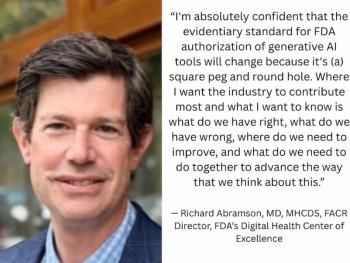
How will generative AI software be evaluated by the FDA in the future? What’s next for point-of-care ultrasound? What steps have been successful in facilitating adoption of AI applications across enterprise systems? Leaders in radiology and health care will be discussing these topics and more at the upcoming HLTH USA conference.
Current Perspectives on Integrating AI into Radiology
In a recent interview with Diagnostic Imaging, Joseph Cavallo, MD, MBA, offered insights on post-deployment monitoring with AI, the potential for improved workflow efficiency and the ongoing challenge of balancing essential clinical skills and AI literacy in the training of radiology residents and fellows.