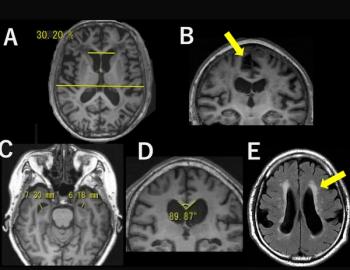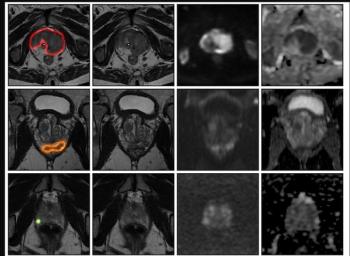

Catch up on the latest imaging research presented at the recent American Society for Radiation Oncology (ASTRO) Annual Meeting.
Company contemplates possible ISO acquisitionA high-ranking U.S. Diagnostic executive predicts that the explosivegrowth that propelled his company from obscurity to market leadershipin the imaging services industry will continue through next
A high-ranking U.S. Diagnostic executive predicts that the explosivegrowth that propelled his company from obscurity to market leadershipin the imaging services industry will continue through next year.
USDL president and COO Joseph Paul said that, if examined ona pro forma basis (also called run rate), USDL would ring up morethan $200 million in revenue this year, providing the performanceof all its properties were considered. In reality, revenues willbe close to $110 million.
This performance almost guarantees that USDL will soon surpassHealth Images as the nation's largest imaging services provider,according to Paul. By the end of 1997, the company could own morethan 150 centers.
"The pace we've generated is not going to slow down. It'sgoing to continue, if not increase," he said.
USDL's acquisitive ways continued in October, with two newdeals adding five more imaging centers to the West Palm Beach,FL, company.
On Oct. 24, USDL secured a definitive agreement to acquirefive multimodality outpatient diagnostic imaging centers fromDayton Medical Imaging in Dayton, OH. The five facilities, locatedin and around Dayton, will generate about $12 million in salesand $4.5 million in pre-tax income this year, according to thecompany.
The Dayton deal was announced three days after USDL boughtthree facilities in the boroughs and suburbs of New York. Themultimodality services are Gramercy MRI in New York City, NarrowsMRI in Brooklyn, and Metropolitan Imaging in Garden City, NY.Their combined revenues will be about $6 million this year.
From March to up until these deals were made, USDL had grownfrom 17 centers to 61. The industry began to seriously take noteof the company in June, when it edged out Diagnostic Imaging Servicesof Los Angeles with a successful last-minute bid for San Diego-basedMedical Imaging Centers of America (SCAN 7/31/96). If stockholdersapprove that takeover this week as expected, USDL will grow byanother 17 fixed and six fee-for-scan sites. USDL has also announcedthe acquisition of three more centers in San Antonio, TX, whichwill raise its total to 87 centers.
After the $36 million MICA deal closes, the company will stillhave $46 million available for more acquisitions, Paul said. Thatsum excludes another $15 million in untapped bank credit thatcould be used to fuel growth, he noted.
USDL's immediate plans call for additional centers to add tothe firm's existing market concentrations in Houston, San Antonio,Jacksonville, FL, and southern California, Paul said.
Also on the plate is a possible acquisition of an independentservice organization. USDL maintains about a quarter of its multimodalityequipment inventory on an in-house basis, Paul said. As the companygrows, he would not be surprised if USDL bought a regional orsubregional ISO, he said.