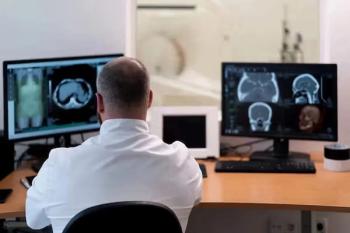
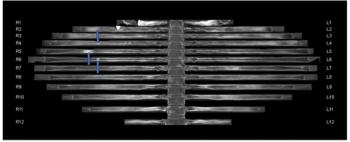
The use of adjunctive CT bone reading software in women with breast cancer detected between 8 to 22 percent more metastatic lesions for reviewing radiologists and reduced CT interpretation time by 50 percent or more, according to a new study.
Who coined the term PACS? The question surfaces in conversations between denizens of medicine during lulls in RSNA sessions. The concept of PACS as a digital image communication and display system, though not the name itself, goes back to 1979. Heinz
Who coined the term PACS? The question surfaces in conversations between denizens of medicine during lulls in RSNA sessions.
The concept of PACS as a digital image communication and display system, though not the name itself, goes back to 1979. Heinz U. Lemke, a professor of computer graphics and computer-assisted medicine at Technische Universitat Berlin, presented a paper, "A network of medical workstations for integrated word and picture communication in clinical medicine," at the sixth conference of the Society for Computer Applications in Radiology in March of that year.
The term "digital radiology" was first introduced in the early 1970s by Dr. Paul Capp, according to H.K. Huang, director of radiology informatics at the Keck School of Medicine, University of Southern California ("PACS: Basic Principles and Applications," Wiley-Liss, 1999). Lack of necessary technology, however, kept the concept from becoming popular until the early 1980s.
The origin of the name "PACS" itself is more elusive.
"There's uncertainty about this," said Dr. Steven C. Horii, associate director, Medical Informatics Group in the department of radiology at University of Pennsylvania Medical Center. "I thought for years it was Sam Dwyer."
Indeed, in 1982, Dwyer and Dr. Andre Duerinckx, chief of radiology at VA North Texas Healthcare System, organized the first PACS conference, the "First International Workshop and Conference on Picture Archiving and Communications Systems (PACS) for Medical Applications," held under aegis of the Society of Photographic Instrumentation Engineers.
Dr. William R. Brody, president of Johns Hopkins University, and Dr. David E. Avrin, vice chair of clinical services in the department of radiology at the University of California, San Francisco, both say they first heard the term "Picture Archiving and Communication Systems" at that SPIE meeting in Newport Beach, CA.
In a special PACS issue of the Radiological Clinics of North America, Huang has credited Duerinckx with coining the term while putting the 1982 meeting together. But Dwyer gives credit to Judith M. Prewitt of the department of mathematics at Occidental College in Los Angeles.
"Prewitt proposed the term while working with Duerinckx and me, preparing for the first PACS meeting 18 years ago," he said.
Horii remembers Dwyer at the time didn't think that "Picture Archiving and Communication System" adequately conveyed all that the system does, and other terms were tried, to no avail.
Presumably, the rejected ideas included
?Picture your Assets Completely Spent;
?Picture Archiving and Capital System; and
?Property the Administrator Can't Sell.
Stay at the forefront of radiology with the Diagnostic Imaging newsletter, delivering the latest news, clinical insights, and imaging advancements for today’s radiologists.
Subscribe