|Articles|August 1, 1998

Portland hospital goes filmless after move

Portland hospital goes filmless after moveA large-scale Agfa PACS network is being used to provide a filmless radiology environment at a new location for Portland-based Doembecher Children's Hospital. The hospital moved this month to a new

Portland hospital goes filmless after move

A large-scale Agfa PACS network is being used to provide a filmless radiology environment at a new location for Portland-based Doembecher Children's Hospital. The hospital moved this month to a new facility on the Marquam Hill campus of Oregon Health Sciences University in Portland.

High-resolution workstations have been placed in radiology as well as pediatric and neonatal intensive care units, while 17 PC-based clinical review stations have been installed in clinics throughout the hospital, according to Ridgefield Park, NJ-based Agfa. An Agfa Drystar dry digital imager has been installed in case a hard copy of an image is required.

An Agfa archive handles image storage, while a RIS interface allows radiology reports to appear along with corresponding images. Work-flow management software provides prefetching of historical images and reports.

Related to this article

Foundation Model-Based Chest X-Ray AI Software Gets FDA Nod
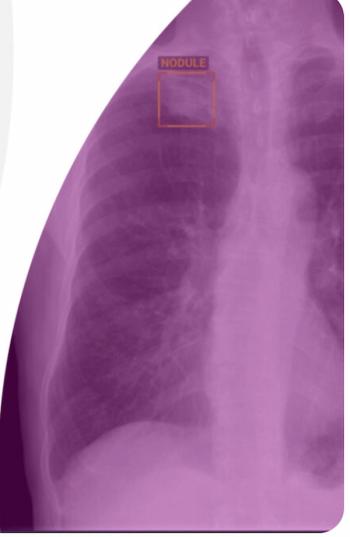
Reportedly one of the first FDA-cleared chest X-ray AI software platforms derived from a foundation model, the Chest Xray software facilitates detection and localization of lung nodules, pneumothorax, mediastinal abnormalities and other thoracic abnormalities.
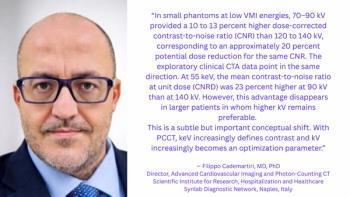
Does kV Still Matter in Photon-Counting CT?
Emerging research demonstrates the increasing stability of attenuation on clinically relevant VMIs with photon-counting CT and a redefined role of kV that may have implications for longitudinal quantitative CT.
CT Radiation Dosing: Where Things Stand, Part 2
In the second of a two-part interview, Kalpana Kanal, PhD, and Mahadevappa Mahesh, MS, PhD, FAPPM, FACR, discussed future directions for research on CT radiation dosing, including the potential of indication-specific diagnostic reference levels (DRLs).