|Articles|April 1, 2009
- Diagnostic Imaging Vol 31 No 4
- Volume 31
- Issue 4
Sequence depicts noncontrast MRA
Inhance 3D Velocity depicts colorcodedarterial and venous flow inbrain without administration ofcontrast media.
Advertisement
Inhance 3D Velocity depicts colorcoded arterial and venous flow in brain without administration of contrast media. Phase-contrast sequence, optimized to run on GE Healthcare’s high-end 3T Discovery MR750 and 1.5T Discovery MR450, is especially suited for use in patients who may be susceptible to gadolinium- linked nephrogenic systemic fibrosis. (Provided by GE Healthcare)
Articles in this issue
over 17 years ago
Dismal economy now hidesprosperity just around the bendover 17 years ago
Serial mummy scanscapture CT advancesover 17 years ago
Apple hypes iPhone radiology applicationover 17 years ago
FSE-Cube earns praise forquality 3T knee MR imagingover 17 years ago
ACR, ARRS linkup joinseducation, political goalsover 17 years ago
Radiation dose fears colorcoronary CTA guidelinesover 17 years ago
Heterotropic Ossificationover 17 years ago
Inquiry concludes first-year residents not ready for callover 17 years ago
Pericardial fat predicts riskof coronary artery diseaseover 17 years ago
Private imaging facilitiesgrew at hospitals' expenseAdvertisement
Related to this article

In the third of a three-part podcast episode, Wendie Berg, MD, PhD, FACR, FSBI, Manisha Bahl, MD, and Amy Patel, MD discuss recent developments with autonomous AI in breast imaging and share their perspective on the overall potential of AI to help mitigate the radiologist shortage.


In a recent interview, Amir Iravani, MD, FRACP, discussed the radiotherapeutic agent 177Lu-edotreotide and new dosimetry data from the COMPETE trial that was recently presented at the ASTRO conference.

While AI offers the lure of efficiency and cleaner writing in scientific research, maintaining the principles of authorship and intellectual engagement is perhaps more important than ever before.

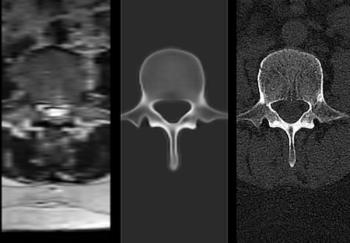
The cloud-based NextMR platform reportedly provides automated 3D bone images of conventional spine MRI images in less than 60 seconds.

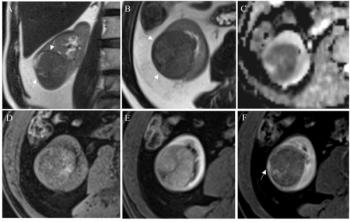
Incorporation of pseudocapsule presence into a modified Clear Cell Likelihood Score (m-ccLS) was associated with a greater than 11 percent higher AUC in differentiating benign and malignant renal masses on mpMRI, according to a new study.

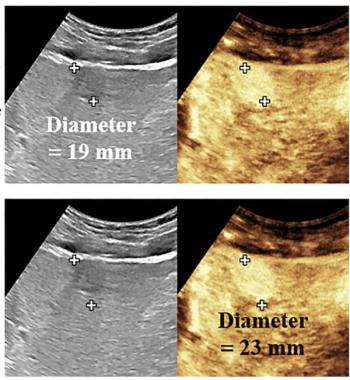
For patients with hepatocellular carcinoma (HCC), perfusion beyond tumor margin on contrast-enhanced ultrasound that exceeds gray-scale ultrasound tumor measurement by 5 mm is associated with a 76 percent higher risk of worse recurrence-free survival, according to newly published research.

In the latest episode of his “Interventional Radiology in Focus” series, Mina Makary, MD, discusses the utility of prostatic artery embolization for treating benign prostatic hyperplasia, key imaging considerations and pertinent technique pearls to help facilitate optimal outcomes.
Advertisement
Advertisement
Trending on Diagnostic Imaging
1
What New Dosimetry Data Reveals About 177Lu-Edotreotide for GEP-NET Treatment
2
FDA Clears AI-Powered Platform for Converting Spine MRIs to 3D Visualizations
3
The Reading Room Podcast: Current Perspectives, Challenges and Possibilities with AI in Breast Imaging, Part 3
4
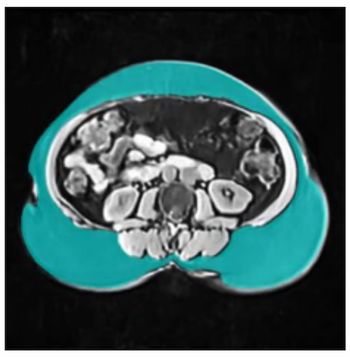
FDA Clears MRI-Based AI Software for Body Composition Analysis
5