Carch up on the top radiology content of the past week.
Carch up on the top radiology content of the past week.
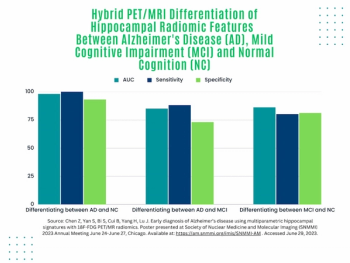
Employing a hybrid positron emission tomography (PET)/magnetic resonance imaging (MRI) model to assess predictive features of Alzheimer’s disease (AD), researchers noted a 100 percent sensitivity rate and a 93 percent sensitivity rate for distinguishing between AD and normal cognition, according to a study presented at the recent Society of Nuclear Medicine and Molecular Imaging (SNMMI) conference in Chicago.

In an interview at the recent Society of Nuclear Medicine and Molecular Imaging (SNMMI) conference in Chicago, Jeremie Calais, M.D., MSc discussed promising research findings for the use of the positron emission tomography (PET) imaging agent 89ZR-DFO-girentuximab for diagnosing clear cell renal cell carcinoma.
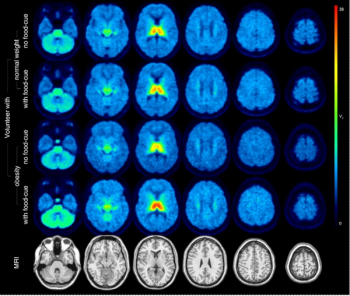
New research presented at the Society of Nuclear Medicine and Molecular Imaging (SNMMI) conference suggests that neuroreceptor differences in reactions to visual food cues between obese people and normal-weight individuals may improve the understanding of underlying mechanisms that contribute to obesity.

In a recent interview at the Society of Nuclear Medicine and Molecular Imaging (SNMMI) conference in Chicago, Phillip Kuo, M.D., Ph.D, F.A.C.R., discussed the potential impact of urinary activity with positron emission tomography (PET) radiopharmaceuticals, and new phase 3 study data that found low urinary activity with the use of the flotufolastat F 18 injectable agent in patients with prostate cancer.

Dr. Nadel was announced as president of SNMMI for the 2023-2024 term at the 2023 SNMMI annual meeting taking place in Chicago.
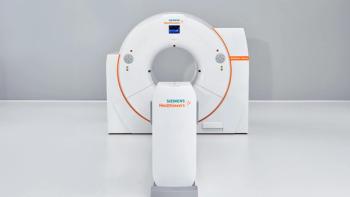
A next-generation positron emission tomography/computed tomography (PET/CT) system, Biograph Vision.X, reportedly offers enhanced spatial resolution and a time of flight of 178 picoseconds.

The research, which garnered “Abstract of the Year” honors at the Society of Nuclear Medicine and Molecular Imaging (SNMMI) conference in Chicago, demonstrates the potential of the targeted agent to significantly improve survival rates in AML.
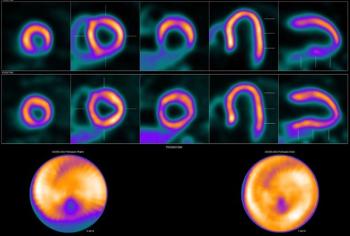
The novel tracer improved both sensitivity and specificity in the study group, of which more than 50 percent were obese and typically more difficult to obtain high-quality imaging.
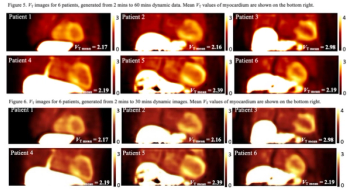
Kinetic modeling is important to understand how to obtain the best quantitative measurement of novel tracers in the organ of interest.

In a lecture at the Society of Nuclear Medicine and Molecular Imaging (SNMMI) conference, Matthew F. Covington, M.D., discussed key findings from recent studies that emphasize the possible prognostic role of positron emission tomography (PET) in de-escalating treatment for breast cancer.
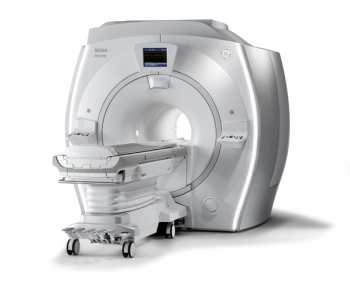
The newly launched Signa PET/MR Air device offers technological features that may bolster image quality and enhance diagnostic accuracy for diseases such as prostate cancer and Alzheimer’s disease.
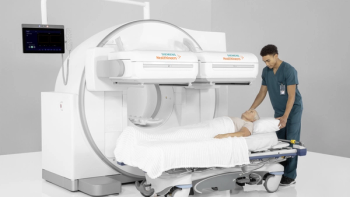
The newly FDA-cleared Symbia Pro.specta SPECT/CT Scanner, which reportedly offers a variety of enhanced capabilities including low-dose CT up to 64 slices and intuitive workflow guides, was launched at the Society of Nuclear Medicine and Molecular Imaging (SNMMI) 2022 Annual Meeting.

In what may be the first study to examine clinical and polysomnographic aspects of obstructive sleep apnea (OSA) and coronary microvascular disease (CMD), researchers said the frequency of OSA may be a significant factor in the development of heart disease and related complications.

Recently approved PMSA-targeted radiotracer can pinpoint biochemical recurrent prostate cancer in men with unhelpful standard imaging.
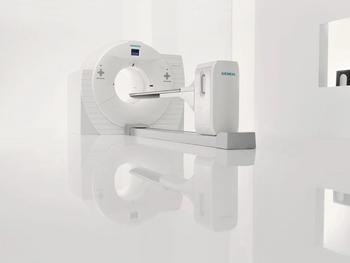
Patients with mild cognitive impairment who take lipophilic statins have a more than doubled risk of progressing to dementia.

Tested so far in animal models, this tracer could further the development of treatments for this life-threatening disease for which there are currently no therapies.
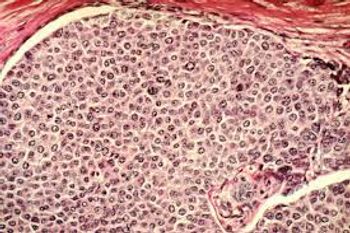
New therapy uses light from decaying radiopharmaceuticals to attack cancer cells from inside the body.

Using an external tracking device can lead to super-resolution that can potentially improve neurological disorder detection.

Use enables direct imaging of disease process.

Using advanced artificial intelligence can give patients a personalized assessment of their risk for significant events, such as heart attack or death.
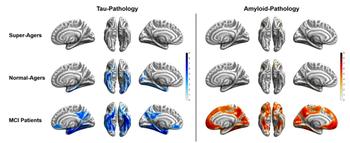
Images reveal older adults with above-average cognitive abilities have a resistance to tau and amyloid proteins.

Using 18F-DCPyL PSMA PET/CT can pinpoint more cancers in men who have biochemical failure with initial treatment.
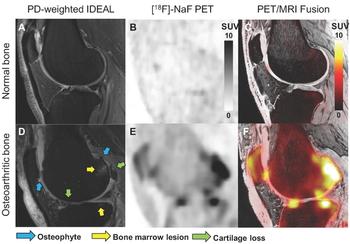
Using PET/MRI 18F NaF offers new functional measure for assessing degeneration of knee joints.
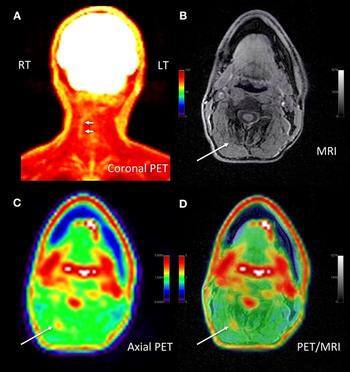
18F-FDG PET/MRI can identify pain generator locations, leading to changes in pain management.

Cardiac imaging with PET and MRI shows excellent diagnostic accuracy compared with SPECT-MPI.
Imaging visualizes rheumatoid arthritis inflammation in preclinical study.
PET finds hypometabolism in healthy brains that may indicate pre-Alzheimer’s disease.

PET imaging aids researchers in search for anti-nicotine vaccine, but shows there is still a lot of work to do.
SPECT/MR debuted this week at the SNMMI annual meeting as a new preclinical hybrid molecular imaging system with promises of higher resolution and lower dose.