Latest Conference Articles

Emerging PSMA PET Agent May Offer Improved Detection of Prostate Cancer

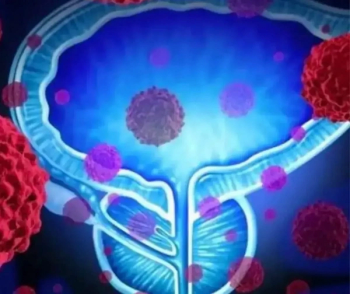
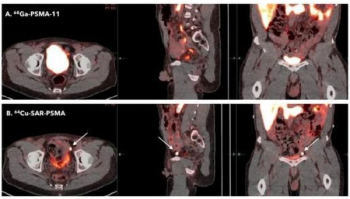
The PSMA PET agent 64Cu SAR-bisPSMA detected a higher number of prostate cancer lesions and had a significantly higher SUVmax and SUVmean than 68Ga PSMA-11 PET/CT, according to initial data from a prospective multisite study presented at the recent Society of Nuclear Medicine and Molecular Imaging (SNMMI) conference.
Emerging Innovations in Molecular Imaging

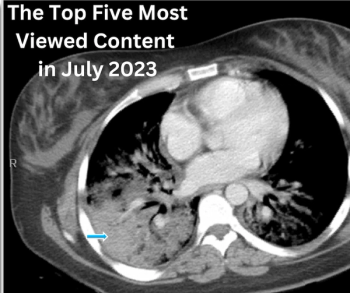
In interviews at the Society of Nuclear Medicine and Molecular Imaging (SNMMI) conference, researchers discussed the potential impact of ultra-high resolution brain positron emission tomography (PET) as well as emerging PET radiotracers for detecting coronary artery disease in obese patients and diagnosing clear cell renal cell carcinoma.

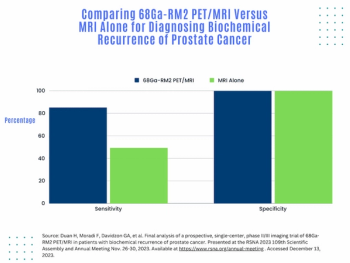
Can an Emerging PET Radiotracer Be a Viable Alternative to Multiparametric MRI for Detecting Prostate Cancer Recurrence?

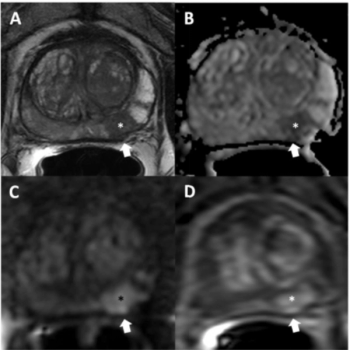
In an analysis of patients with intraprostatic/prostate bed findings of biochemical prostate cancer recurrence, the use of 18F-DCFPyL PET/CT led to an 82.3 percent cancer detection rate in comparison to 80 percent for multiparametric MRI, according to research presented at the recent Society for Nuclear Medicine and Molecular Imaging (SNMMI) conference.
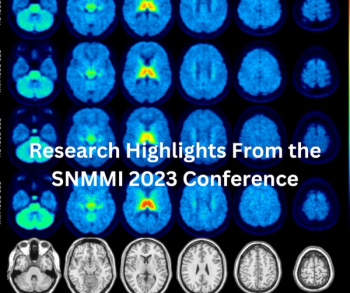
In a video interview, Hong Song, M.D., Ph.D., discussed retrospective research, presented at the recent Society for Nuclear Medicine and Molecular Imaging (SNMMI) conference, that evaluated the combination of artificial intelligence (AI)-based software and the PSMA agent piflufolastat F 18 to help quantify prostate cancer lesions and associations with biochemical progression-free survival.

Ultra-High Resolution Brain PET: A ‘Quantum Leap’ for Neuroradiology

In a recent interview at the SNMMI conference, Roger Lecomte, Ph.D., and Vincent Doyon discussed the advent of ultra-high resolution (UHR) brain positron emission tomography (PET), which reportedly offers double the spatial resolution of conventional PET and may facilitate earlier detection of Alzheimer’s disease and other conditions.

Can SPECT/CT Guidance Facilitate Personalized Dosing for Patients with Prostate Cancer?

The use of single-photon emission computed tomography (SPECT)/computed tomography (CT) to monitor the effectiveness of Lu-177-PSMA (Pluvicto) in treating prostate cancer led to a greater than 50 percent decrease in prostate-specific antigen (PSA) level for 60 percent of patients in a new study, noted Andrew Nguyen, MBBS, FRACP, AANMS, in a recent interview at the Society of Nuclear Medicine and Molecular Imaging (SNMMI) conference in Chicago.

Hybrid PET/MRI Assessment with Hippocampal Radiomics May Facilitate Early Alzheimer’s Diagnosis

Employing a hybrid positron emission tomography (PET)/magnetic resonance imaging (MRI) model to assess predictive features of Alzheimer’s disease (AD), researchers noted a 100 percent sensitivity rate and a 93 percent sensitivity rate for distinguishing between AD and normal cognition, according to a study presented at the recent Society of Nuclear Medicine and Molecular Imaging (SNMMI) conference in Chicago.

Can Molecular Imaging Provide Key Insights on Obesity Interventions?

New research presented at the Society of Nuclear Medicine and Molecular Imaging (SNMMI) conference suggests that neuroreceptor differences in reactions to visual food cues between obese people and normal-weight individuals may improve the understanding of underlying mechanisms that contribute to obesity.

A Closer Look at Urinary Activity and PET Radiopharmaceuticals for Prostate Cancer Imaging

In a recent interview at the Society of Nuclear Medicine and Molecular Imaging (SNMMI) conference in Chicago, Phillip Kuo, M.D., Ph.D, F.A.C.R., discussed the potential impact of urinary activity with positron emission tomography (PET) radiopharmaceuticals, and new phase 3 study data that found low urinary activity with the use of the flotufolastat F 18 injectable agent in patients with prostate cancer.

Deep Learning Detection of Mammography Abnormalities: What a New Study Reveals

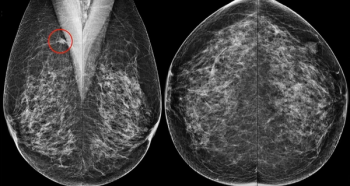
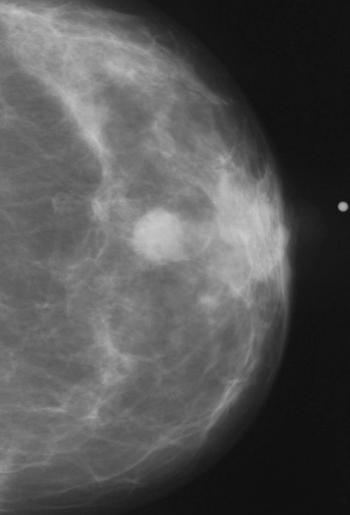
In multiple mammography datasets with the original radiologist-detected abnormality removed, deep learning detection of breast cancer had an average area under the curve (AUC) of 87 percent and an accuracy rate of 83 percent, according to research presented at the recent Society for Imaging Informatics in Medicine (SIIM) conference.
Expediting the Management of Incidental Pulmonary Emboli on CT

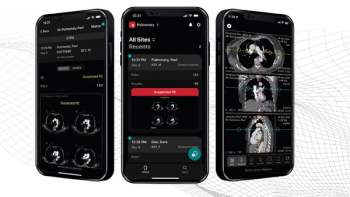
In a recent video interview from the Society for Imaging Informatics in Medicine (SIIM) conference, Ali Tejani, M.D., discussed pertinent insights on leveraging the value of adjunctive artificial intelligence (AI)-enabled triage software for computed tomography (CT) scans with radiology workflow improvements to achieve “clinically meaningful change” for patients with incidental pulmonary emboli findings.