
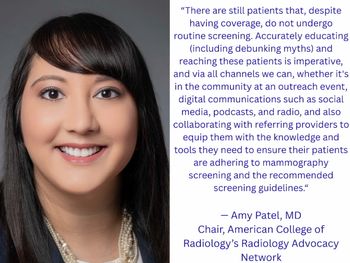
In a recent interview, Amy Patel, MD, discussed recent research on breast cancer screening, pertinent obstacles and keys to facilitating improved adherence with mammography screening.
In a recent interview, Amy Patel, MD, discussed recent research on breast cancer screening, pertinent obstacles and keys to facilitating improved adherence with mammography screening.
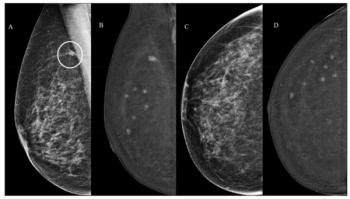
While acknowledging key limitations, the authors of a new literature review noted that contrast-enhanced mammography offers a viable alternative to conventional imaging and breast MRI for preoperative tumor evaluation and may have a significant impact on surgical management.
Emerging research demonstrates that those with total plaque volume > 750 mm3 have an 18.6 percent risk of MACE at four years in comparison to a 1.4 percent MACE risk for those with no plaque.
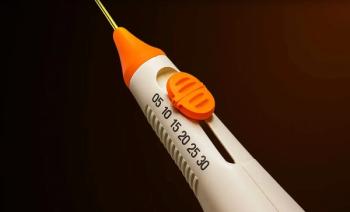
The Star RF Electrode and VIVA RF Electrode are reportedly the first devices to garner a specific cleared indication for benign thyroid nodule ablation.
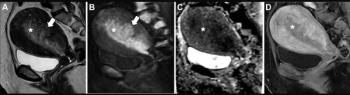
In comparison to the 2009 International Federation of Gynecology and Obstetrics (FIGO) staging system for endometrial cancer, researchers found that the updated 2023 FIGO system had over a 17 percent decrease for substage agreement between pelvic MRI and pathology findings.
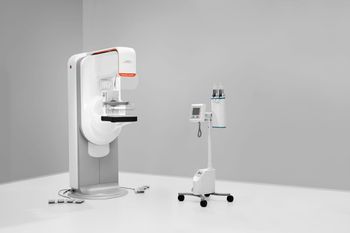
The Mammomat B.brilliant’s ClearCEM image reconstruction technique reportedly utilizes advanced algorithms to facilitate improved noise reduction and lesion enhancement.
Catch up on the most-well viewed radiology content in June 2026.

In recent interviews with Diagnostic Imaging, Jeremie Calais, MD, PhD, Michael Hofman, MBBS, FRACP, Heather Jacene, MD, Phillip Kuo, MD, and more shared their thoughts about the potential impact of theranostics and what excites them about the future of nuclear medicine.
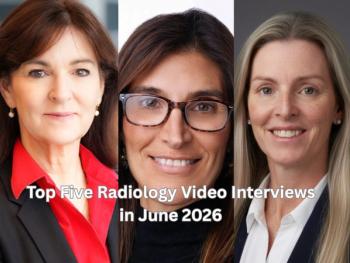
Catch up on the most well-viewed video interviews from Diagnostic Imaging in June 2026.
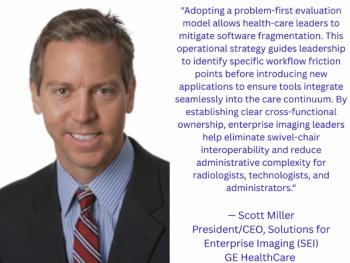
In order to fully take advantage of the capabilities of AI, this author emphasizes key principles and a framework for converting isolated technology solutions into reliable components of radiology workflows and operations.
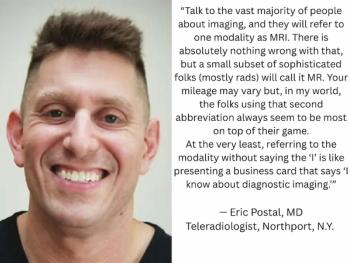
The words you say, how you say them and the tone in which you say them may impact perceptions of your credibility.

Catch up on a variety of FDA news in radiology from the past week.

Catch up on the top radiology content of the past week.
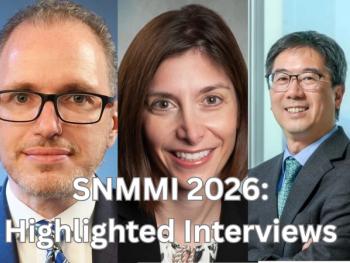
Catch up on recent interviews with Michael Hofman, MBBS, FRACP, Heather Jacene, MD, Phillip Kuo, MD, and more discussing new research and advances presented at the Society of Nuclear Medicine and Molecular Imaging (SNMMI) 2026 conference.
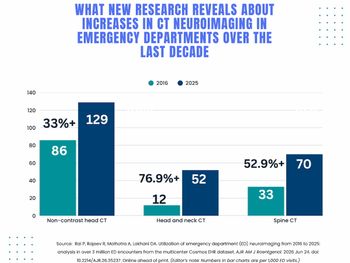
Researchers found that non-contrast head CT exams, head and neck CT exams and spine CT imaging increased by 33 percent, 76.9 percent and 52.9 percent, respectively, per 1,000 emergency department encounters over the last decade.
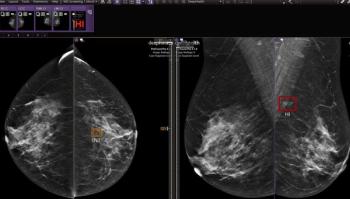
The new functionalities for the AI-enabled Breast Suite software include automated identification of breast arterial calcifications and integration of prior mammograms.

Catch up on the top AI-related news and research in radiology over the past month.
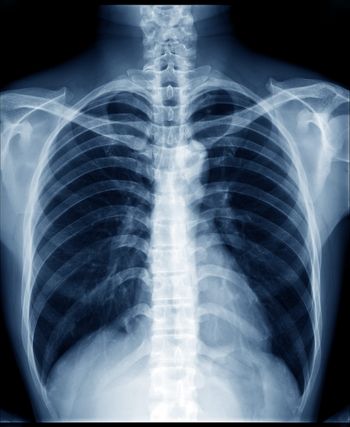
The First Read software provides preliminary drafting of radiology reports based on AI assessment of chest X-rays.

The Oncology Virtual Expert AI software reportedly provides semi-automated segmentation maps of brain tumors based on standard brain MRI scans.
In a recent interview discussing the SNMMI conference, Jeremie Calais, MD, PhD, shared his thoughts on emerging advances. a key mentor in nuclear medicine and combination therapy for prostate cancer.
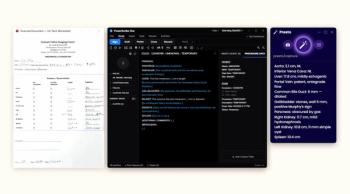
The newly launched HOPPR Presto Agent reporting platform can be integrated into existing radiology systems and AI models without the need for new software.

In a recent interview, Constance Lehman, MD, PhD, discussed newly published research demonstrating the dynamic capability of AI-based risk scores, drawn from screening mammograms, to facilitate risk-adaptive screening.

In a recent episode of our “Molecular Imaging in Focus” series, Surekha Yadav, MBBS, MD, discussed research presented at the SNMMI conference that showed significant advantages of PSMA PET over conventional imaging for detection of osseous oligometastatic prostate cancer (PCa).

The VascularAssist Occlusion Triage software reportedly demonstrated over a 90 percent sensitivity for detecting peripheral artery disease (PAD) on CT in clinical performance testing.
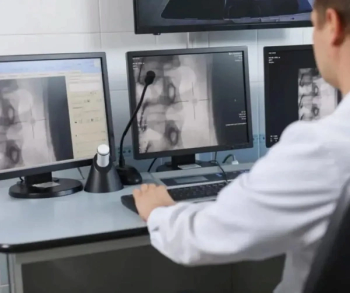
A combination of incentives and embrace of technology-enhanced efficiencies may facilitate underlying ‘autopilot’ motivations toward increased achievement in navigating radiology worklists.
Catch up on the top radiology content of the past week.
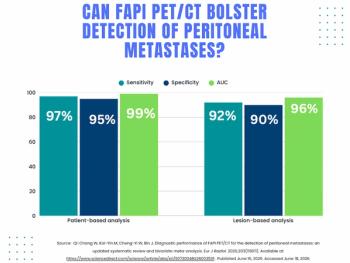
The use of FAPI PET/CT offered a 97 percent pooled sensitivity for detecting peritoneal metastases in a patient-based analysis in a new meta-analysis involving over 800 patients.
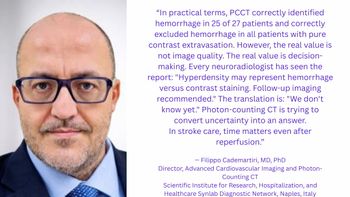
New research suggests that photon-counting CT may provide critical insight into a diagnostic dilemma that has challenged radiologists for decades.
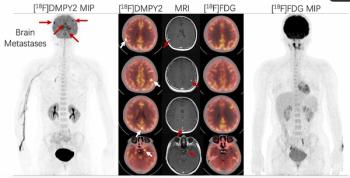
For patients with advanced melanoma, the melanin-targeted PET radiotracer (¹⁸F)DMPY2 offered superior detection of metastatic foci in the brain and liver in comparison to (¹⁸F)FDG, according to preliminary comparative research presented at the recent SNMMI conference.

In a recent interview, Mary L. Bouxsein, PhD, discussed challenges with access to dual-energy X-ray absorptiometry (DEXA) screening for osteoporosis, the emergence of biomechanical CT (BCT) and the potential impact of national Medicare coverage of BCT for bone mass measurement.