


Women's Health CT
Latest News
Advertisement
Latest Videos

CME Content



Advertisement
More News
Catch up on the top radiology content of the past week.
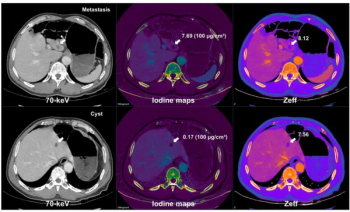
New research suggests the combination of multiparametric dual-energy CT and deep learning image reconstruction for liver metastases detection enables a 45 percent reduction in radiation dosing.
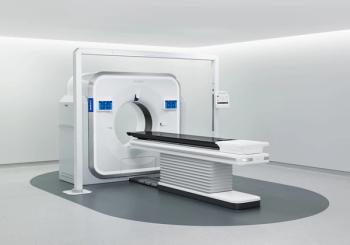
Facilitating increased efficiency in radiation therapy planning, the new Rembra RT and Areta RT computed tomography platforms reportedly offer 4D CT capabilities and image reconstruction speeds up to 106 images per second.
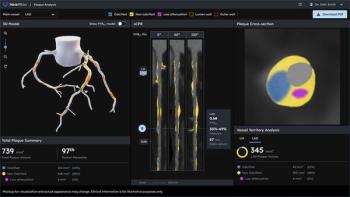
The updated Heartflow Plaque Analysis software reportedly offers enhanced 3D visualization of plaque type, volume and distribution based on coronary computed tomography angiography (CCTA) imaging.

In a recent interview, Alan Braverman, M.D., discussed challenges with the detection of aortic dissection, reviewed pertinent risk factors and offered insights on imaging that may facilitate earlier diagnosis of the life-threatening condition.

In a recent interview with Diagnostic Imaging, Noa Antonissen, M.D., and Colin Jacobs, Ph.D., discussed new research findings demonstrating robust risk stratification with a CT-based deep learning model for lung nodules as well as a 39.4 percent reduction in false positives in comparison to traditional classification.
Catch up on the top radiology content of the past week.
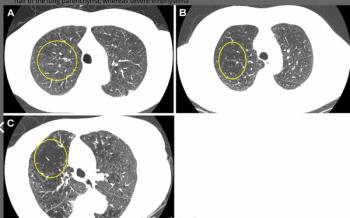
Researchers also found that low-dose chest CT detection of emphysema was associated with a 29 percent higher risk of all-cause mortality up to 25 years later, according to a study involving over 9,000 individuals with a history of smoking.
In a recent interview, Camille Simard, M.D., MSc, discussed findings from a new study assessing elevated risks of spontaneous pregnancy loss and congenital anomalies associated with CT exposure in the month prior to conception.
Catch up on the top radiology content of the past week.
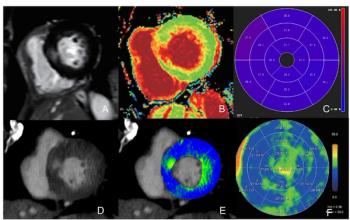
For myocardial extracellular volume quantification, single-phase and dual-phase photon-counting CT provided over 20 percent higher correlation with cardiac MRI in contrast to dual-phase energy-integrating detector CT, according to new research findings.
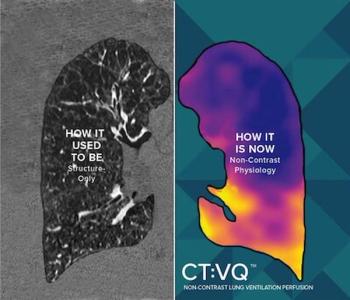
Offering the capability to convert a non-contrast chest CT into quantitative ventilation perfusion mapping, use of the CT:VQ software allows for additional Category III CPT reimbursement beyond the chest CT.
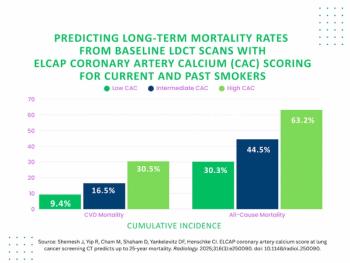
In a long-term follow-up analysis of the ELCAP CAC score for predicting cardiovascular mortality, over 30 percent of current or former smokers with high ELCAP CAC scoring on low-dose CT suffered cardiovascular disease death within a 25-year period.
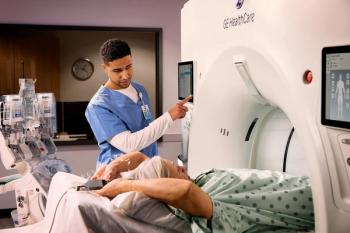
The Revolution Vibe computed tomography system reportedly facilitates quality low-dose imaging for cardiac exams in patients with arrhythmias, heavily calcified coronaries and stents.
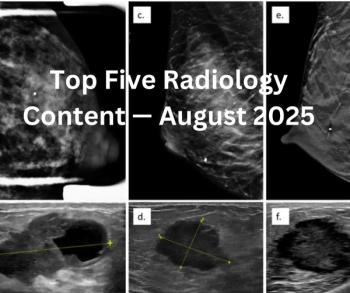
Catch up on the most-well viewed radiology content in August 2025.

Catch up on the top AI-related news and research in radiology over the past month.
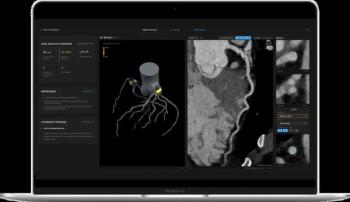
Use of the AI-powered Salix Coronary Plaque module, which offers detection of high-risk plaque within 10 minutes based off of CCTA scans, will reportedly qualify for $950 in Category 1 CPT reimbursement in 2026.
Catch up on the top radiology content of the past week.
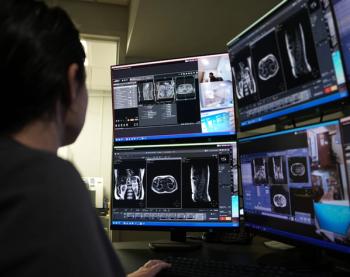
In addition to facilitating centralized scanning for a variety of imaging, the TechLive system may help ease the strain of technologist shortages and broaden access to advanced imaging exams.
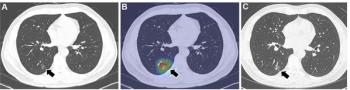
While a CT-based deep learning model demonstrated a 91 percent AUC for predicting lung cancer risk within one year, researchers noted other mixed results in a new study involving over 18,000 individuals.
Catch up on the most-well viewed radiology content in July 2025.
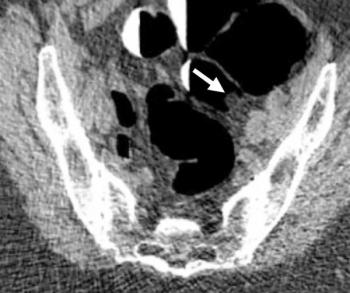
Computed tomography colonography (CTC) demonstrated a 91.6 percent positive predictive value (PPV) for polyps > 6 mm, according to new research involving over 9,000 patients who underwent CTC for primary asymptomatic colorectal cancer screening.
Catch up on the top radiology content of the past week.
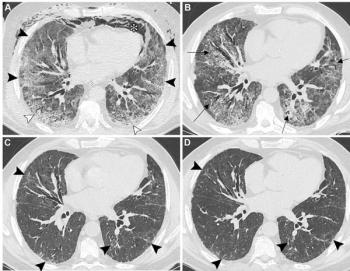
Developed by 21 thoracic radiologists, the new international consensus statement addresses appropriate indications, scan acquisition and keys to reporting for the use of chest CT imaging in evaluating for residual lung abnormalities from COVID-19.
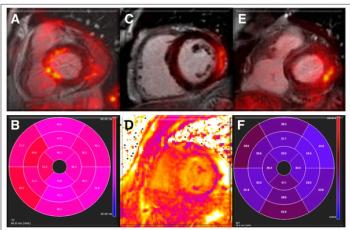
Study Reveals Significant Prevalence of Abnormal PET/MRI and Dual-Energy CT Findings with Long Covid
In a prospective study involving nearly 100 patients with Long Covid, 57 percent of patients had PET/MRI abnormalities and 90 percent of the cohort had abnormalities on dual-energy CT scans.
Advertisement
Advertisement
Trending on Diagnostic Imaging
1
MRI Research Reveals Strong Link Between Vascular Hyperintensity and Cerebral Edema in Patients with Acute Ischemic Stroke
2
Diagnostic Imaging's Weekly Scan: September 6 — September 12
3