



Women's Health CT
Latest News
Advertisement
Latest Videos


Shorts

1:00
Could AI Assessment of Adrenal Gland Volume on CT Provide Insight into Chronic Stress?
10 months ago
by
Shadpour Demehri, MD

0:41
Can AI Improve Coronary Plaque Quantification on CT for Patients Deemed to be at Low Risk?
10 months ago
by
Ibrahim Danad, MD, PhD

0:34
Emphasizing AI Plaque Quantification on CCTA
10 months ago
by
Fatima Rodriguez, MD
CME Content



Advertisement
More News
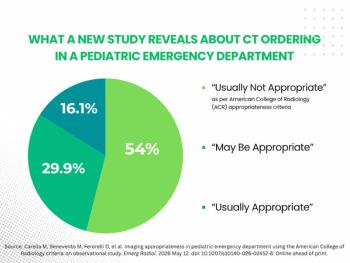
Study: More than Half of CT Requests in Pediatric Emergency Department are ‘Usually Not Appropriate’
In a study involving nearly 350 completed requests for CT scans at a pediatric hospital emergency department, researchers found that 54 percent were not appropriate according to American College of Radiology appropriateness criteria.
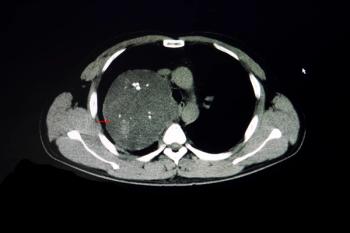
In a new capabilities analysis of 16 CE-marked AI software platforms for CT lung cancer screening, researchers found that only 6.7 percent of supporting peer-reviewed studies were prospective and that none of the studies assessed impact on patient outcomes.
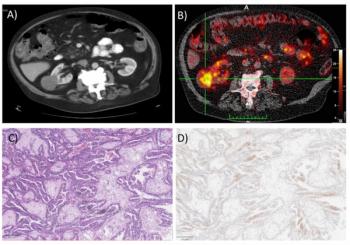
While previous research has demonstrated the capability of the PET/CT agent (89Zr)girentuximab for detecting clear cell renal cell carcinoma (ccRCC), a new analysis reveals a 98 percent positive predictive value (PPV) for detecting non-ccRCC renal cancers.
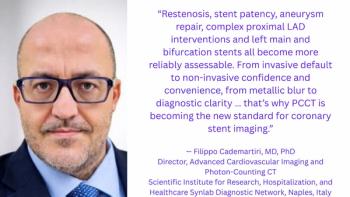
The benefits of photon-counting CT via ultra-high spatial resolution, reduced blooming artifacts and high temporal resolution allow characterization with confidence in coronary stent assessment.
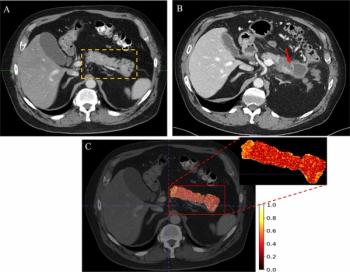
In an independent test set, a radiomic AI model demonstrated an 82 percent AUC for detecting pancreatic ductal adenocarcinoma on computed tomography (CT) scans at a median of nearly 16 months prior to clinical diagnosis.

Catch up on the top AI-related news and research in radiology over the past month.
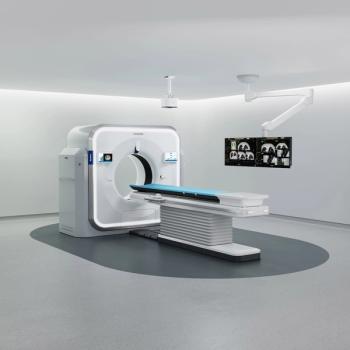
The Rembra CT reportedly facilitates high-throughput imaging for high-volume settings such as emergency departments and the Rembra RT and Areta RT platforms offer an extended 85 cm field of view and 4D CT to enable enhanced accuracy in tumor targeting.
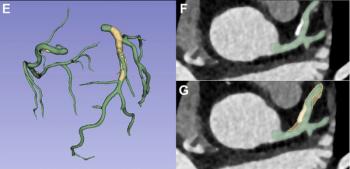
PlaqueSegNet, an emerging deep learning model for coronary plaque quantification based off CCTA exams, offered a greater than 90 percent intraclass correlation coefficient agreement with intravascular ultrasound (IVUS) and expert readers across four separate datasets.
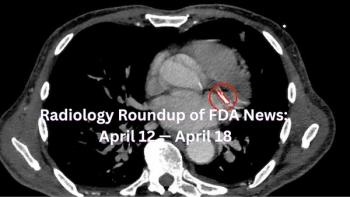
Catch up on a variety of new FDA clearances in radiology from the past week.
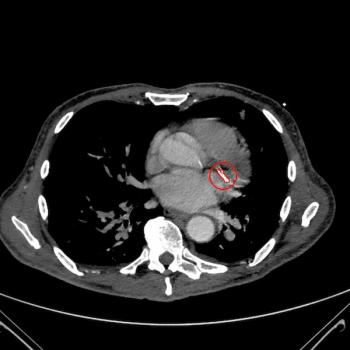
The Bunkerhill Contrast CAC and Bunkerhill Contrast AVC are reportedly the only AI-powered software modalities to garner 510(k) clearance for detection and quantification of coronary artery calcium and aortic valve calcium on contrast-enhanced CT scans.
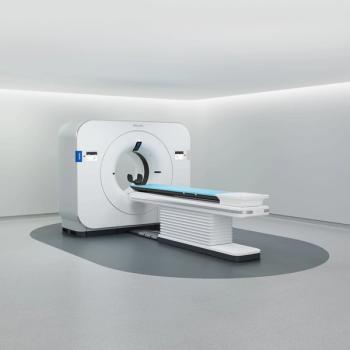
The Philips Spectral CT Verida system reportedly provides reconstruction of 145 images per second, allowing entire CT exams to appear in less than 30 seconds.
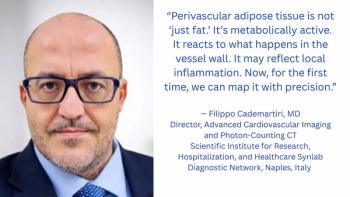
New research demonstrates the capability of photon-counting CT to go beyond stenosis and inflammation to offer precision mapping insights into the individualized metabolic activity of carotid perivascular adipose tissue.

Catch up on the top radiology content of the past week.
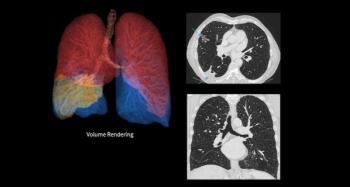
The CT-based True Definition DL software reportedly facilitates enhanced efficiency and high-resolution visualization for musculoskeletal, pulmonary and inner ear imaging.
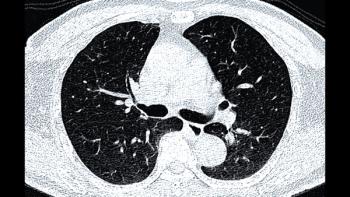
For people with a history of heavy smoking, detection of significant incidental findings (SIFs) on low-dose computed tomography (LDCT) screening scans was associated with a 13.89 per 1000 marginal risk difference for extrapulmonary cancer in contrast to those with no SIFs, according to a study involving over 26,000 people.
Catch up on the top radiology content of the past week.
Catch up on a variety of new FDA clearances and approvals in radiology from the past week.
Catch up on the top AI-related news and research in radiology over the past month.
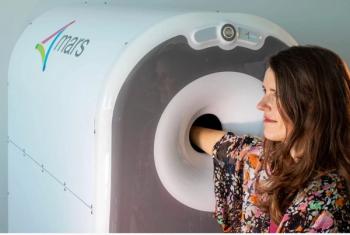
Offering high-resolution 3D imaging, the MARS Bioimaging Extremity Scanner System reportedly enhances the visualization of bone, soft tissue, blood vessels and metallic implants.
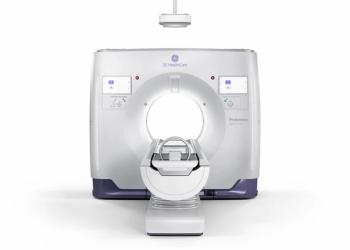
The Photonova Spectra photon-counting CT system reportedly offers a variety of features, including 8-bin energy resolution, rapid rotation speed and motion-free imaging.
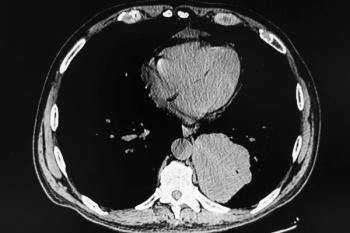
While smokers with negative baseline CT findings had a higher overall lung cancer risk than never smokers, the authors of a new study of over 30,000 people noted no elevated risk at two years.
Catch up on the top radiology content of the past week.
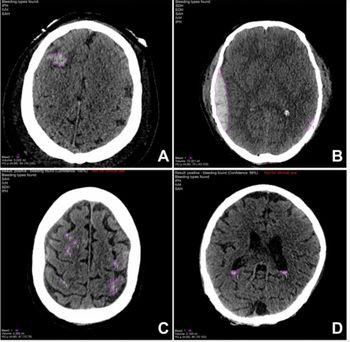
New study findings demonstrate that the deep learning software syngo.CT Brain Hemorrhage VB60 reportedly offers a 93.6 percent sensitivity as well as 99.2 percent negative predictive value for intracranial hemorrhage.
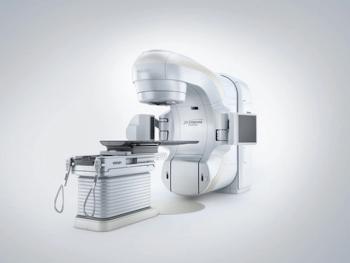
The expanded 510(k) clearance, which covers the TrueBeam, TrueBeamSTx, VitalBeam and Edge radiotherapy systems, may facilitate another treatment option for patients with osteoarthritis who have failed to get adequate pain relief from other treatment approaches.

More prominent honeycombing, reduced total ground glass opacity (GGO) and less pure GGO on CT scans each demonstrated 75 percent or higher AUCs for differentiating usual interstitial pneumonia (UIP) from non-UIP, according to new research.
Advertisement
Advertisement
Trending on Diagnostic Imaging
1
MRI Research Reveals Strong Link Between Vascular Hyperintensity and Cerebral Edema in Patients with Acute Ischemic Stroke
2
Diagnostic Imaging's Weekly Scan: September 6 — September 12
3