












Catch up on the top radiology content of the past week.
Catch up on the top radiology content of the past week.
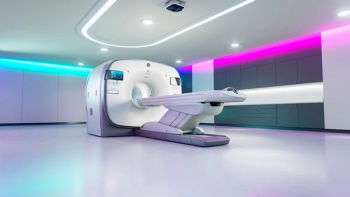
Precision DL, a deep learning-based software which will be available on GE HealthCare’s Omni Legend PET/CT device, reportedly increases the detectability of small, low-contrast lesions by 42 percent.
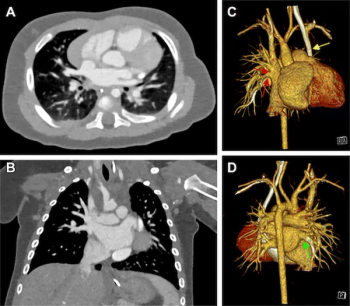
Photon-counting computed tomography (PCCT) significantly increased the signal-to-noise ratio (SNR) and the contrast-to-noise ratio (CNR) in comparison to dual-source CT (DSCT) at similar radiation dosing, according to a new study of over 100 children with suspected congenital heart defects.
Catch up on the top radiology content of the past week.

Catch up on the top AI-related news and research from the past month.
In what may be the first comparative study of the polygenic risk score and the computed tomography (CT)-derived coronary artery calcium (CAC) score for assessing coronary heart disease (CHD) risk, researchers found that the CAC score was associated with significant improvements in assessing and stratifying risk for the development of CHD in middle-aged to older adults.
Catch up on the top radiology content of the past week.
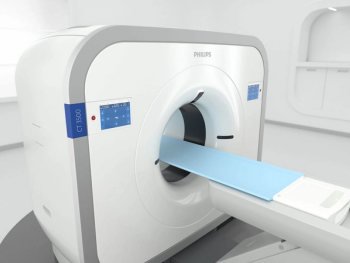
The artificial intelligence (AI)-enabled CT 3500 system reportedly reduces patient positioning time by 23 percent, improves low-contrast detectability by 60 percent and facilitates up to an 80 percent reduction in radiation dosing.
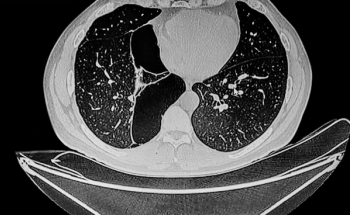
In a large retrospective study of 26,455 participants from the National Lung Screening Trial, low dose computed tomography (LDCT) exams revealed significant incidental findings (SIFs), ranging from emphysema to suspicious lesions, in 8,954 participants.
Catch up on the top radiology content of the past week.
Revising a March 2022 recommendation, the Food and Drug Administration (FDA) said thyroid monitoring for young children three years of age and under receiving iodinated contrast media (ICM) in relation to contrast-enhanced computed tomography (CECT) can now be reserved for those with risk factors including prematurity, low birth weight or conditions affecting thyroid function.
Catch up on the top AI-related news and research from the past month.
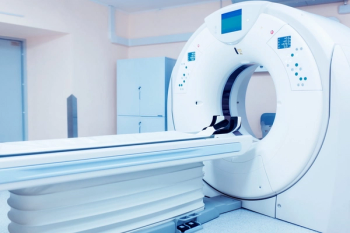
While one computed tomography (CT) scan appears to have no elevated cancer risk in pediatric patients, four or more pediatric exposures to CT scans are associated with increased risks for intracranial tumor, leukemia, and non-Hodgkin lymphoma, according to newly published research out of Taiwan.

Lamenting a lack of control over imaging requests from referring clinicians, this author suggests that a more collaborative approach between referrers and radiologists may facilitate more efficient use of imaging.
Catch up on the top radiology content of the past week.
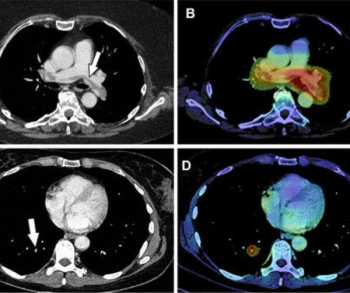
In a new study involving over 11,700 chest computed tomography (CT) scans in oncology patients, adjunctive artificial intelligence software demonstrated a sensitivity rate of 91.6 percent for incidental pulmonary embolism (IPE) and reduced median detection and notification time for IPE-positive scans from multiple days to one hour for a radiology department at a comprehensive cancer center.
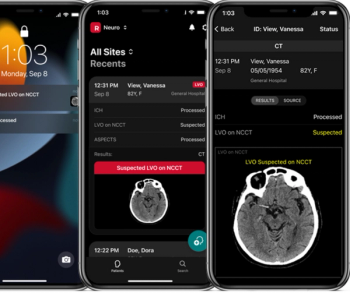
Powered by artificial intelligence (AI), the Rapid NCCT Stroke modality is reportedly the first medical device to gain FDA 510(k) clearance for detecting suspected large vessel occlusion and intracranial hemorrhage based on assessment of non-contrast computed tomography (NCCT).
Catch up on the top radiology content of the past week.

Review the case study and test your knowledge to make the correct diagnosis.
Catch up on the top radiology content of the past week.
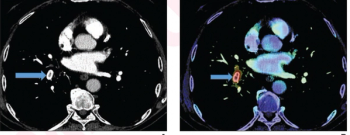
A recent study showed that artificial intelligence (AI)-based worklist reprioritization led to a mean reduction of 12.3 minutes in radiology report turnaround time for positive computed tomography pulmonary angiography (CTPA) exams that were positive for pulmonary embolism.
Catch up on the top radiology content of the past week.
Catch up on the top AI-related news and research in radiology over the past month.
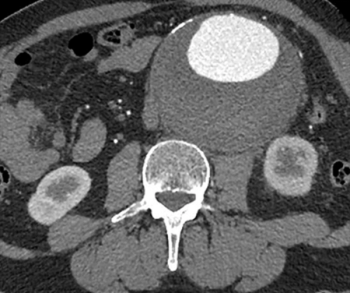
Viz AAA is reportedly the first artificial intelligence (AI)-enabled algorithm to garner FDA 510(k) clearance for the detection of abdominal aortic aneurysm.
Catch up on the top radiology content of the past week.