




Cardiac CT
Latest News
Advertisement
Latest Videos















Advertisement
More News
Catch up on the top radiology content of the past week.
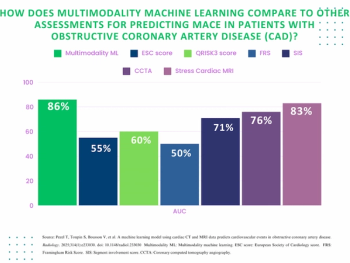
For patients with newly diagnosed obstructive coronary artery disease (CAD), a multimodal machine learning model offered an 86 percent AUC for predicting MACE, which was 10 percent higher than CCTA alone and over 35 percent higher than the Framingham Risk Score.
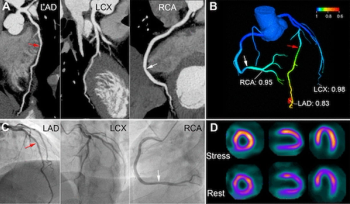
For patients with suspected or known coronary artery disease (CAD) without percutaneous coronary intervention (PCI), researchers found that those with a normal CTA-derived quantitative flow ratio (CT-QFR) had a 22 percent higher MACE-free survival rate.
Catch up on the most-well viewed radiology content in November 2024.
Catch up on the top radiology content of the past week.
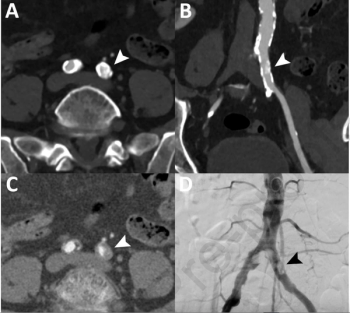
New research demonstrates that photon-counting computed tomography angiography (PC CTA) provides sensitivity, specificity, and accuracy rates of 90 percent and higher for the detection of stenotic disease in patients with peripheral artery disease (PAD).
Catch up on the top radiology content of the past week.
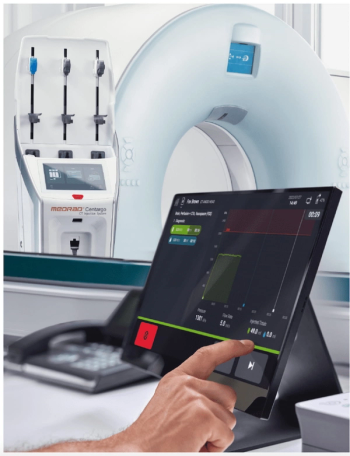
Facilitating optimal use of contrast, the Medrad Centargo CT Injection System reportedly combines user-friendly features with workflow efficiency for high-volume CT departments.

In recent interviews, Eric Rohren, M.D., and Krishna Nallamshetty, M.D., discuss the potential of abdominal aortic aneurysms (AAAs) to progress into life-threatening consequences and an emerging AI-powered tool that may bolster adherence to best practice recommendations in radiology reporting of incidental AAA findings on CT and MRI.
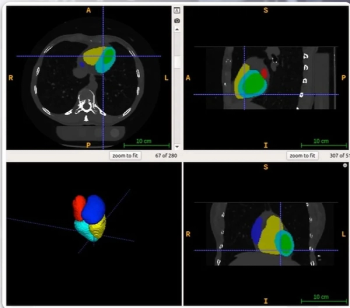
The AI-enabled AutoChamber software also garnered the FDA’s breakthrough device designation for opportunistic detection of enlarged heart chambers on non-contrast CT scans.
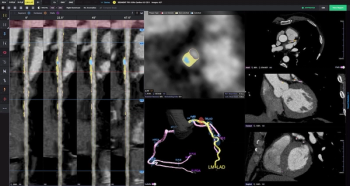
Al-powered quantitative assessment of coronary CT angiography (CCTA) revealed that non-calcified plaque volume was over 3.5 times higher in patients who had major adverse cardiovascular events, according to multicenter research presented at the Transcatheter Cardiovascular Therapeutics (TCT) conference.
Catch up on the top radiology content of the past week.
Catch up on the top AI-related news and research in radiology over the past month.
The Ezra Blueprint scan reportedly includes quantitative brain measurements, coronary calcium scoring (CAC) and a full-body MRI that provides screening for over 500 conditions.
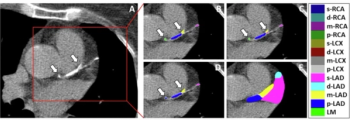
For segment-level coronary artery calcium (CAC) scoring, a deep learning model had an accuracy rate of 73 percent for assigning calcifications to coronary artery segments and achieved a micro-average specificity of 97.8 percent.
Catch up on the top radiology content of the past week.
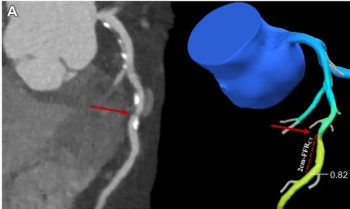
In nearly 5,300 patients with suspected coronary artery disease (CAD), adjunctive use of CT-based fractional flow reserve software significantly reduced the 90-day invasive coronary angiography (ICA) rate in comparison to unassisted use of coronary computed tomography angiography (CCTA).
Medicare to Cover AI-Powered, CCTA-Based Coronary Plaque Analysis and Quantitative Coronary Topography
Published: | Updated:
Four Medicare administrative contractors (MACs) will provide coverage of AI-enabled coronary plaque analysis and quantitative coronary tomography assessment of coronary computed tomography angiography (CCTA) for Medicare beneficiaries starting in November 2024.
Catch up on the top radiology content of the past week.
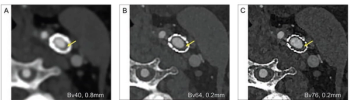
Researchers found that ultra-high resolution photon-counting significantly enhanced visualization of small vessels and facilitated improved reduction of blooming artifacts for head and neck computed tomography angiography (CTA) scans.
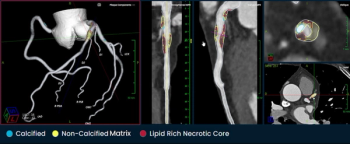
Through analysis of coronary computed tomography angiography (CCTA) images, the PlaqueIQ software provides quantification and classification of atherosclerosis, a common cause of myocardial infarction (MI) and ischemic stroke.
Catch up on the top AI-related news and research in radiology over the past month.
Catch up on the top radiology content of the past week.
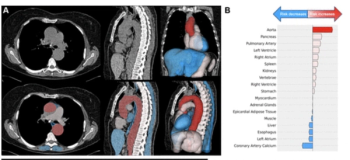
Emphasizing multi-structure segmentation and feature extraction from chest CT scans, an emerging AI model demonstrated an approximately 70 percent AUC for predicting significant incidental extrapulmonary findings as well as two-year and 10-year all-cause mortality.
Catch up on the top radiology content of the past week.
Advertisement
Advertisement
Trending on Diagnostic Imaging
1
FDA Clears MRI-Based AI Software for Prognostic Evaluation of Patients with Mild Cognitive Impairment
2
Can MRI-Based AI Have an Impact in Reducing Unnecessary Prostate Biopsies?
3
The Reading Room Podcast: A Closer Look at New Research on 177Lu-Edotreotide for Treating GEP-NETs
4
FDA Clears AI-Enabled FFR-IQ Software for Estimating Fractional Flow Reserve from CCTA
5