




Cardiac CT
Latest News

Advertisement
Latest Videos











Advertisement
More News
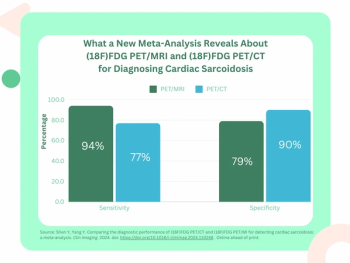
The researchers found that (18F)FDG PET/MRI had a 17 percent higher pooled sensitivity rate for cardiac sarcoidosis in contrast to (18F)FDG PET/CT.

While contrast media extravasation is a rare complication, there can be varying degrees of severity. Accordingly, this author reviews possible causes of this complication, prevention principles and pertinent considerations in addressing this complication when it does occur.
Catch up on the most-well viewed radiology content in July 2024.
Catch up on the top radiology content of the past week.
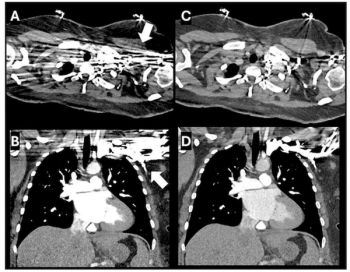
New research looking at photon-counting computed tomography (PCCT) demonstrated significantly reduced variation and tracheal air density attenuation with polyenergetic reconstruction in contrast to monoenergetic reconstruction on chest CT.
Catch up on the top radiology content of the past week.
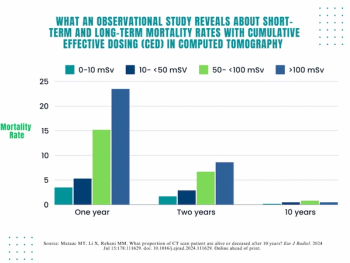
Emerging research suggests CT radiation dosing of 50 mSv or greater is associated with higher mortality at two years but nearly half of those patients were alive 10 years later.
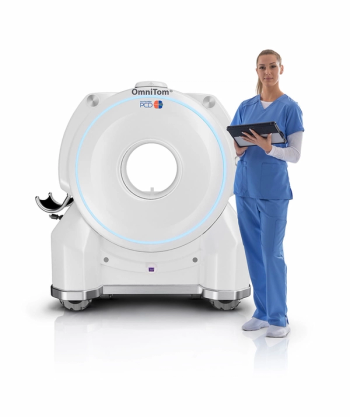
Photon-counting CT-optimized features with the OmniTom Elite system include 30 cm field of view scanning, continuous spiral scanning, and an ultra-high-resolution capability of 0.141 mm resolution.
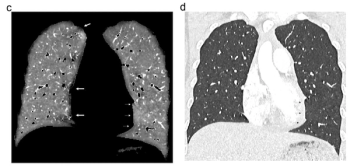
Photon-counting CT enables enhanced fissure visualization and a lower degree of cardiac motion artifacts for lung perfusion imaging at a significantly reduced scan time in contrast to dual-energy CT, according to new research findings.
Catch up on the most-well viewed radiology content in June 2024.
Catch up on the top AI-related news and research in radiology over the past month.
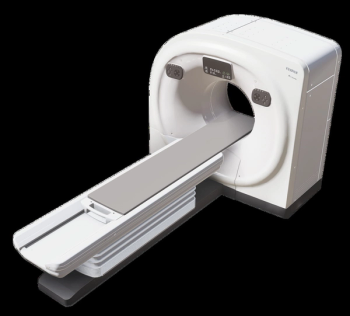
Proprietary technologies with the FCT iStream computed tomography system reportedly facilitate enhanced workflow efficiency and significantly reduced radiation dosing.
Catch up on the top radiology content of the past week.
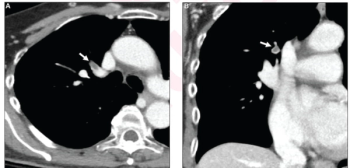
Artificial intelligence facilitated a 96.2 percent sensitivity rate for incidental pulmonary embolism (IPE) on contrast-enhanced CT chest or abdomen exams, according to new prospective research involving over 4,300 patients.
Catch up on the top radiology content of the past week.
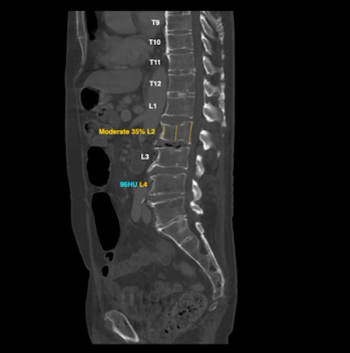
Nanox Adds AI Applications to Teleradiology Platform for CT Second Opinions
Published: | Updated:
Facilitating additional consultation on chest and abdominal CT scans, the Second Opinions teleradiology platform now features FDA-cleared AI tools for cardiac, bone and liver assessments.
An AI algorithm that incorporates scoring of coronary inflammation based on coronary CT angiography (CCTA) may enhance long-term cardiovascular risk stratification beyond conventional risk factor and imaging assessments, even in patients without obstructive CAD.
Catch up on the top radiology content of the past week.
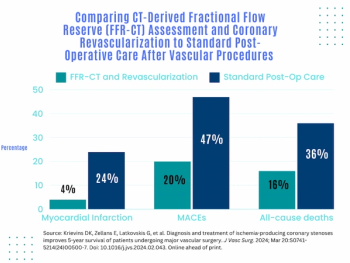
For patients with no history of coronary artery disease (CAD), new research shows the use of CT-derived fractional flow reserve (FFR-CT) guided revascularizations after elective vascular surgery reduced myocardial infarction and all-cause death by 20 percent in comparison to standard care.
Catch up on the top radiology content of the past week.
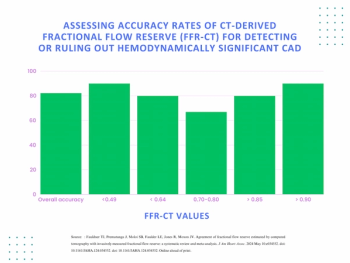
What a New Meta-Analysis Reveals About Fractional Flow Reserve Assessment with Computed Tomography
Published: | Updated:
While acknowledging variable accuracy overall with CT-derived fractional flow reserve (FFR-CT) values, researchers found that the accuracy rate increased to 90 percent for FFR-CT values greater > 0.90 and < 0.49.
Catch up on the top radiology content of the past week.
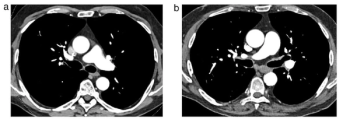
In comparison to energy-integrating detector CT for the workup of suspected acute pulmonary embolism, the use of photon-counting detector CT reduced radiation dosing by 48 percent, according to newly published research.
Catch up on the top radiology content of the past week.
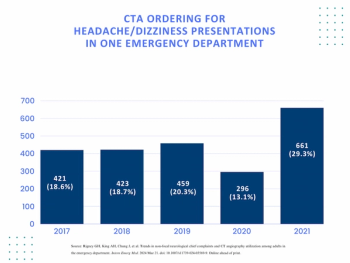
Researchers noted a 67.4 percent increase in head and neck CT angiography and a 38 percent reduction in findings of acute pathology in a recent comparison of 2017 and 2021 statistics for headache and/or dizziness presentations at the emergency department of an urban academic medical center.
Advertisement
Advertisement
Trending on Diagnostic Imaging
1
FDA Clears MRI-Based AI Software for Prognostic Evaluation of Patients with Mild Cognitive Impairment
2
Can MRI-Based AI Have an Impact in Reducing Unnecessary Prostate Biopsies?
3
The Reading Room Podcast: A Closer Look at New Research on 177Lu-Edotreotide for Treating GEP-NETs
4
FDA Clears AI-Enabled FFR-IQ Software for Estimating Fractional Flow Reserve from CCTA
5