

Neurology MRI
Latest News
Advertisement
Latest Videos


Shorts
0:34
Could Diabetes Be a Key Trigger for Bone Loss and Cognitive Decline?
a month ago
by
Shadpour Demehri, MD

0:44
Timely Access to Neuroimaging: One of the Biggest Challenges in Stroke Care
2 months ago
by
Arun Talkad, MD
0:53
How AI-Enabled Triage Helps Navigate Weekend Call Duties in Radiology
2 months ago
by
Raza Mushtaq, MD

0:38
How AI Triage Efficiency Gains in Neuroradiology May Facilitate Improved Work-Life Balance
3 months ago
by
Vivek Singh, MD

0:30
How Brain fMRI and DWI MRI May Help Pinpoint the Cause of Urinary Incontinence in Stroke Survivors
3 months ago
by
Kay Jann, PhD

0:50
How AI Can Provide 'Life Saving Information' Beyond MRI for Aneurysm Monitoring
3 months ago
by
Vivek Singh, MD

0:47
Self-Policing and MRI Safety
4 months ago
by
Tobias Gilk, MRSO, MRSE

0:59
A Call for Regulation of MRI Safety
4 months ago
by
Emanuel Kanal, MD

0:43
Key Design Parameters for Integrating Disney Characters into Pediatric MRI to Reduce Anxiety
5 months ago
by
Atul Gupta, MD

0:52
The Good News and Bad News About MRI Safety
5 months ago
by
Tobias Gilk, MRSO, MRSE
Podcasts









Advertisement
More News
Catch up on the most well-viewed video interviews from Diagnostic Imaging in September 2026.
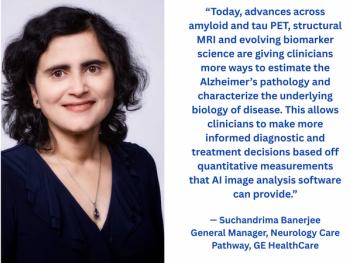
Given the increasing prevalence of Alzheimer’s disease and a staggering number of people with dementia who are undiagnosed, this author discusses five essential keys for radiologists and their colleagues to facilitate earlier detection, precision care treatment and monitoring to help ensure timely care and intervention.
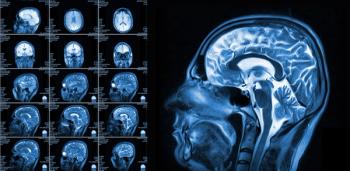
For patients with small cell lung cancer (SCLC), there was a 40 percent improvement in cognitive failure-free survival (CFFS) with brain MRI alone in comparison to the combination of brain MRI and prophylactic cranial irradiation (PCI), according to research presented at the ASTRO conference.

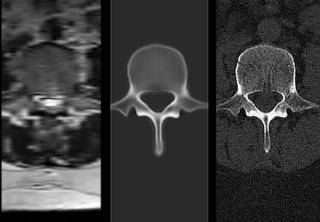
In a study involving over 700 participants who had chest CT and brain MRI, those with diabetes and lower vertebral bone mineral density (vBMD) had a nearly five percent faster total accumulation of white matter hyperintensity (WMH) in comparison to those without diabetes.
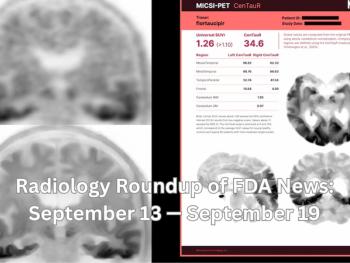
Catch up on a variety of FDA news in radiology from the past week.
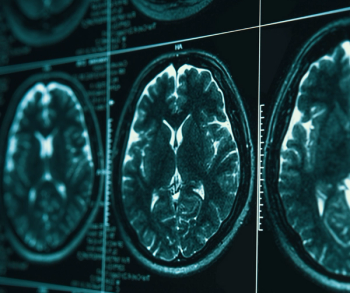
In a study involving over 2,800 people who had brain MRI scans, researchers found that people in the most disadvantaged neighborhoods had 37 percent higher white matter hyperintensity volume (WMHV) on average in comparison to people in the least disadvantaged areas.

The presence of vascular hyperintensity on T2 FLAIR MRI was associated with nearly double the odds of cerebral edema, according to newly published research involving 855 patients with acute ischemic stroke.

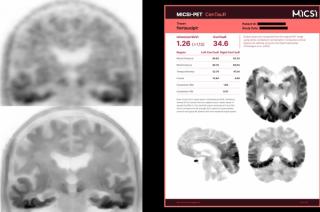
New research demonstrates significantly higher specificity and inter-reader agreement with MRI-guided reconstruction in comparison to standard ordered-subset expectation-maximization (OSEM) reconstruction of PET imaging for amyloid assessment.
Catch up on the most-well viewed radiology content in August 2026.
Catch up on the top AI-related news and research in radiology over the past month.
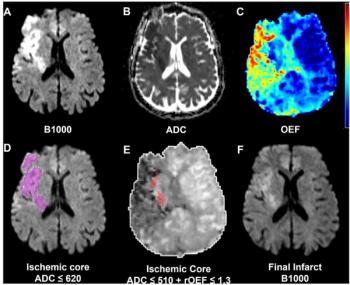
For patients who had successful reperfusion after acute ischemic stroke, new research demonstrated an 80 percent AUC for predicting infarct with the combination of apparent diffusion coefficient (ADC) mapping and relative oxygen ejection fraction (rOEF).

Catch up on the top radiology content of the past week.
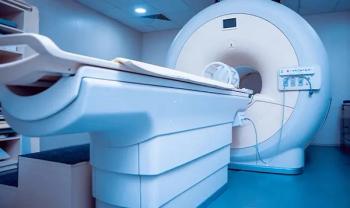
Noting the rising imaging volume and dearth of MRI scanner availability, the authors of a new literature review explore the utility and impact of workflow redesign, staff training, scheduling improvements and AI advances for enhancing MRI workflows.
In a recent interview, Kay Jann, PhD, discussed challenges with urinary continence in stroke survivors and a forthcoming NIH-funded study examining the use of brain MRI to help identify those who may benefit from transcutaneous spinal cord stimulation (TSCS).

Catch up on the most well-viewed video interviews from Diagnostic Imaging in July 2026.
Catch up on the top radiology content of the past week.
In a recent interview, Vivek Singh, MD, discussed the practical realities of integrating AI into neuroradiology workflows, addressing challenges and concerns with implementation and potential automation bias, and emphasizing the importance of appropriate governance with AI tools and measurable outcomes in stroke imaging.

Researchers found that former NFL players had a 3.8-fold higher mortality rate for all-cause dementia and a nearly 3.9-fold higher mortality rate for Parkinson’s disease, according to a study involving over 19,800 former NFL players.

Catch up on the most well-viewed video interviews from Diagnostic Imaging in June 2026.
Catch up on a variety of FDA news in radiology from the past week.
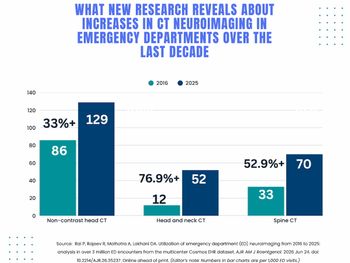
Researchers found that non-contrast head CT exams, head and neck CT exams and spine CT imaging increased by 33 percent, 76.9 percent and 52.9 percent, respectively, per 1,000 emergency department encounters over the last decade.
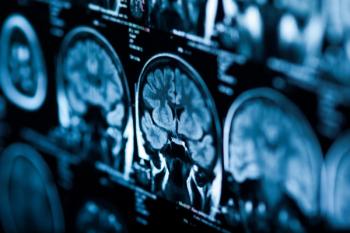
The Oncology Virtual Expert AI software reportedly provides semi-automated segmentation maps of brain tumors based on standard brain MRI scans.
Catch up on the top radiology content of the past week.
Catch up on the top radiology content of the past week.
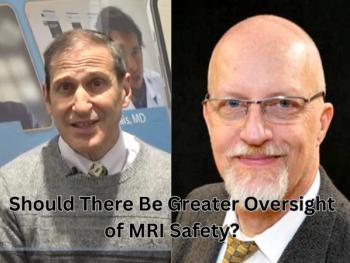
In recent interviews, Emanuel Kanal, MD, and Tobias Gilk, MRSO, MRSE, noted a lack of point-of-care safety requirements for MRI, a lack of state oversight, and a prevailing lack of minimum standards overall for MRI safety.
Advertisement
Advertisement
Trending on Diagnostic Imaging
1
Study Shows PCCT Offers Higher Image Quality and Reduced Radiation Dosing than EID-CT in Obese Patients
2
FDA Clears Machine Learning Module for Emerging Musculoskeletal Ultrasound Platform
3
FDA Clears AI-Enabled FFR-IQ Software for Estimating Fractional Flow Reserve from CCTA
4
Radiology Roundup of FDA News: October 18 — October 24
5