




Cardiac CT
Latest News
Advertisement
Latest Videos













Advertisement
More News
The dose length product (DLP) for the flash mode on a dual-source photon-counting CT system was less than a third of that for the spiral mode, according to a study of CTA findings for 1,000 patients presented at the Society of Cardiovascular Computed Tomography (SCCT) conference.

In a recent interview, Amir Ahmadi, M.D., discussed limitations of conventional diagnostic assessments for people with suspected coronary artery disease, and the emergence of AI-enabled plaque quantification to facilitate more timely detection and intervention.
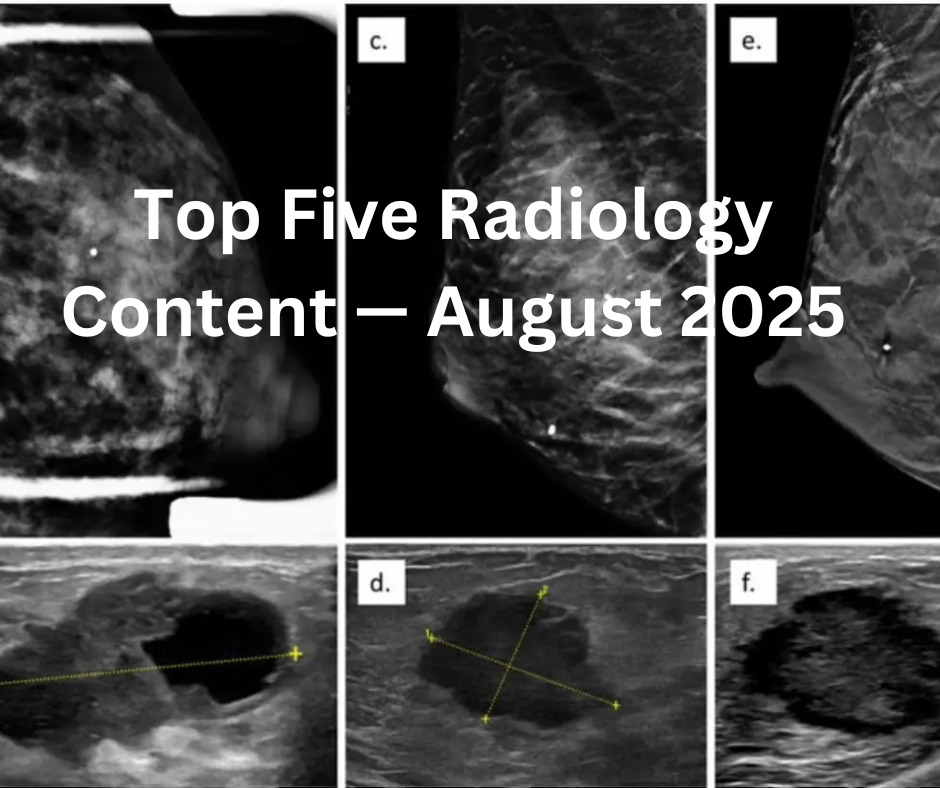
Stay updated with the latest in radiology, including PET, MRI, and AI research, plus essential insights on mammography and cardiac imaging.
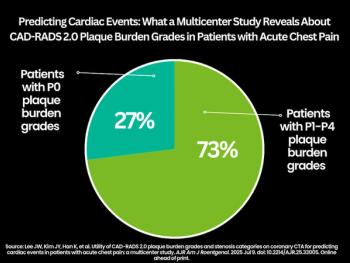
For patients who had coronary CTA for acute chest pain, emerging research found no significant association between plaque burden grades with CAD-RADS 2.0 and cardiac events.
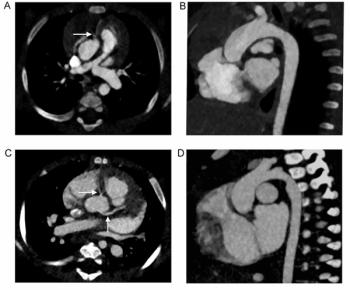
For pediatric patients with congenital heart disease, new research showed that cardiac PCCT yielded comparable signal-to-noise and contrast-to-noise ratios to energy-integrating detector CT at over a 43 percent lower dose length product.
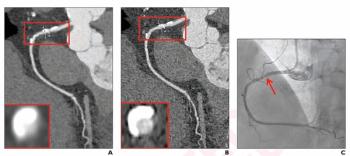
In a new study comparing standard resolution and ultra-high resolution modes for patients undergoing coronary CTA with photon-counting detector CT, researchers found that segment-level sensitivity and accuracy rates for diagnosing coronary artery stenosis were consistently > 89.6 percent.
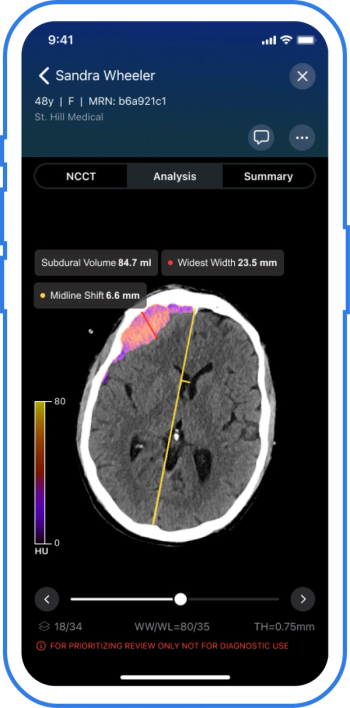
The AI-powered Viz Subdural Plus reportedly provides automated measurements and labeling of subdural collections, including subdural hemorrhages (SDHs), based on non-contrast CT scans.
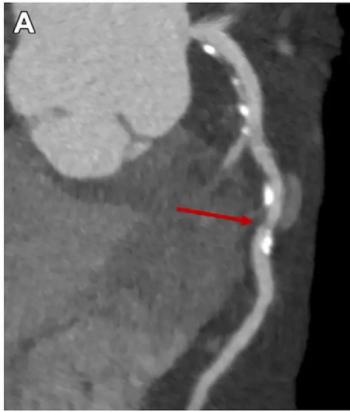
Emphasizing increasing recognition of the capability of coronary computed tomography angiography (CCTA) for the evaluation of acute and stable chest pain, this author defuses common misperceptions and reviews key considerations for implementation of a CCTA program.
Catch up on the top radiology content of the past week.
Catch up on the most-well viewed radiology content in May 2025.
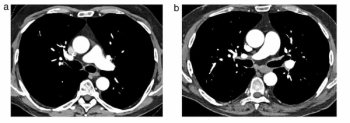
In a review of 155 studies, researchers examined the capabilities of photon-counting computed tomography (PCCT) for enhanced accuracy, tissue characterization, artifact reduction and reduced radiation dosing across thoracic, abdominal, and cardiothoracic imaging applications.

Catch up on the top AI-related news and research in radiology over the past month.
Catch up on the top radiology content of the past week.
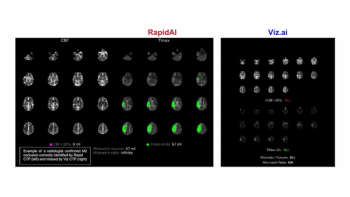
The Rapid CTP AI software offered 23 percent greater detection of medium vessel occlusions in comparison to the Viz CTP AI software, according to research presented at the European Stroke (Organization) Conference (ESOC).
Catch up on the top radiology content of the past week.
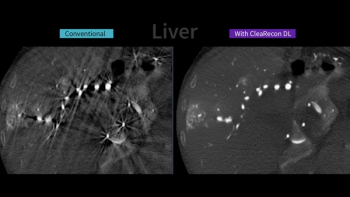
The CleaRecon DL software reportedly removes streak artifacts that can occur with the use of cone-beam computed tomography (CBCT) during interventional radiology procedures.

In a recent interview, C. Alberto Morales, M.D., discussed the impact of advances with CTA imaging and AI, and a shifting emphasis in cardiac risk stratification from stenosis to plaque burden.
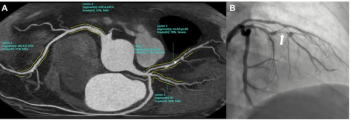
In a study involving over 1,000 patients who had coronary computed tomography angiography (CCTA) exams, AI software demonstrated a 90 percent AUC for assessments of cases > CAD-RADS 3 and 4A and had a 98 percent NPV for obstructive coronary artery disease.
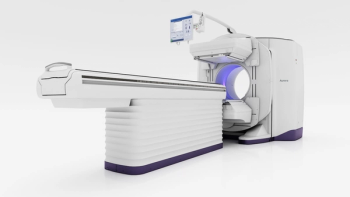
The combination of the Aurora SPECT/CT system with AI-enabled Clarify DL image reconstruction reportedly offers the potential of enhanced image quality and streamlined workflows in nuclear medicine.
In a second part of a new podcast episode on recently published research on projected radiation-induced cancers from computed tomography (CT) scans, Mahadevappa Mahesh, MS, Ph.D., and Joseph Cavallo, M.D., offer current perspectives on cardiac CT dosing, AI advances and the importance of teamwork in ensuring appropriate dosing for CT.
Catch up on the top radiology content of the past week.
In a new podcast, Mahadevappa Mahesh, MS, Ph.D., and Joseph Cavallo, M.D., share their perspectives on recently published research looking at projections for future radiation-induced cancers from computed tomography (CT) scans.
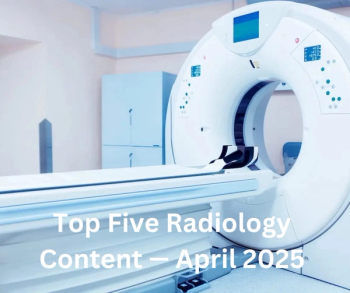
Catch up on the most-well viewed radiology content in April 2025.
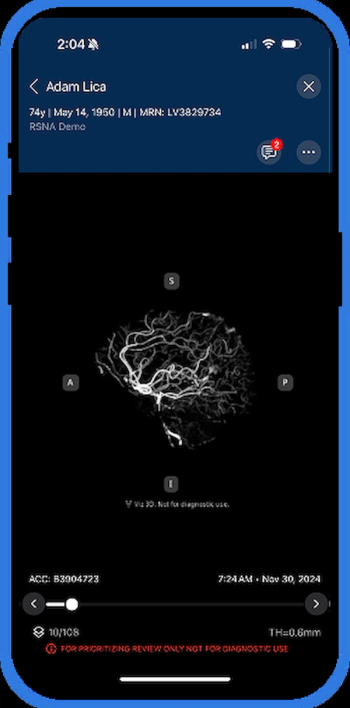
Offering automated conversion of computed tomography angiography (CTA) into 3D images, Viz 3D CTA reportedly facilitates real-time insights into complex neurovascular anatomy.

Catch up on the most well-viewed video interviews from Diagnostic Imaging in April 2025.
Advertisement
Advertisement
Trending on Diagnostic Imaging
1
FDA Clears MRI-Based AI Software for Prognostic Evaluation of Patients with Mild Cognitive Impairment
2
Can MRI-Based AI Have an Impact in Reducing Unnecessary Prostate Biopsies?
3
The Reading Room Podcast: A Closer Look at New Research on 177Lu-Edotreotide for Treating GEP-NETs
4
FDA Clears AI-Enabled FFR-IQ Software for Estimating Fractional Flow Reserve from CCTA
5