





Cardiac CT
Latest News
Advertisement
Latest Videos








CME Content



Advertisement
More News

Catch up on the top AI-related news and research in radiology over the past month.
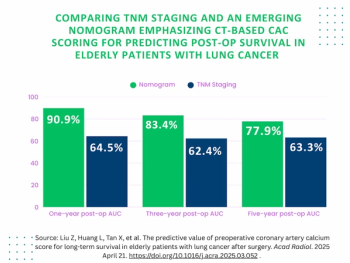
For elderly patients with lung cancer, a preoperative CT-based coronary artery calcium score > 40 was associated with a 53 percent higher risk of all-cause mortality after surgery, according to new study findings.
Catch up on the top radiology content of the past week.
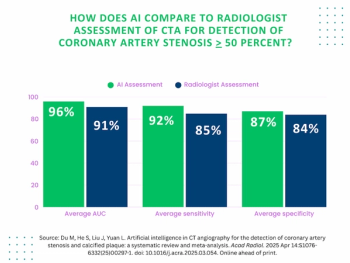
Meta-Analysis Shows Merits of AI with CTA Detection of Coronary Artery Stenosis and Calcified Plaque
Artificial intelligence demonstrated higher AUC, sensitivity, and specificity than radiologists for detecting coronary artery stenosis > 50 percent on computed tomography angiography (CTA), according to a new 17-study meta-analysis.
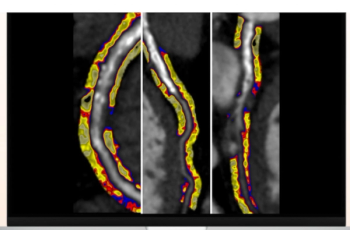
Going into effect in 2026, the new CPT codes may facilitate increased adoption of the CaRi-Heart software for detecting coronary inflammation from computed tomography scans pending FDA clearance of the technology.

For patients with acute ischemic stroke, research has demonstrated that automated assessment of ischemic core volume on brain CT scans via the Brainomix 360 software is equivalent to that derived from CT perfusion.
Catch up on the top radiology content of the past week.
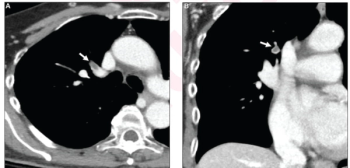
Study with CT Data Suggests Women with PE Have More Than Triple the One-Year Mortality Rate than Men
After a multivariable assessment including age and comorbidities, women with pulmonary embolism (PE) had a 48 percent higher risk of one-year mortality than men with PE, according to a new study involving over 33,000 patients.
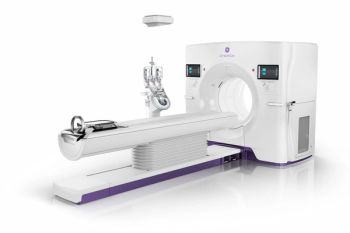
Featuring enhanced low-dose image quality with motion-free images, the Revolution Vibe CT system reportedly facilitates improved diagnostic clarity for patients with conditions ranging from in-stent restenosis to atrial fibrillation.
Catch up on the top AI-related news and research in radiology over the past month.
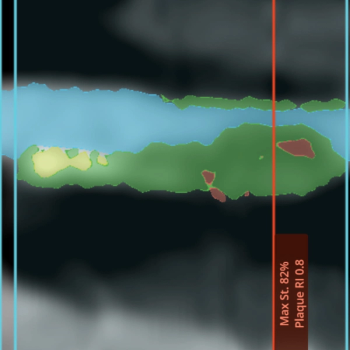
Through AI-powered assessment of coronary computed tomography angiography (CCTA) scans, the CaRi-Plaque software may provide improved clarity on the development of coronary plaques and luminal stenosis.
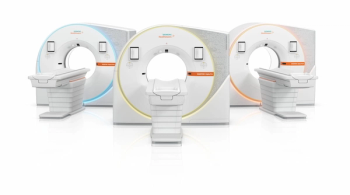
The Naeotom Alpha class of photon-counting computed tomography (PCCT) scanners emphasize significantly reduced scan times and enhanced detection of small abnormalities.
Catch up on the top radiology content of the past week.
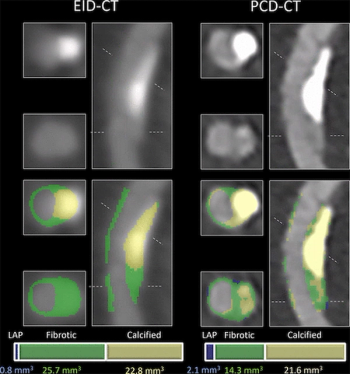
The use of ultra-high-resolution photon-counting CT in the evaluation of stable chest pain may significantly reduce follow-up tests and invasive coronary angiography (ICA) procedures, possibly resulting in millions in health-care cost savings, according to a cost-effectiveness analysis presented recently at the European Congress of Radiology.
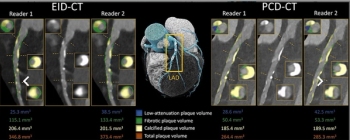
Ultra-high spatial resolution with photon-counting CT facilitated a 33 percent reduction in the assessment of median total plaque volume and a 45 percent higher inter-reader agreement for evaluation of low-attenuation plaque volume in contrast to energy-integrating detector (EID) CT.
Catch up on the top radiology content of the past week.
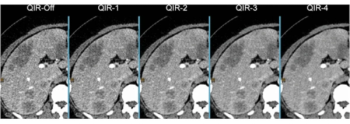
The advanced reconstruction algorithm offers optimal noise reduction, artifact correction, detailed spectral data and streamlined radiation dosing across cardiac, pulmonary and oncologic imaging.
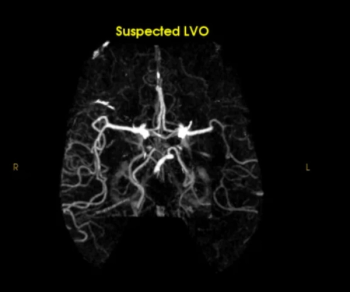
The Rapid LVO AI software detected 33 percent more cases of large vessel occlusion (LVO) on computed tomography angiography (CTA) than Viz LVO AI software, according to a new comparative study presented at the International Stroke Conference (ISC).
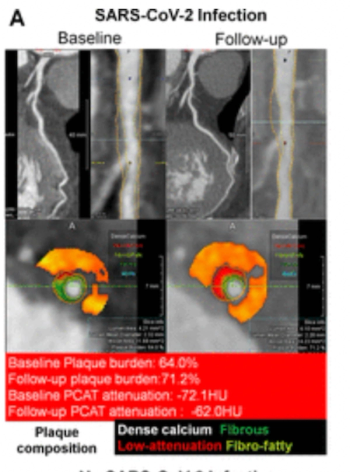
Prior COVID-19 infection was associated with a 28 percent higher progression of total percent atheroma volume (PAV) annually and over a 5 percent higher incidence of high-risk plaque in patients with coronary artery lesions, according to CCTA findings from a new study.
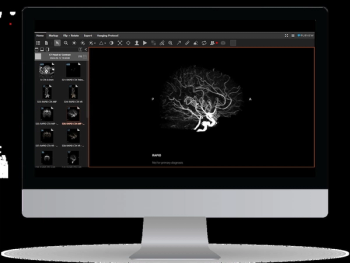
The artificial intelligence (AI)-enabled software Lumina 3D reportedly provides reconstructions of computed tomography angiography (CTA) images of the head and neck in minutes.
Catch up on the top radiology content of the past week.
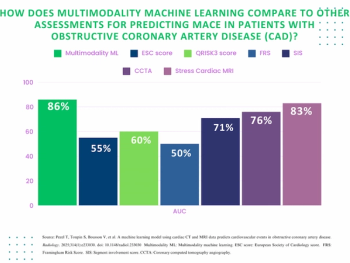
For patients with newly diagnosed obstructive coronary artery disease (CAD), a multimodal machine learning model offered an 86 percent AUC for predicting MACE, which was 10 percent higher than CCTA alone and over 35 percent higher than the Framingham Risk Score.
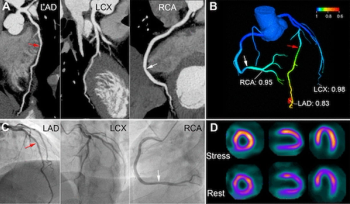
For patients with suspected or known coronary artery disease (CAD) without percutaneous coronary intervention (PCI), researchers found that those with a normal CTA-derived quantitative flow ratio (CT-QFR) had a 22 percent higher MACE-free survival rate.
Catch up on the most-well viewed radiology content in November 2024.
Catch up on the top radiology content of the past week.
Advertisement
Advertisement