





Facility Management
Latest News
Advertisement
Latest Videos









Advertisement
More News

Catch up on the top radiology content of the past week.
In the second of a multi-part podcast episode, Emanuel Kanal, M.D. and Tobias Gilk, MRSO, MRSE, share their perspectives on remote MRI safety protocols for ensuring screening accuracy and adherence to conditional implant guidelines as well as a rapid and effective response to adverse events.
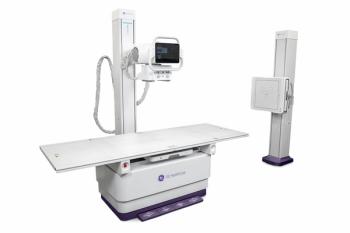
The newly launched Definium Pace Select ET X-ray platform reportedly provides increased automation and advanced image processing.
In the first of a multi-part podcast episode, Emanuel Kanal, MD and Tobias Gilk share their insights and perspectives on remote MRI safety.
Catch up on the latest MRI studies, AI innovations, and expert insights on abbreviated breast MRI with our Weekly Scan.
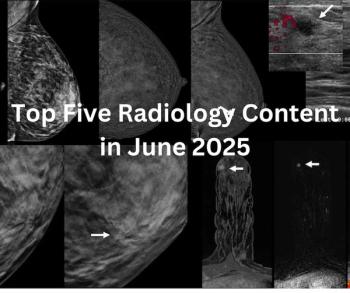
Catch up on the most-well viewed radiology content in June 2025.
Catch up on the top radiology content of the past week.
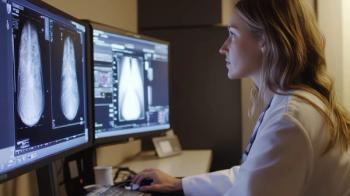
A new report conveys the cumulative impact of ongoing challenges with radiologist residency positions, reimbursement, post-COVID-19 attrition rates and the aging of the population upon the persistent shortage of radiologists in the United States.
Looking for an enlightened approach to billing isn’t easy amid a sea of third-party payor excuses, absurd addendum requests and CT headers seemingly etched in stone.
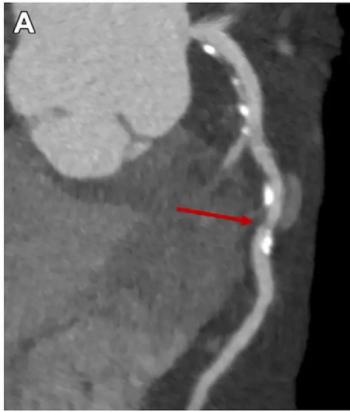
Emphasizing increasing recognition of the capability of coronary computed tomography angiography (CCTA) for the evaluation of acute and stable chest pain, this author defuses common misperceptions and reviews key considerations for implementation of a CCTA program.

Recognizing the daunting combination of increasing imaging volume and workforce shortages, these authors discuss key risk factors contributing to burnout and moral injury in radiology, and potential solutions to help preserve well-being among radiologists.

Refraining from expressing one’s political viewpoints in the workplace needs to be reemphasized.
In a recent interview, Samir Abboud, M.D., discussed new research examining the impact of generative AI in maximizing efficiency and reducing the time-consuming nature of radiology reporting.
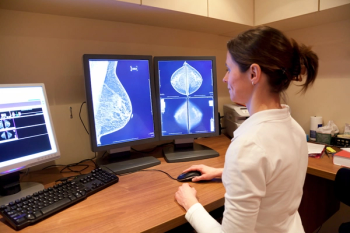
Through AI recognition of subtle patterns in breast tissue on screening mammograms, the Clairity Breast software reportedly provides validated risk scoring for predicting one’s five-year risk of breast cancer.
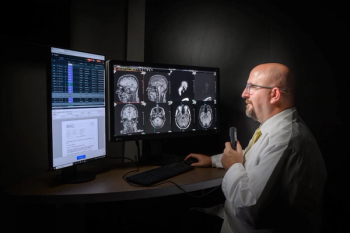
The cloud-based platform reportedly facilitates AI-enhanced teleradiology workflow efficiencies across multiple systems and facilities.
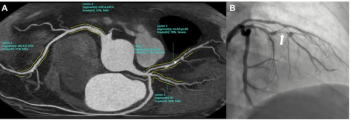
In a study involving over 1,000 patients who had coronary computed tomography angiography (CCTA) exams, AI software demonstrated a 90 percent AUC for assessments of cases > CAD-RADS 3 and 4A and had a 98 percent NPV for obstructive coronary artery disease.
Catch up on the most-well viewed radiology content in April 2025.
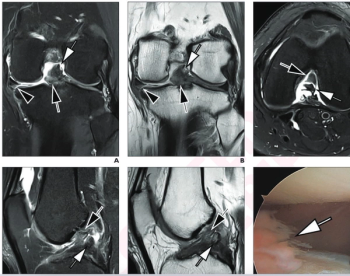
Employing deep learning image reconstruction, parallel imaging and multi-slice acceleration in a sub-five-minute 3T knee MRI, researchers noted 100 percent sensitivity and 99 percent specificity for anterior cruciate ligament (ACL) tears.
Some abbreviations for radiology transcriptions defy reasonable explanation but they continue to persist on multiple voice recognition platforms.
Catch up on the top radiology content of the past week.
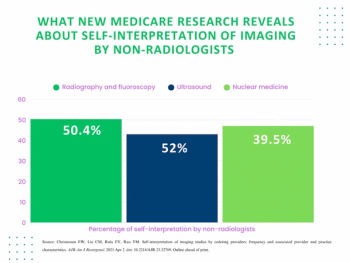
In a review of over 1,630,000 office-based non-breast imaging Medicare fee-for-service (FFS) claims from 2022, researchers found that 39.5 percent of nuclear medicine imaging were interpreted by ordering clinicians.
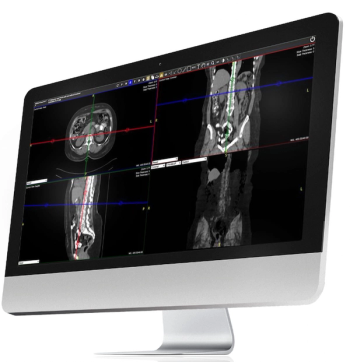
The Exa PACS/RIS platform reportedly combines AI-enabled worklist navigation tools with advances in multiplanar functionality and 3D-generated image segmentation.
Catch up on the top radiology content of the past week.
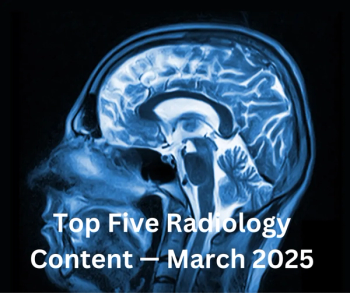
Catch up on the most-well viewed radiology content in March 2025.
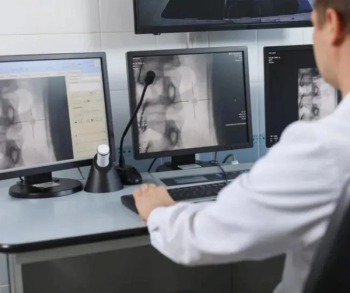
In addition to a variety of tools to promote radiology workflow efficiencies, the integration of the Gravity AI tools into the PowerServer RIS platform may reduce time-consuming prior authorizations to minutes for completion.
Advertisement
Advertisement
Trending on Diagnostic Imaging
1
FDA Clears AI-Powered Platform for Converting Spine MRIs to 3D Visualizations
2
FDA Clears MRI-Based AI Software for Body Composition Analysis
3
The Responsibility of Authorship in the AI Era
4
Study Shows Impact of Key mpMRI Features for Enhancing Assessment of Renal Masses
5