



Oncology MRI
Latest News
Advertisement
Latest Videos


Advertisement
More News
Catch up on the top radiology content of the past week.

Catch up on the most-well viewed radiology content in March 2025.
Catch up on the most-well viewed prostate imaging content in March 2025.
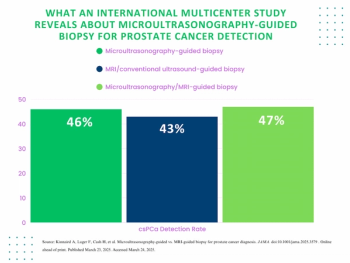
Microultrasonography-guided biopsy offered comparable detection as MRI/conventional ultrasound-guided biopsy in detection of Gleason grade group 2 or higher prostate cancer, according to a new international multicenter study.
Catch up on the top radiology content of the past week.
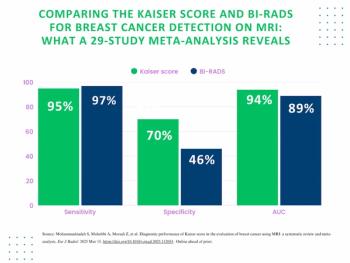
The Kaiser score offers 24 percent higher pooled specificity than the Breast Imaging Reporting and Data System (BI-RADS) for detecting malignancies on breast MRI, according to a 29-study meta-analysis.
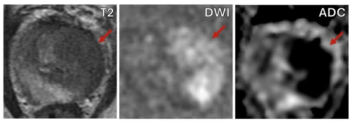
While DCE MRI was deemed helpful in over 67 percent of cases in which it was used, researchers found that monitored prostate MRI exams, which facilitated a 75 percent reduction of DCE MRI sequences, had comparable sensitivity for prostate cancer as non-monitored exams.
Catch up on the top radiology content of the past week.
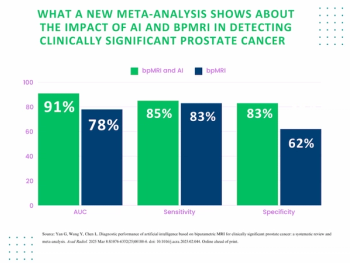
Researchers noted the combination of AI and bpMRI had an average AUC of 91 percent for csPCa detection in contrast to 78 percent for unassisted radiologist interpretation in a recent meta-analysis.
Catch up on the top radiology content of the past week.
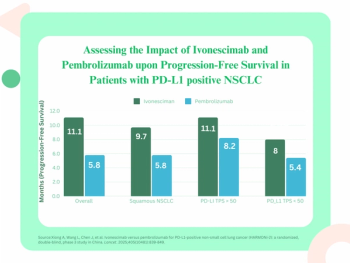
The use of ivonescimab was correlated with a median 5.3-month improvement in progression-free survival (PFS) over pembrolizumab in patients with PD-L1 positive non-small cell lung cancer, according to CT and MRI findings from a phase 3 randomized multicenter trial.
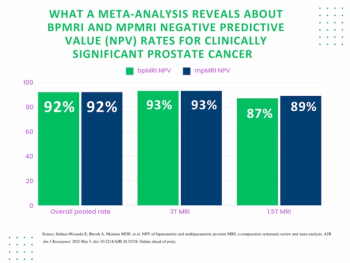
In an 18-study meta-analysis involving over 4,600 patients, researchers found that bpMRI and mpMRI had equivalent pooled negative predictive value (NPV) of 92 percent for clinically significant prostate cancer (csPCa).
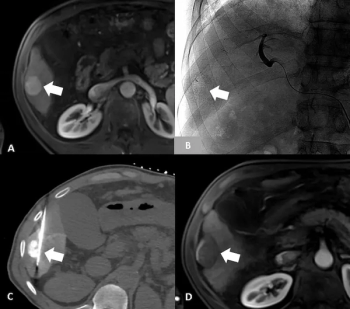
In a comparative study of staging systems for hepatocellular carcinoma, the Barcelona Clinic Liver Cancer (BCLC) system offered the highest likelihood ratio (LR) and lowest Akaike information criteria (AIC) for predicting overall survival after transarterial chemoembolization (TACE) for hepatocellular carcinoma.
Catch up on the top radiology content of the past week.
Catch up on the most-well viewed prostate imaging content in February 2025.
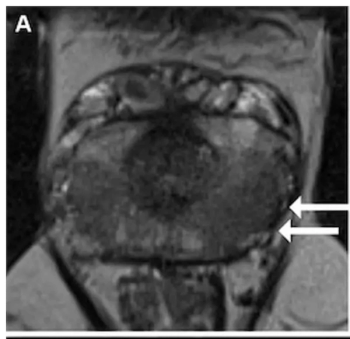
In a multicenter study involving over 1,000 patients, a deep learning software offered comparable sensitivity and specificity for Gleason grade group > 2 tumors in comparison to radiologist interpretation.
Catch up on the most-well viewed radiology content in February 2025.
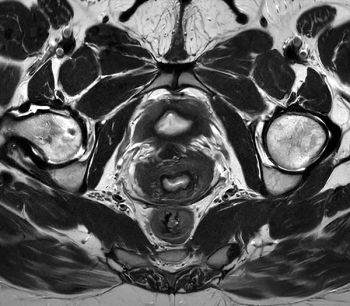
The updated software reportedly enables a threefold improvement in MRI scan time and enhanced image sharpness.

Catch up on the top AI-related news and research in radiology over the past month.
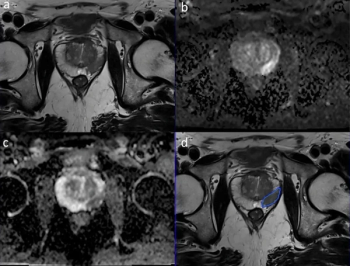
In a recent literature review, researchers offered insights on current considerations with prostate MRI and discussed keys to effective use of the modality in screening for prostate cancer.
Catch up on the top radiology content of the past week.
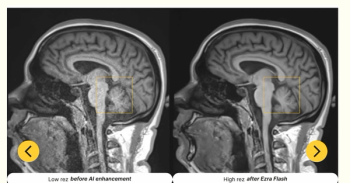
The updated AI-enabled software reportedly facilitates enhanced MRI imaging of the brain, abdomen, and pelvis.
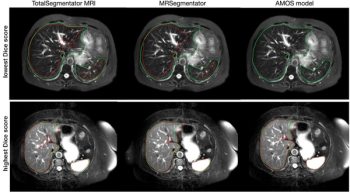
The open-source, deep learning MRI segmentation tool reportedly offers over a 10 percent higher Dice score than similar segmentation models for 40 anatomical structures.

Black, Hispanic, and Asian women were over 25 percent less likely than White women to have same-day follow-up diagnostic service after abnormal findings on screening mammography exams, according to a new study involving over one million patients.
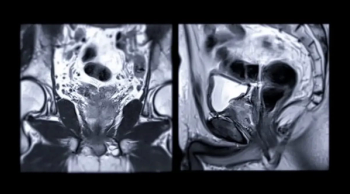
Researchers found that patients with high PSA density have more than double the risk of false-negative findings on prostate MRI and those with low PSA density are significantly less likely to have false-positive results.
Advertisement
Advertisement
Trending on Diagnostic Imaging
1
Brain MRI Study Reveals Higher Brain Age Gap and White Matter Hyperintensity for Those in Disadvantaged Neighborhoods
2
The Reading Room Podcast: Assessing the Current Landscape of AI and Reimbursement in Radiology, Part 2
3
Breast Imaging in Focus: Key Pearls from New Guidelines on Proliferative Breast Lesions with Atypia and LCIS
4
Prostate MRI Study Links Lower ACD Values on DWI to Higher Long-Term Risk of Distant Metastases
5