


Oncology MRI
Latest News
Advertisement
Latest Videos


Shorts

0:39
A 'Wake-Up Call' for BI-RADS 3 Audits
3 days ago
by
Stamatia Destounis, MD, FACR

0:47
Self-Policing and MRI Safety
3 months ago
by
Tobias Gilk, MRSO, MRSE

0:59
A Call for Regulation of MRI Safety
3 months ago
by
Emanuel Kanal, MD

0:43
Key Design Parameters for Integrating Disney Characters into Pediatric MRI to Reduce Anxiety
3 months ago
by
Atul Gupta, MD

0:52
The Good News and Bad News About MRI Safety
4 months ago
by
Tobias Gilk, MRSO, MRSE

1:12
Where Things Stand with MRI Safety Standards
4 months ago
by
Emanuel Kanal, MD

0:52
Key Advantages of MRI-Based AI Software for 3D Views of Prostate Cancer
4 months ago
by
Soroush Adam Ramin, MD

0:45
Emphasizing the Evidence on Supplemental Imaging in Women with Dense Breasts
4 months ago
by
Wendie Berg, MD, PhD

0:52
Where Things Stand with the Find It Early Act
7 months ago
by
Amy Patel, MD
0:59
Why Supplemental Imaging Use is 'Quite Low' for Women with Dense Breasts
8 months ago
by
Manisha Bahl, MD
Podcasts


Advertisement
More News
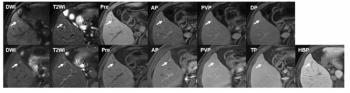
New research revealed that risk-stratified MRI surveillance in patients with cirrhosis led to over a 10 percent increase in early detection and over a 44 percent decrease in surveillance exams in comparison to reported results with semiannual ultrasound monitoring.
In comparison to standard readout-segmented echo-planar imaging, the combination of deep learning reconstruction and multi-shot diffusion-weighted imaging (DWI) offered significantly higher SNR, CNR and lesion contrast with a greater than a two-minute reduction in scan time.
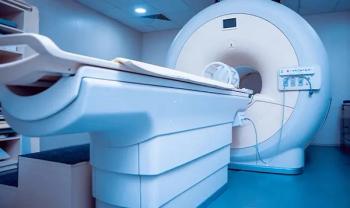
Noting the rising imaging volume and dearth of MRI scanner availability, the authors of a new literature review explore the utility and impact of workflow redesign, staff training, scheduling improvements and AI advances for enhancing MRI workflows.
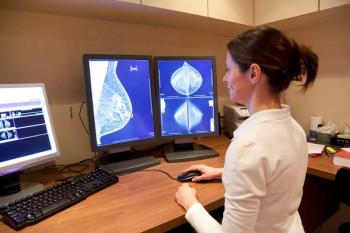
In a recently published review of the BI-RADS v2025 manual, leading breast radiologists offered pertinent insights on key changes for reporting of mammogram, breast ultrasound and breast MRI interpretation and assessment.
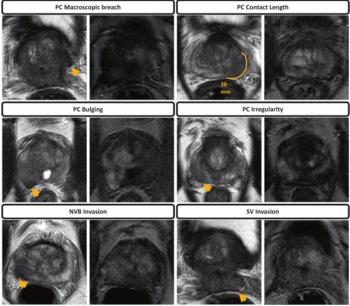
For biopsy-naïve patients who had radical prostatectomy for prostate cancer, new research suggests that biparametric MRI is comparable to multiparametric MRI for detecting extraprostatic extension.
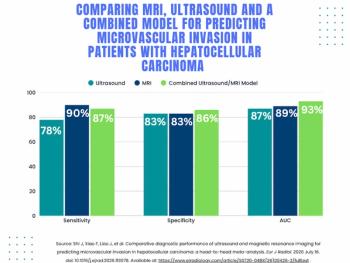
A model combining MRI and ultrasound findings yielded a 93 percent AUC for predicting microvascular invasion in hepatocellular carcinoma.
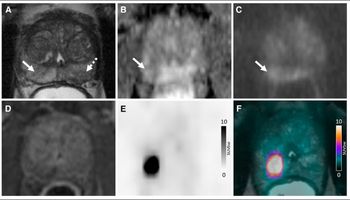
Researchers said the combination of 18F-flotufolastat PET/MRI may lead to a 57 percent reduction of prostate biopsies in comparison to a 25 percent reduction with prostate MRI alone.
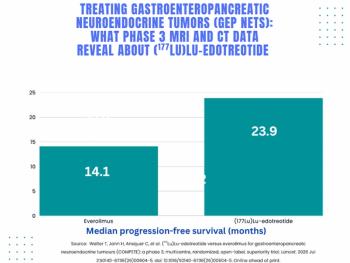
In comparison to everolimus, the peptide receptor radionuclide therapy (177Lu)Lu-edotreotide provided over a nine month longer median progression-free survival for patients with gastroenteropancreatic neuroendocrine tumours (GEP NETs), according to new phase 3 research.
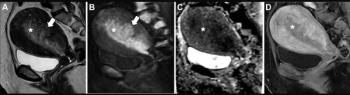
In comparison to the 2009 International Federation of Gynecology and Obstetrics (FIGO) staging system for endometrial cancer, researchers found that the updated 2023 FIGO system had over a 17 percent decrease for substage agreement between pelvic MRI and pathology findings.

Catch up on the most well-viewed video interviews from Diagnostic Imaging in June 2026.

Catch up on a variety of FDA news in radiology from the past week.

The Oncology Virtual Expert AI software reportedly provides semi-automated segmentation maps of brain tumors based on standard brain MRI scans.

Catch up on the top radiology content of the past week.
Catch up on the top radiology content of the past week.
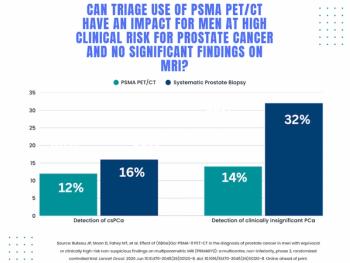
For men with high clinical risk for prostate cancer (PCa) and a lack of significant findings on mpMRI, triage use of PSMA PET/CT resulted in a 49 percent reduction of biopsies and an 18 percent reduction in detection of clinically insignificant PCa, according to newly published research.

In recent interviews, Emanuel Kanal, MD, and Tobias Gilk, MRSO, MRSE, noted a lack of point-of-care safety requirements for MRI, a lack of state oversight, and a prevailing lack of minimum standards overall for MRI safety.

Catch up on a variety of new FDA clearances in radiology from the past week.
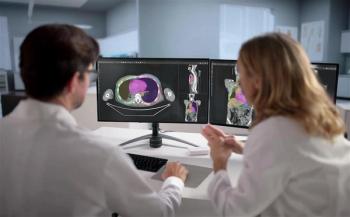
The MIM Contour ProtegeAI+ 2.0 software reportedly offers new AI-powered contouring models for brain MRIs and pelvic CTs.
Catch up on the top radiology content of the past week.
Catch up on the most-well viewed radiology content in May 2026.

Catch up on the most well-viewed video interviews from Diagnostic Imaging in May 2026.

In recent interviews, Emanuel Kanal, MD, and Tobias Gilk, MRSO, MRSE, discuss new multicenter research examining pediatric MRI safety as well as key challenges and preventive measures in this patient population.

Catch up on the top AI-related news and research in radiology over the past month.
Catch up on the top radiology content of the past week.
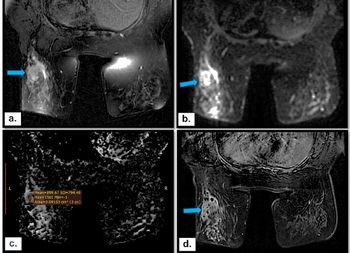
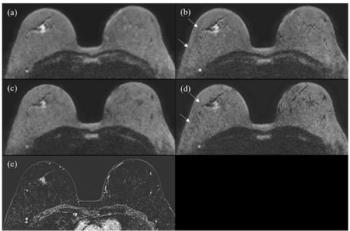
In a study of 351 women with BI-RADS 3-5 non-mass enhancement breast lesions, researchers found that multiparametric MRI offered 98.4 percent sensitivity and a 97.9 percent negative predictive value (NPV).
Advertisement
Advertisement
Trending on Diagnostic Imaging
1
Brain MRI Study Reveals Higher Brain Age Gap and White Matter Hyperintensity for Those in Disadvantaged Neighborhoods
2
The Reading Room Podcast: Assessing the Current Landscape of AI and Reimbursement in Radiology, Part 2
3
Breast Imaging in Focus: Key Pearls from New Guidelines on Proliferative Breast Lesions with Atypia and LCIS
4
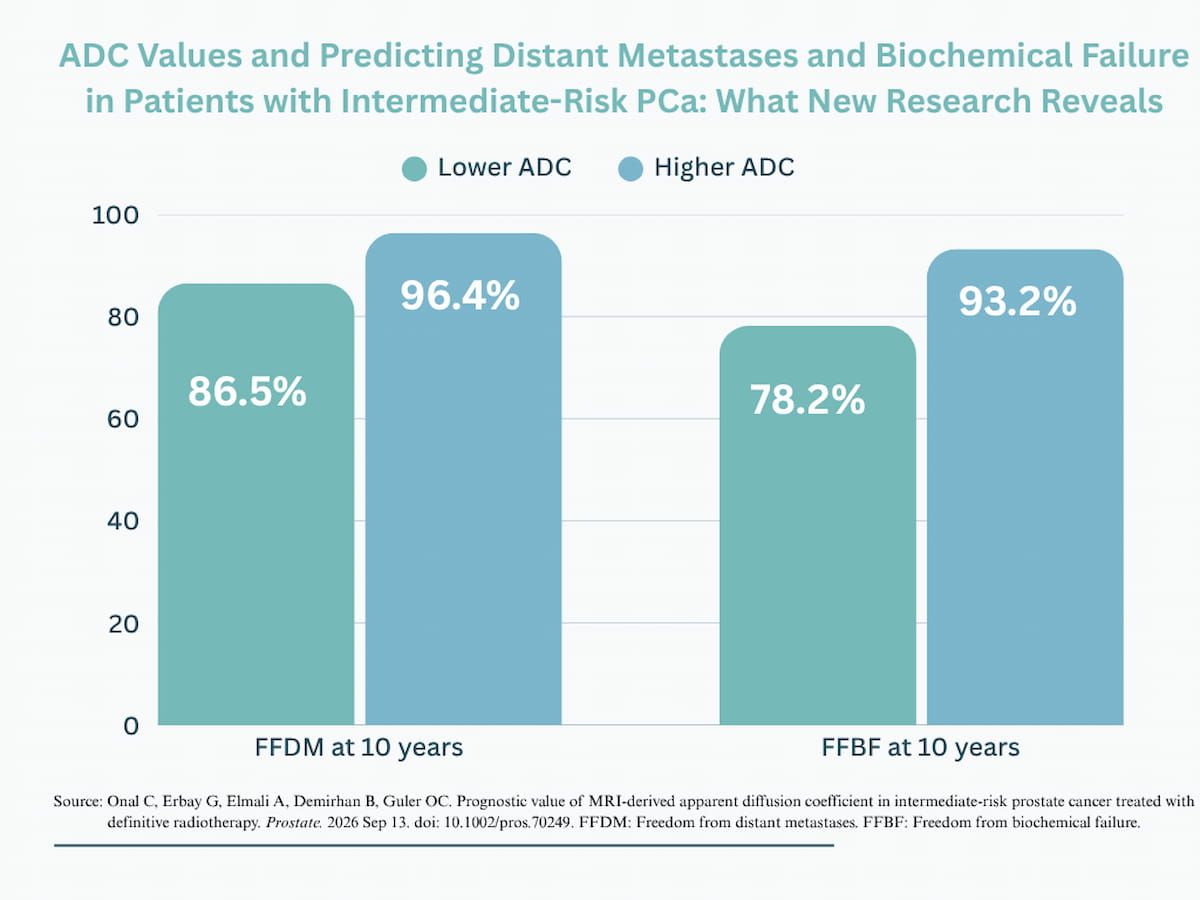
Prostate MRI Study Links Lower ACD Values on DWI to Higher Long-Term Risk of Distant Metastases
5