

Oncology MRI
Latest News
Advertisement
Latest Videos


Advertisement
More News
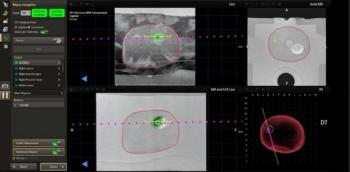
Advanced annotation with the updated UroNav MRI/ultrasound fusion platform may facilitate enhanced precision and efficiency with focal therapies for prostate cancer.
In the first of a multi-part podcast episode, Emanuel Kanal, MD and Tobias Gilk share their insights and perspectives on remote MRI safety.
Catch up on the latest MRI studies, AI innovations, and expert insights on abbreviated breast MRI with our Weekly Scan.
In the first of a multi-part podcast episode, Stamatia Destounis, MD, Emily Conant, MD and Habib Rahbar, MD, share their insights on the role of abbreviated breast MRI in breast screening.
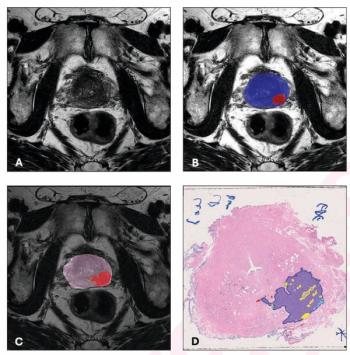
The use of adjunctive bpMRI-based AI led to 10 percent and greater increases in lesion-level PPV for csPCa and PCa with a threshold of PI-RADS > 3.
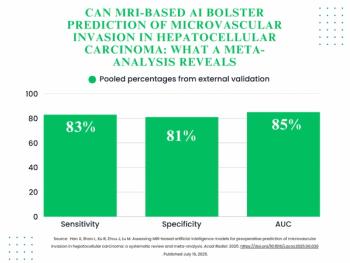
In external validation findings from a 29-study meta-analysis, MRI-based AI had a pooled AUC of 85 percent for preoperative prediction for microvascular invasion in patients with hepatocellular carcinoma.
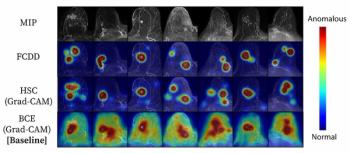
A fully convolutional data description (FCDD) model for identifying anomalies on breast MRI demonstrated an 84 percent AUC for detection tasks in a balanced cohort with a 20 percent malignancy prevalence and a 72 percent AUC for detection tasks in an imbalanced group with a 1.85 percent cancer prevalence.
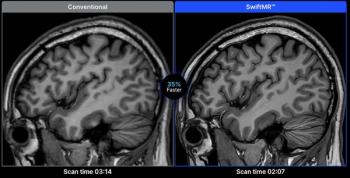
The updated capabilities of SwiftMR include personalized scan settings within the software, artifact reduction and cloud integration.
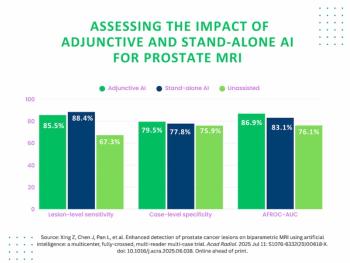
Emerging research revealed significantly enhanced sensitivity for prostate cancer detection with adjunctive and stand-alone use of AI.
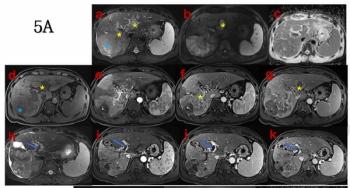
For patients with unresectable hepatocellular carcinoma, a pre-treatment MRI finding of LI-RADS tumor in vein was associated with over an 86 percent lower likelihood of responding to transcatheter arterial chemoembolization (TACE) and targeted immunotherapy.
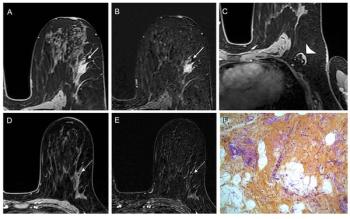
In external testing, a model combining radiological complete response on breast MRI, nodal status and Ki-67 proliferation index yielded an 88 percent AUC for predicting pathologic complete response to neoadjuvant chemoimmunotherapy for patients with triple-negative breast cancer, according to new research.
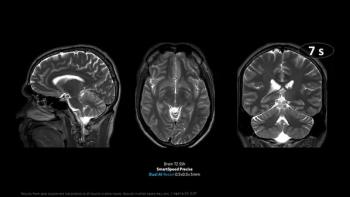
The deep learning reconstruction software reportedly facilitates accelerated MRI scanning and significantly enhanced image sharpness.
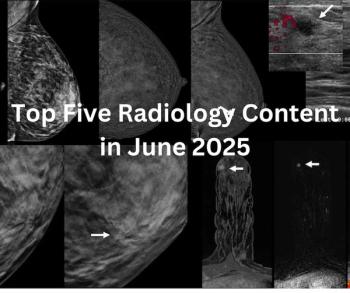
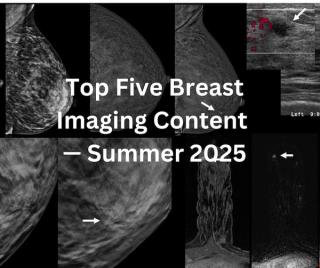
Catch up on the most-well viewed radiology content in June 2025.

Catch up on the top AI-related news and research in radiology over the past month.
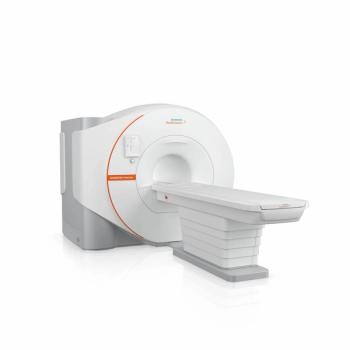
Offering a cost- and resource-saving DryCool magnet technology, the Magnetom Flow.Ace MRI system reportedly requires 0.7 liters of liquid helium for cooling over the lifetime of the device in contrast to over 1,000 liters commonly utilized with conventional MRI platforms.
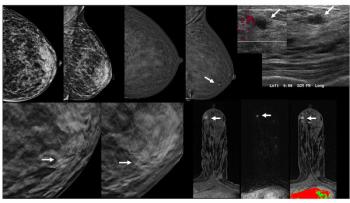
While the addition of contrast-enhanced mammography (CEM) to digital breast tomosynthesis (DBT) led to over a 13 percent increase in false positive cases, researchers also noted over double the cancer yield per 1,000 women in comparison to DBT alone.
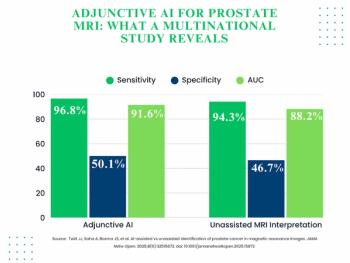
The use of adjunctive AI in biparametric prostate MRI exams led to 3.3 percent and 3.4 percent increases in the AUC and specificity, respectively, for clinically significant prostate cancer (csPCa) in a 360-person cohort drawn from 53 facilities.
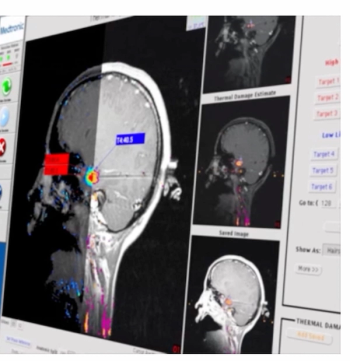
An alternative to an open neurosurgical approach, the Visualase V2 MRI-Guided Laser Ablation System reportedly utilizes laser interstitial thermal therapy (LITT) for targeted soft tissue ablation in patients with brain tumors and focal epilepsy.
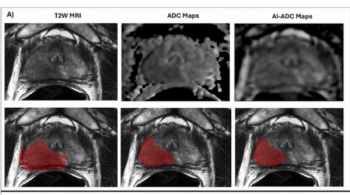
Emerging research showed that AI-generated ADC mapping from MRI led to significant increases in accuracy, PPV and specificity in comparison to conventional ADC mapping while achieving a 93 percent sensitivity for PCa.
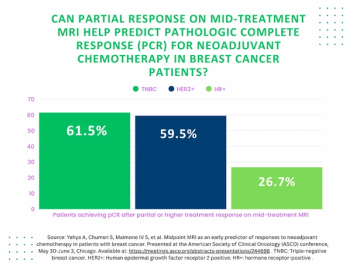
A partial response rate to neoadjuvant chemotherapy on mid-treatment MRI preceded a higher pathologic complete response (pCR) in 61.5 percent of women with triple-negative breast cancer, according to research presented at the American Society of Clinical Oncology (ASCO) conference.
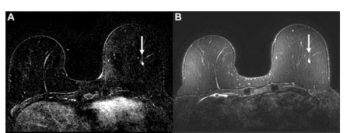
Assessing the simulated use of AI-generated suspicion scores for determining whether one should continue with full MRI or shift to an abbreviated MRI, the authors of a new study noted comparable sensitivity, specificity, and positive predictive value for biopsies between the MRI approaches.
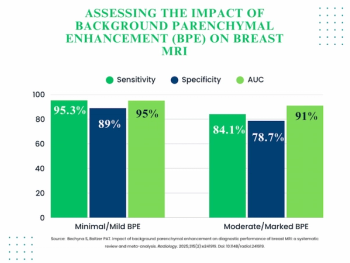
Moderate or marked background parenchymal enhancement (BPE) reduces the sensitivity and specificity of MRI for breast cancer detection by more than 10 percent in comparison to scans with minimal or mild BPE, according to a new meta-analysis.
Catch up on the most-well viewed radiology content in May 2025.
Catch up on the top AI-related news and research in radiology over the past month.
Advertisement
Advertisement
Trending on Diagnostic Imaging
1
Brain MRI Study Reveals Higher Brain Age Gap and White Matter Hyperintensity for Those in Disadvantaged Neighborhoods
2
The Reading Room Podcast: Assessing the Current Landscape of AI and Reimbursement in Radiology, Part 2
3
Breast Imaging in Focus: Key Pearls from New Guidelines on Proliferative Breast Lesions with Atypia and LCIS
4
Prostate MRI Study Links Lower ACD Values on DWI to Higher Long-Term Risk of Distant Metastases
5