


Oncology MRI
Latest News
Advertisement
Latest Videos


Advertisement
More News

Catch up on the top AI-related news and research in radiology over the past month.
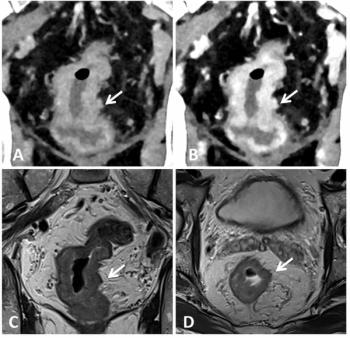
For T3-T4 rectal cancer staging, a new study showed that optimal photon-counting CT offered an AUC range between 80 and 86 percent in comparison to an AUC range between 78 and 88 percent for rectal MRI.
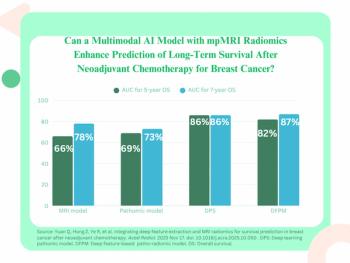
Incorporating mpMRI radiomics, clinical characteristics, deep learning and pathomic features, a multimodal model offered 82 percent and 87 percent AUCs for predicting overall survival outcomes at five years and seven years, respectively, for women treated with neoadjuvant chemotherapy for breast cancer.
Catch up on the top radiology content of the past week.
Catch up on the top radiology content of the past week.
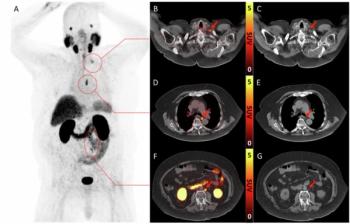
In a new review from the European Society of Urogenital Radiology (ESUR), researchers discuss the merits and limitations of PSMA PET/CT and whole-body MRI (WB-MRI) for patients with advanced prostate cancer.
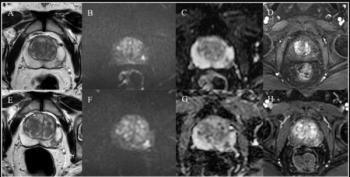
Researchers found no statistically significant differences between bpMRI and mpMRI evaluations of patients with PI-RADS 3 presentations, according to a new multi-reader study.
Catch up on the top radiology content of the past week.
Catch up on the most-well viewed prostate cancer imaging content in October 2025.

Catch up on the most-well viewed radiology content in October 2025.
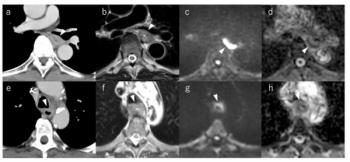
For patients with esophageal cancer, preoperative MRI demonstrated an average AUC above 94 percent for detecting tracheal invasion in contrast to an AUC range between 52.9 and 70.6 percent for CT, according to a recently published study.
Catch up on the most-well viewed MRI content in October 2025.
Catch up on the top radiology content of the past week.
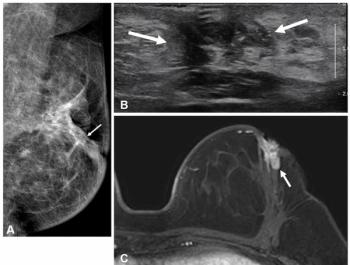
Pre-op breast MRI was associated with a 12.5 percent reduced 5-year cumulative incidence of recurrence for patients who underwent surgery for hormone receptor-negative cancer, according to newly published research.
In a recent interview, Deepa Sheth, M.D., discussed the rising incidence of breast cancer, key considerations in supplemental imaging for women with dense breasts and use of the CIVIE RadPod platform to facilitate consistent quality and imaging reads by fellowship-trained breast radiologists.
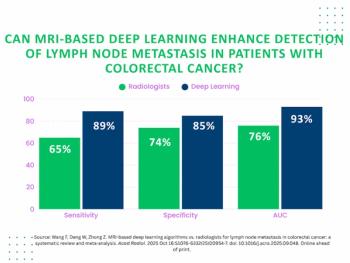
Deep learning assessment of MRI offered a 24 percent higher sensitivity than radiologist interpretation for detecting lymph node metastasis in patients with colorectal cancer, according to a new meta-analysis.
Catch up on the top radiology content of the past week.
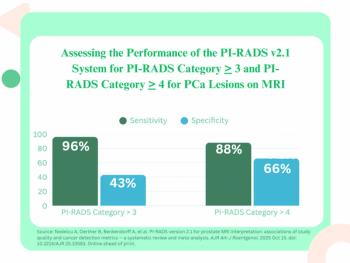
While a new meta-analysis of the PI-RADS v2.1 criteria showed 96 percent and 88 percent sensitivity rates for PI-RADS category > 3 and PI-RADS category > 4 assessments respectively, researchers noted a high risk of bias in 29 percent of the reviewed studies.
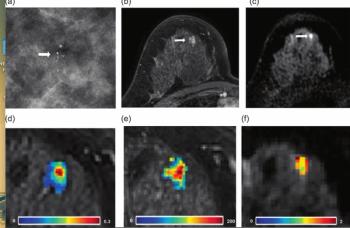
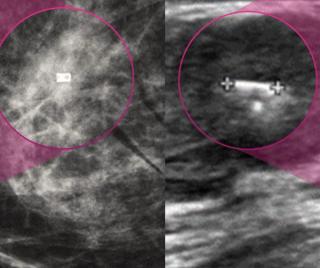
While dynamic contrast enhanced breast MRI may help reduce biopsies for suspicious calcifications on mammograms, quantitative MRI features and diffusion-weighted imaging (DWI) may not provide additional diagnostic benefit in these cases, according to a new study.
Catch up on the top radiology content of the past week.
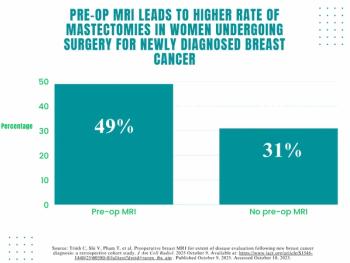
Women who had an MRI prior to undergoing surgery for newly diagnosed breast cancer were 18 percent more likely to have a mastectomy, according to newly published research.
Catch up on the most-well viewed radiology content in September 2025.
Catch up on the top radiology content of the past week.
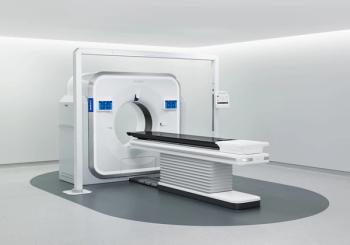
Facilitating increased efficiency in radiation therapy planning, the new Rembra RT and Areta RT computed tomography platforms reportedly offer 4D CT capabilities and image reconstruction speeds up to 106 images per second.
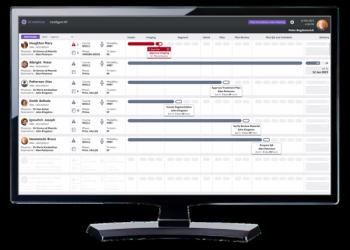
Emphasizing enhanced connectivity, the latest version of the Intelligent Radiation Therapy (iRT) software may facilitate improved workflow efficiencies with the planning, performance and reporting for radiation therapy.
Advertisement
Advertisement
Trending on Diagnostic Imaging
1
Brain MRI Study Reveals Higher Brain Age Gap and White Matter Hyperintensity for Those in Disadvantaged Neighborhoods
2
The Reading Room Podcast: Assessing the Current Landscape of AI and Reimbursement in Radiology, Part 2
3
Breast Imaging in Focus: Key Pearls from New Guidelines on Proliferative Breast Lesions with Atypia and LCIS
4
Prostate MRI Study Links Lower ACD Values on DWI to Higher Long-Term Risk of Distant Metastases
5