

Catch up on the top radiology content of the past week.
Catch up on the top radiology content of the past week.
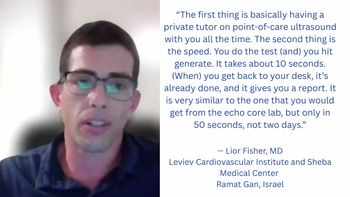
In a recent interview, Lior Fisher, MD, discussed new research findings for AI software that may enable single view ultrasound detection of valvular and ventricular dysfunction by non-cardiologists.
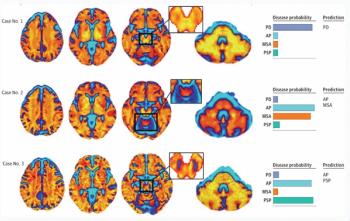
The neuropacs™ MRI-based AI software provided a 96 percent or better AUROC for differentiating between Parkinson’s disease, atypical parkinsonism, multiple system atrophy Parkinsonian variant and progressive supranuclear palsy, according to a prospective multicenter study published in JAMA Neurology.
Catch up on the top radiology content of the past week.

In a recent interview, Jeremie Calais, MD, PhD, shared his perspective on recent research that compared the risk stratification capabilities of nomogram models incorporating PSMA PET data to established clinical risk scoring models from the European Association of Urology and the National Comprehensive Cancer Network (NCCN).
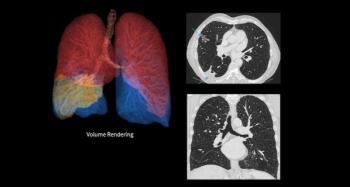
The CT-based True Definition DL software reportedly facilitates enhanced efficiency and high-resolution visualization for musculoskeletal, pulmonary and inner ear imaging.
In a recent interview, Joseph Cavallo, MD, and Marla Sammer, MD, discussed the dearth of AI applications for pediatric imaging, new research evaluating adjunctive AI triage for CT detection of intracranial hemorrhages in children six and older, and going beyond the data points to ascertain the impact of AI on patient care.
In a recent interview, James Nagarajah, M.D., discussed new phase 2 research demonstrating significantly delayed disease progression in a cohort of patients with oligometastatic hormone-sensitive prostate cancer treated with 177-Lu-PSMA-617 and complete remission in nearly a quarter of these patients.
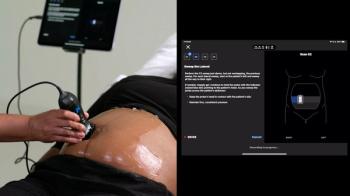
Reportedly trained on over 21 million images, Butterfly Network’s AI-enabled Gestational Age tool reportedly provides reliable automated age assessments between 16 and 37 weeks.
Catch up on the top radiology content of the past week.

In the latest episode of his “Interventional Radiology in Focus” series, Mina Makary, M.D., discusses the viability of uterine fibroid embolization, noting key insights from the literature as well as pearls in managing patient expectations.
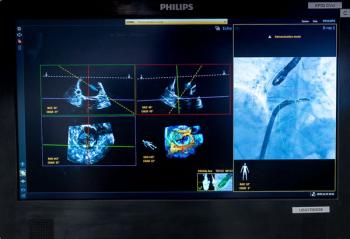
Providing automated tracking and image guidance of the Edwards PASCAL Ace mitral valve repair device, the DeviceGuide reportedly enables integration of live ultrasound and X-ray images into a single view.
In a recent interview, Louise Emmett, MBChB, FRACP, FAANMS, MD, discussed recent findings from the Co-PSMA trial demonstrating enhanced detection of biochemical recurrence of prostate cancer with the PET agent 64Cu-SAR-bisPSMA.
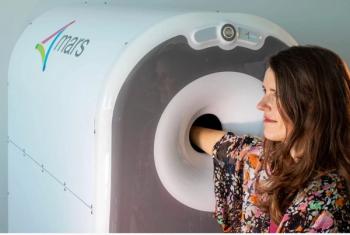
Offering high-resolution 3D imaging, the MARS Bioimaging Extremity Scanner System reportedly enhances the visualization of bone, soft tissue, blood vessels and metallic implants.
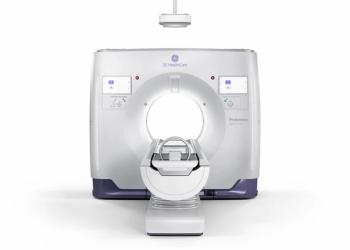
The Photonova Spectra photon-counting CT system reportedly offers a variety of features, including 8-bin energy resolution, rapid rotation speed and motion-free imaging.
Catch up on the top radiology content of the past week.
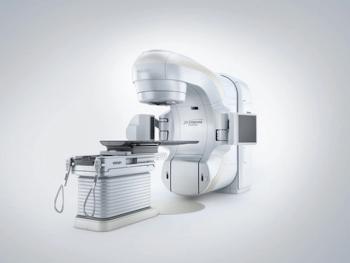
The expanded 510(k) clearance, which covers the TrueBeam, TrueBeamSTx, VitalBeam and Edge radiotherapy systems, may facilitate another treatment option for patients with osteoarthritis who have failed to get adequate pain relief from other treatment approaches.

How teams use PSMA PET to stage prostate cancer: who orders, who reads, and how tumor boards refine treatment when findings conflict.
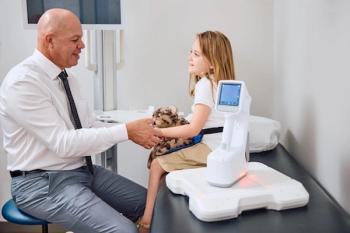
Emphasizing patient comfort and features to minimize radiation exposure, the MC2 portable X-ray device is now cleared for imaging of pediatric patients.
In an interview, W. Taylor Kimberly, M.D., discussed recent research showing that multidirectional diffusion-weighted imaging (DWI) on low-field MRI yielded a 95 percent positive predictive value (PPV) for detecting acute ischemic stroke.
In the second part of a two-part interview, David Larson, M.D., M.B.A, and Jason Poff, M.D., shared their insights on the recent study of a structured pre-deployment approach to assessing AI models and potential directions in future radiology research.
Catch up on the top radiology content of the past week.
In the first of a two-part interview, David Larson, M.D., M.B.A., and Jason Poff, M.D., discussed a new study examining the use of a structured pre-deployment method for evaluating the value of a portfolio of AI models for radiology.

In the latest episode of her “Breast Imaging in Focus” series, Manisha Bahl, M.D., offers a closer look at pertinent findings from the GEMINI study, including one AI integration model that facilitated over a 10 percent increase in cancer detection and a 31 percent decrease in radiologist workload.
Learn how PSMA PET reshapes prostate cancer staging, outperforms CT and bone scans, and finds recurrence even at very low PSA.
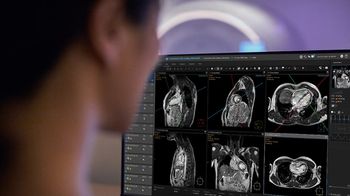
Reportedly providing automation of 14 standard and advanced cardiac MRI views in less than 30 seconds, the SmartHeart also facilitates a 75 percent reduction in breath holds for basic MRI views.

Utilized within the cloud-native Genesis Radiology Workspace, the newly FDA-cleared View reportedly facilitates anytime, anywhere efficiency with seamless access to enhanced visualization and AI-powered tools.
Catch up on the top radiology content of the past week.
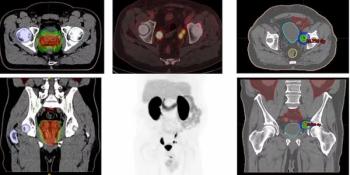
Designed to enhance product stability at higher radioactive concentrations, the PSMA PET imaging agent Pylarify TruVu (piflufolastat F 18) may facilitate enhanced supply flexibility and access for men with suspected recurrence or metastasis of prostate cancer.
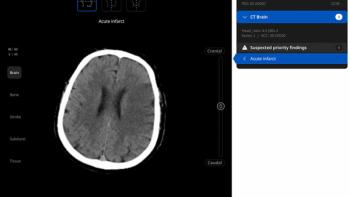
The Harrison.ai software is reportedly the first AI software to gain clearance for acute infarct triage on non-contrast CT scans.