
Catch up on the top radiology content of the past week.
Catch up on the top radiology content of the past week.
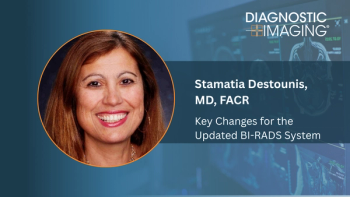
In a recent interview, Stamatia Destounis, MD, FACR, shared her perspective on recent changes to the BI-RADS system, offering insights on contrast-enhanced mammography, reporting changes for breast MRI and ultrasound, and the importance of auditing for BI-RADS category 3 assessments.
Catch up on the top radiology content of the past week.

In the first of a two-part interview, Kalpana Kanal, PhD, and Mahadevappa Mahesh, MS, PhD, FAPPM, FACR, discussed recently published research showing significant declines in computed tomography (CT) radiation dosing over the past decade.
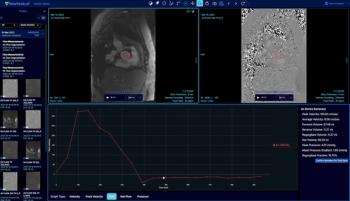
Offering ease of integration into existing radiology workflows, the AI-enabled Heartvue.Proton software emphasizes time savings with automation of common measurements for cardiac MRI.
In a recent episode of our Molecular Imaging in Focus series, Sharmila Dorbala, MD, MPH, discusses phase 3 study findings on the use of the PET/CT radiotracer 124I- evuzamatide for overall detection of cardiac amyloidosis as well as the subtypes light-chain amyloidosis (AL) and transthyretin amyloidosis (ATTR) cardiac amyloidosis.
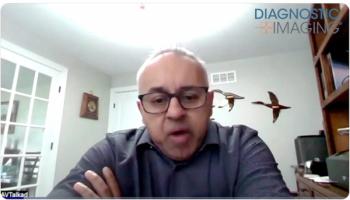
In a recent interview, Arun Talkad, MD, discussed the use of AI-powered enterprise imaging to facilitate recently expanded acute stroke care guidelines from the American Heart Association and the American Stroke Association.
Catch up on the top radiology content of the past week.

In the latest episode of his “Interventional Radiology in Focus” series, Mina Makary, MD, discusses the appeal of the specialty, key advances in the field in recent years, and the need for increased awareness of what interventional radiology can offer to patients.
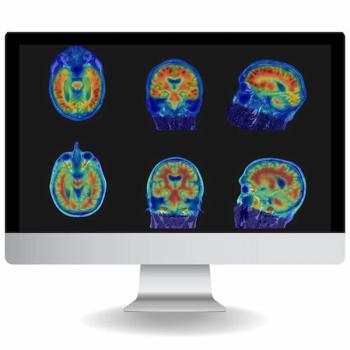
The AI-powered software NeuroQuant PET reportedly offers automated quantification and structured reporting and facilitates evaluation of brain scans with multiple amyloid PET radiotracers.
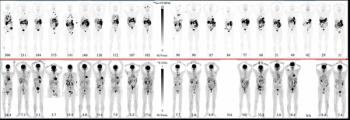
Preliminary research with the PET radiopharmaceutical 68Ga-NYM096 has demonstrated a 95.7 percent accuracy rate in patients with primary clear cell renal cell carcinoma (ccRCC) and a significantly higher mean SUVmax in the most active lesions in comparison to 18F-FDG.

In a recent Practice Academy webinar session, Nina Kottler, MD, MS, FSIIM, FAIM, discussed challenges with narrow AI applications, the continued emergence of foundation models and a potential trajectory with AI that may facilitate a combination of opportunistic screening and prognostic risk assessment.
In a recent Practice Academy webinar session, Seena Dehkharghani, MD, FAHA, and Raza Mushtaq, MD, discussed the challenge of burgeoning worklist volume amid the ongoing radiologist shortage and the emergence of AI advances with enterprise imaging.
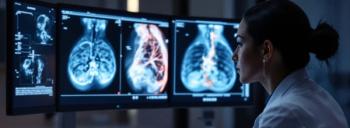
The cmAngio 2.0 AI-enabled software reportedly offers new capabilities for quantitative measurement of breast arterial calcification (BAC) as well as age-based contextualization based on mammography assessment.
Catch up on the latest contrast-enhanced mammography research, CT insights, MRI studies and FDA approvals in PET imaging with our Weekly Scan.
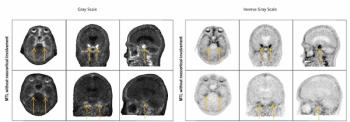
Recent positron emission tomography (PET) studies with florquinitau F 18 injection (Tauklarify) demonstrated inter-reader agreement ranging between 86 to 92 percent in evaluating patients for Alzheimer’s disease.
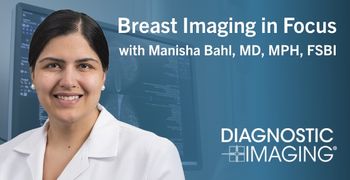
In the latest episode of her “Breast Imaging in Focus” series, Manisha Bahl, MD, MPH, FSBI, offers her perspective on a new study that examines the effectiveness of contrast-enhanced mammography in initial and subsequent rounds of breast cancer screening.
In a recent episode of our “Molecular Imaging in Focus” series, Martin Pomper, MD, PhD, discussed the origin of PSMA PET, shared his perspective on non-PSMA targets in prostate cancer and offered his thoughts on the potential promise of emerging theranostics.
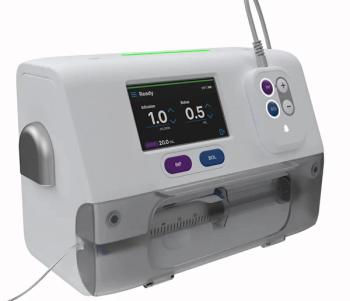
The VueJect ultrasound contrast delivery system, which is geared toward cardiac ultrasound imaging, also gained Health Canada authorization.
In a recent interview, Kay Jann, PhD, discussed challenges with urinary continence in stroke survivors and a forthcoming NIH-funded study examining the use of brain MRI to help identify those who may benefit from transcutaneous spinal cord stimulation (TSCS).
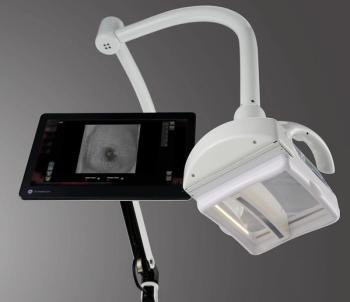
The AI tools for the newly launched Invenia ABUS Prime ultrasound platform reportedly facilitate a 40 percent increase in scan speed and up to a 93 percent sensitivity rate for lesion detection in women with dense breasts.
Catch up on the top radiology content of the past week.
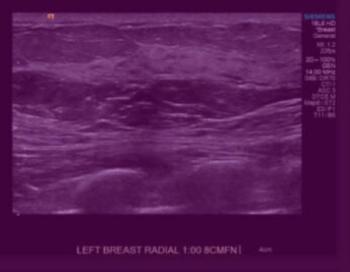
Combining automated lesion detection and characterization, the DeepHealth Breast Ultrasound software reportedly offers greater than 98 percent sensitivity for localizing breast lesions and reduces interpretation time for radiologists by 37 percent.
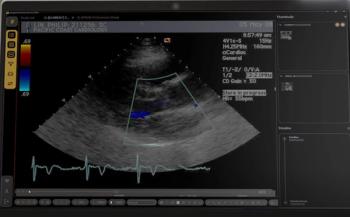
Offering rapid loading and viewing access for CT, MRI, ultrasound, PET imaging and mammograms, the ImageGrid® StreamVue platform can be integrated into existing PACS environments at hospitals and imaging centers.
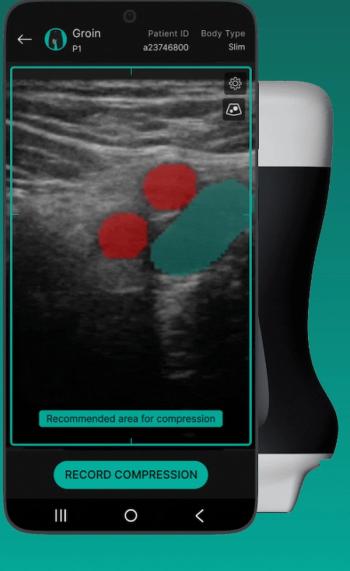
Utilization of the ThinkSono Guidance software app by non-ultrasound trained clinicians on point-of-care ultrasound devices reportedly facilitated diagnostic image quality in 87.1 percent of cases, according to recent research.
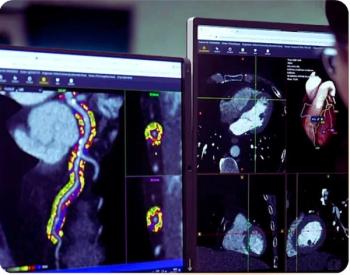
Recently presented research with the AI-powered CaRi-Heart software at the Society of Cardiovascular Computed Tomography (SCCT) conference found that assessments of advanced coronary inflammation with the software were linked to significantly higher cardiovascular mortality risks.
Catch up on the top radiology content of the past week.
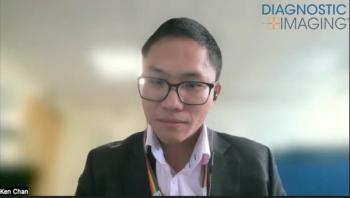
In a recent interview, Kenneth Chan, MBBS, discussed new research, presented at the recent Society of Cardiovascular Computed Tomography (SCCT) conference, that showed the impact of coronary inflammation in identifying elevated cardiovascular risk in patients with zero or low coronary artery calcium (CAC) scores.
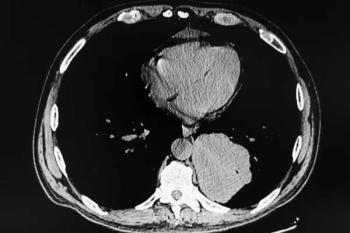
The HOPPR EF Chest CT Narrative Model reportedly provides narrative language describing pertinent findings across pulmonary, upper abdominal, cardiac, mediastinal and soft tissue regions with processing of 3D chest CT volumes.
In a recent interview, Vivek Singh, MD, discussed the practical realities of integrating AI into neuroradiology workflows, addressing challenges and concerns with implementation and potential automation bias, and emphasizing the importance of appropriate governance with AI tools and measurable outcomes in stroke imaging.