
For the first quarter of 2013, medical imaging managers have very low confidence in Medicare reimbursement rates, according to the latest MICI data.
For the first quarter of 2013, medical imaging managers have very low confidence in Medicare reimbursement rates, according to the latest MICI data.
CCTA is effective for determining heart attack risk in patients with suspected coronary artery disease - even if there are no treatable risk factors.
The FDA has approved the Advisa DR MRI SureScan pacing system, a second-generation pacemaker designed for use with MRI machines, according to Medtronic.
Providers are turning to third-party consulting firms to prepare for ICD-10, including help with training, roadmaps and documentation, according to KLAS.
CT texture analysis of primary esophageal tumors may be a potential imaging biomarker, helping determine the effectiveness of chemotherapy.
Mammograms every two years are just as beneficial to women over 65 as are annual exams - and may reduce false positives.
Risks of radiation-induced cancer from CT scans in early adulthood are outweighed by the benefits obtained from the scans.
Amyloid imaging, used to detect plaques in the brain, may help diagnose cardiac amyloidosis, researchers said.
Primary care physicians prefer to deliver radiology results to their patients, and they feel obligated to follow recommendations in the reports.
A rule aid comprising seven factors may aid physicians in deciding whether to refer children for abdominal CT scans following blunt trauma to the abdomen.
Radiation exposure from CCTAs has been significantly reduced with use of a new second-generation CT scanner, without compromising diagnostic accuracy.
Brain amyloid PET imaging could assist in diagnosing cognitive impairment in patients who meet certain conditions, according to a new task force.
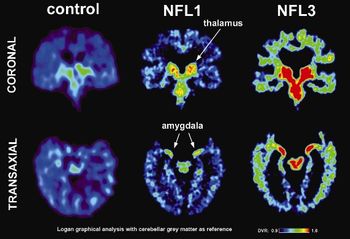
PET imaging with a chemical marker called FDDNP has identified abnormal tau proteins among former professional football players.
Dual-tracer PET/CT may be more effective than contrast-enhanced CT for staging of hepatocellular carcinoma for evaluation of liver transplant suitability.
Participants who complete levels I-IV at ACR’s Radiology Leadership Institute will be awarded credits toward an MBA from Babson College.
Amyvid has received approval in the European Union for use in patients with cognitive impairment being evaluated for Alzheimer’s disease.
Low-dose CT is an appropriate screening tool for lung cancer among high-risk patients, say new guidelines issued by the American Cancer Society.
Adding virtual colonoscopy, or CT colonography, by adding the test to HEDIS could improve colorectal cancer screening compliance.
Riverain Technologies has received FDA 510(k) clearance for software aimed at improving clarity of conventional chest X-rays.
Teleradiologists perform better when they focus on images sent from fewer hospitals rather than reading for a larger number of facilities.
Legislation passed to avoid the so-called “fiscal cliff” cuts reimbursement to certain medical imaging services and retains the medical device excise tax.
The ABR will offer a dual primary certificate in interventional and diagnostic radiology, representing a shift in expertise, the ABMS announced.
Bilateral dual-energy contrast agent-enhanced digital mammography is as effective as MRI in detecting known primary breast tumors.
Combining fluorodeoxyglucose-PET, MRI and cerebrospinal analysis significantly increases the accuracy of predicting Alzheimer’s disease progression.
F-18-flurorothymidine PET appears to be useful in assessing the grade and proliferation in gliomas, especially in newly diagnosed patients.
Infinitt and Intelerad rose to the top among PACS vendors who offer timely upgrades and expanded usability, according to a KLAS report released at RSNA 2012.
Changes in tumor enhancement detected by post-gadolinium (Gd) T1-weighted MRI are highly predictive of which patients with recurrent glioblastoma brain tumors will benefit from second-line therapy.
Brain changes from post-concussion syndrome are visible on MRI.
Dose awareness extends to nuclear medicine exams with the development of online materials to guide providers on radiopharmaceutical dose utilization.
Agfa Healthcare will launch at RSNA 2012 its digital DX-D 400 DR solution marketed as an economical solution for all digital radiography applications.