
Cardiac MRI can cut adverse events among patients with possible ACS, shortens hospital stays, and better identifies patients requiring invasive procedures.
Cardiac MRI can cut adverse events among patients with possible ACS, shortens hospital stays, and better identifies patients requiring invasive procedures.

Diffusion tensor imaging demonstrates changes in the brain of soccer players who head the ball frequently during games and practice.
Children’s risk from radiation exposure from CT scans drops significantly when dose from the highest-dose exams is lowered and unnecessary exams eliminated.
MR images detect heart damage in childhood cancer survivors who were treated with anthracycline-based regimens.
Experts may consider new guidelines for virtual colonoscopy, or CT colonography, screening after study shows women can be screened later than men.
Certified imaging informatics professionals have gained ground in radiology and are a major topic at SIIM. Paul Nagy, PhD, explains how they can transform radiology practice.
CMS should establish minimum standards and oversight for accreditation of advanced diagnostic imaging services, a recommendation hailed by industry groups.
PET images show why education can help people cope with the effects of Alzheimer’s disease in its early stages.
Patients with acute diverticulitis diagnosed by contrast-enhanced CT may benefit from early colonoscopies for colon cancer screening.
Radiologists need more education on radiation risk to help make decisions for patients who may need imaging tests but have a history of radiation exposure.
Digital chest tomosynthesis used as a screening tool for lung cancer shows comparable rates of detection to low-dose CT.
MRI measurements of aortic arch pulse wave velocity allow physicians to predict cognitive decline and cardiovascular diseases.
Digital breast tomosynthesis for breast cancer screening reduces recall rates and biopsies, and detects more cancers.
Study confirms earlier findings that low-dose CT detects more lung cancer than chest X-rays and lowers mortality from lung cancer.
CT scans performed on children and adolescents may contribute to a slightly elevated risk cancer over the following 10 years.
Diffusion MRI has shown the interruption in development of the cerebral cortex among premature babies, compared with their full-term peers.
Maryland became the seventh state to enact breast density patient notification laws.
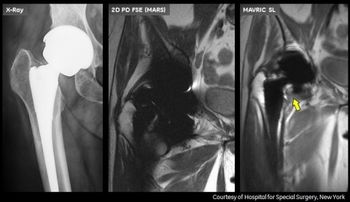
GE Healthcare this week introduced a new MRI technique designed to allow for more accurate imaging of soft tissue and bone in patients with metal joint implants.
Non-invasive autopsies, performed by MRI, could help determine cause of death for fetuses and young children.
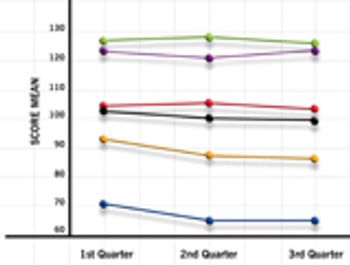
Digital radiography (mammography) detects as many breast cancers as screen film mammography and more cancers than computed radiography.
Hospitals in New Jersey and Maine were recognized by the American College of Radiology for excellence in multiple professional, technological and policy areas.
Dynamic contrast-enhanced breast MRI is a useful tool in aiding detection of residual disease following excisional biopsy for breast cancer.
Electronic bone suppression programs used in addition to CAD allow radiologists to detect more lung nodules than with chest X-rays alone.
Use of 18F-FDG PET/CT may help detect advanced disease in patients with ulcerative colitis or Crohn’s disease.
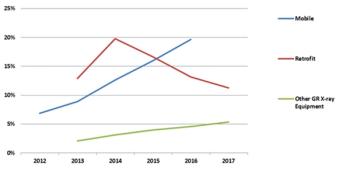
The global X-ray market is expected to see strong growth in the next few years, thanks to demand for mobile X-ray and retrofit upgrade kits.
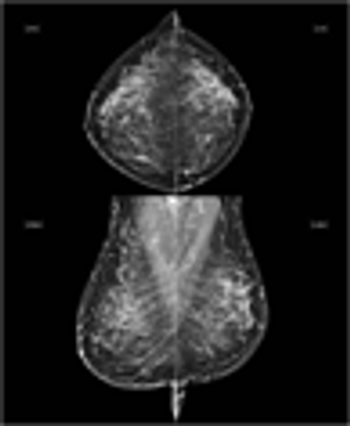
Integrating 2D and 3D screening increases breast cancer detection and may lower reports of false positives.
Use of transvaginal sonography increases detection of ectopic pregnancies when patient history and clinical evaluation alone aren’t sufficient for diagnosis.
Using MRI to measure thalamic atrophy in patients with clinically isolated syndrome can help predict which patients will develop multiple sclerosis.
Screening mammograms enhanced by CAD trigger more false alarms than non-CAD screenings and detect more early cancers that may never have needed treatment.