


Cardiac CT
Latest News
Advertisement
Latest Videos




Shorts

0:42
Emphasizing the Need for More Research on Indication-Based DRLs for CT Imaging
a month ago
by
Kalpana Kanal, PhD

0:34
Is Maturing Technology with CT Scanners a Key Factor with Reduced Radiation Dosing?
a month ago
by
Mahadevappa Mahesh, MS, PhD, FAAPM, FACR
0:31
'Moving in the Right Direction' with CT Radiation Dosing
a month ago
by
Kalpana Kanal, PhD

0:26
Screening Implications for AI Assessment of Coronary Inflammation from Non-Contrast CT
3 months ago
by
Kenneth Chan, MBBS

0:56
Coronary Inflammation Measurement with AI: Can It Be a Game Changer for CV Risk Stratification?
3 months ago
by
Kenneth Chan, MBBS

0:38
Emphasizing the Importance of Incidental Calcifications in Decision-Making
3 months ago
by
Ron Blankstein, MD
0:50
Improved Physician Notification on AI Detection of Incidental Coronary Plaque and the Impact on Patient Care
3 months ago
by
Ron Blankstein, MD
0:33
The Value of AI in Extracting Hidden Data from Chest CT Images
5 months ago
by
Shadpour Demehri, MD

0:39
Will We Eventually See Longitudinal Plaque Volume Tracking with CCTA?
6 months ago
by
Sujith Kalathiveetil, MD, FACC

0:43
The Potential of Multisystem Screening with CT-Based AI
9 months ago
by
David Yankelevitz, MD
Podcasts











Advertisement
More News
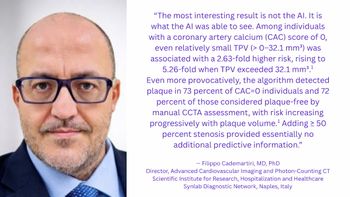
A new study shows that even small plaque volume may be associated with significantly higher risk for cardiovascular events, making the enhanced spatial resolution available with advanced imaging even more critical in risk stratification.
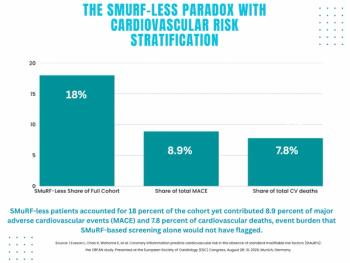
Elevated coronary inflammation, measured with the CCTA-derived and AI-enabled perivascular fat attenuation index (FAI) score, was associated with over a 12-fold higher risk for cardiovascular mortality in patients with no diabetes, hypertension, smoking history or obesity, according to new research presented at the European Society of Cardiology (ESC) Congress.
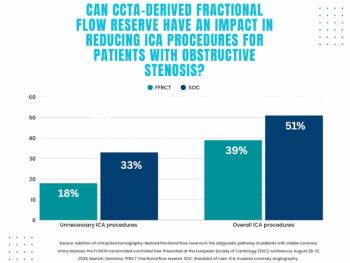
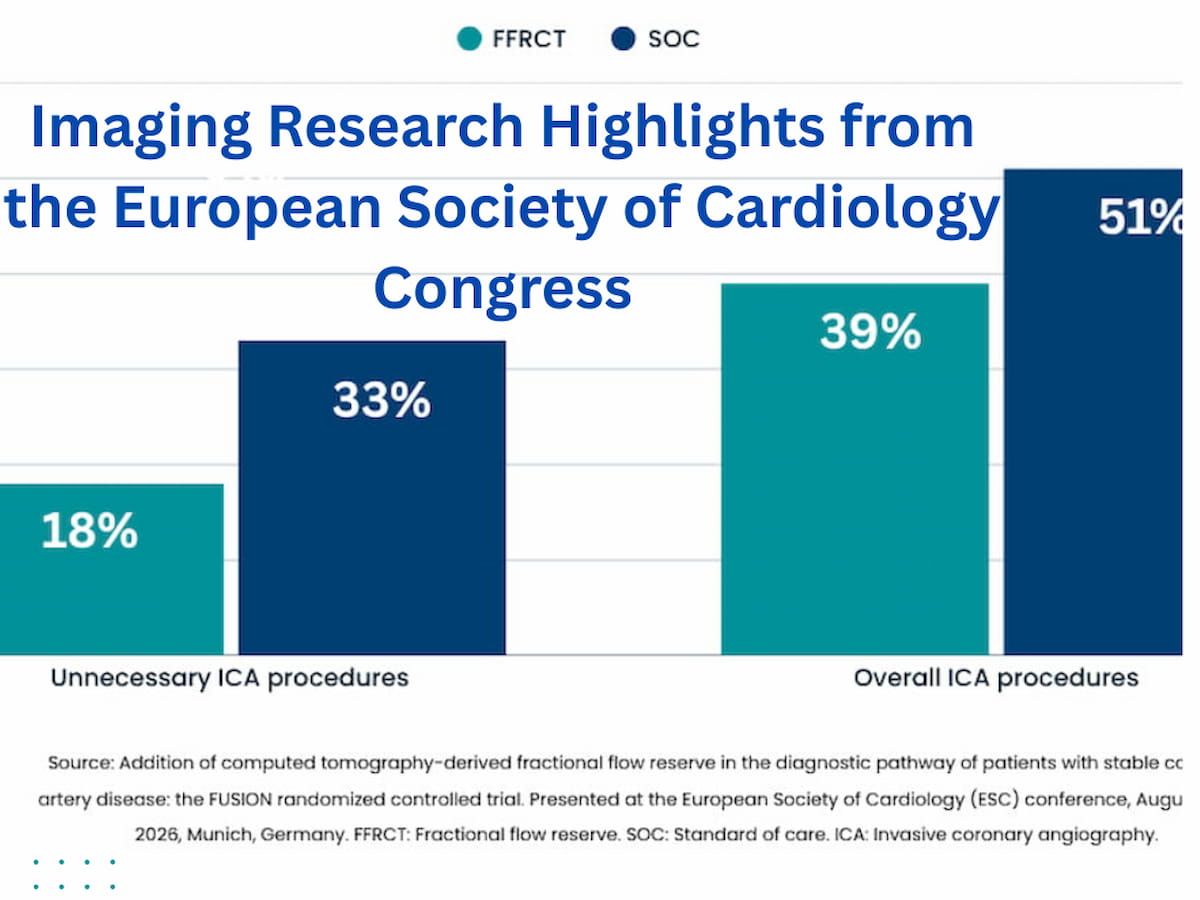
New research presented at the European Society of Cardiology (ESC) conference demonstrates that fractional flow reserve (FFR) based off CCTA exams significantly decreases unnecessary invasive coronary angiography (ICA) procedures for patients with stable chest pain and obstructive stenosis.
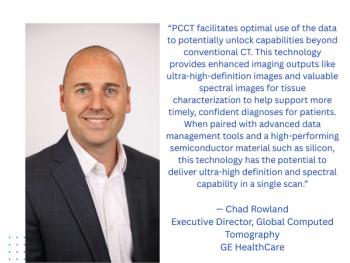
In addition to providing stronger image quality, well-designed photon-counting CT systems may facilitate increased standardization, efficiency and simplification that may lead to reduced cognitive burden for radiologists.
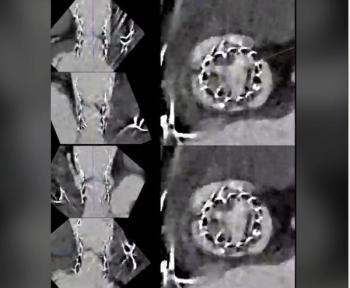
The high-resolution temporal and spatial imaging with photon-counting CT bolster our understanding of the connections between anatomy and function in structural heart imaging.

Catch up on the latest blogs from Filippo Cademartiri, MD, PhD, who discusses topics ranging from CCTA scan acquisition and photon-counting CT to artificial intelligence and assessment of current plaque as a biomarker for evaluating MACE risk.
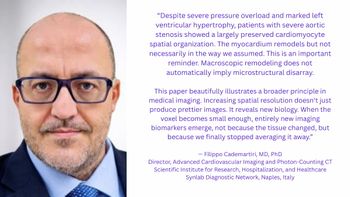
Smaller voxel size may offer insights into biology we could never access with conventional resolution.
New computed tomography (CT) research in July 2026 ranged from the ongoing impact of AI to significant declines in CT radiation dosing over the past decade to a growing recognition that coronary artery calcium (CAC) scoring alone may not be sufficient to convey a true picture of cardiovascular risk stratification.

Catch up on the most-well viewed radiology content in July 2026.

Catch up on the most well-viewed video interviews from Diagnostic Imaging in July 2026.
In comparison to findings from a similar study in 2014, the national volume computed tomography (CT) dose index (CTDLvol) declined by 9.3 percent, according to newly published research involving 5 million CT exams for over 2.8 million adults in 2025.

Catch up on the top AI-related news and research in radiology over the past month.
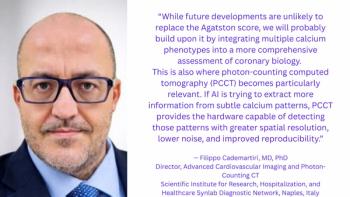
Advanced imaging with photon-counting CT and AI detection of subtle calcification may lead to a reevaluation of the power of zero with coronary artery calcium (CAC) scoring.
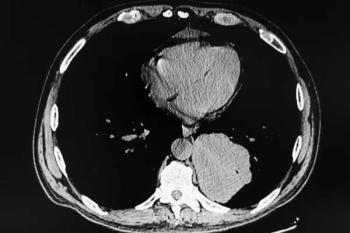
The HOPPR EF Chest CT Narrative Model reportedly provides narrative language describing pertinent findings across pulmonary, upper abdominal, cardiac, mediastinal and soft tissue regions with processing of 3D chest CT volumes.
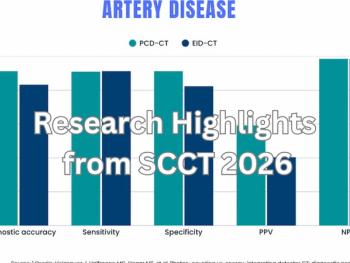
Catch up on the latest imaging research from the recent Society of Cardiovascular Computed Tomography (SCCT) conference.

Catch up on the top radiology content of the past week.
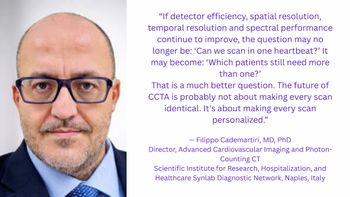
In the age of advanced CCTA imaging, a one-size-fits-all approach to image acquisition is a disservice to patients.

In a recent interview, Ron Blankstein, MD, discussed new research presented at the Society of Cardiovascular Computed Tomography (SCCT) conference, including a study examining the impact of notification of AI detection of coronary plaque on physicians prescribing lipid-lowering therapy.
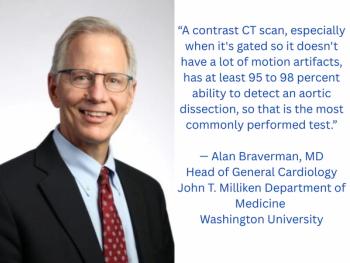
In light of the recent death of Sen. Lindsey Graham from aortic dissection, we highlight pertinent diagnostic principles and key imaging findings for the timely detection of aortic dissection, a topic that Alan Braverman, MD, FACC, discussed in an interview with Diagnostic Imaging.

Out of multiple potential risk factors for the development of preeclampsia, ranging from hypertension to non-gestational diabetes and maternal age > 35, researchers found that pre-pregnancy coronary artery calcium (CAC) was the only risk factor significantly associated with preeclampsia.
Catch up on the top radiology content of the past week.
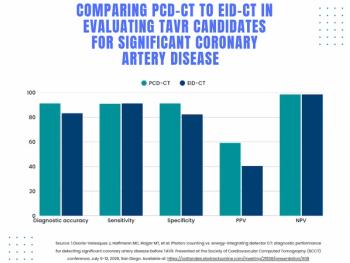
For patients having CT angiography prior to TAVR procedures, researchers found that photon-counting detector CT (PCD-CT) offered higher specificity and PPV for detecting significant coronary artery disease (CAD), according to study findings to be presented at the Society of Cardiovascular Computed Tomography (SCCT) conference.
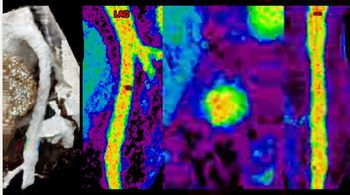
Photon-counting computed tomography (PCCT) is a foundational cornerstone that can facilitate detection, targeting and reversal of coronary artery disease.
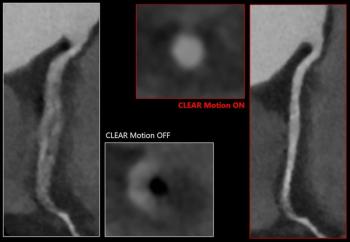
Deep learning-based motion correction with the CLEAR Motion software reportedly bolsters cardiac imaging quality while the PIQE 1024 Deep Learning Reconstruction software offers equivalent SNR to photon-counting CT for high-resolution views of objects less than 0.5 mm.
Catch up on the top radiology content of the past week.
Advertisement
Advertisement
Trending on Diagnostic Imaging
1
FDA Clears MRI-Based AI Software for Prognostic Evaluation of Patients with Mild Cognitive Impairment
2
Can MRI-Based AI Have an Impact in Reducing Unnecessary Prostate Biopsies?
3
The Reading Room Podcast: A Closer Look at New Research on 177Lu-Edotreotide for Treating GEP-NETs
4
How AI, Theranostics and More Empowered Patients Have Led to Significant Changes in Radiology
5