

Ultrasound
Latest News
June 16th 2026
By Jeff Hall
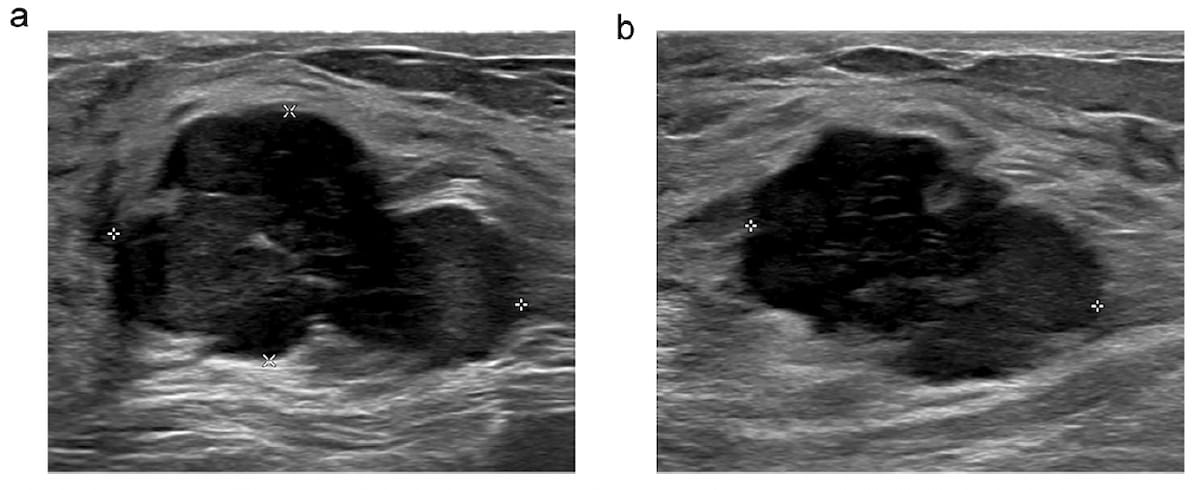
While use of an AI software demonstrated significantly higher accuracy in evaluating BI-RADS 2 presentations and no significant difference with radiologists in BI-RADS 4 assessments of breast ultrasound in a sub-analysis, researchers noted the exclusion of galactoceles, fluid collections and skin lesions that are commonly found in pregnant and lactating women.
Advertisement
Latest Videos









Advertisement
More News
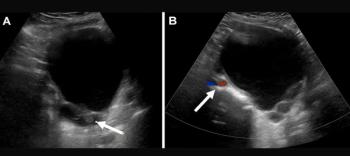
Cystadenomas and cystadenofibromas accounted for 46 percent of benign lesions initially scored as O-RADS 4 and 5 lesions on pelvic ultrasound, according to newly published research.

Recent research demonstrated that non-physician operators with brief training on the Accuro XV ultrasound system had a greater than 90 percent rate for obtaining diagnostically adequate images.

Catch up on the most well-viewed video interviews from Diagnostic Imaging in April 2026.
Catch up on the top AI-related news and research in radiology over the past month.

Approximately 15 percent of women with abnormal screening mammography results and adverse social determinants of health (SDOH) had follow-up diagnostic mammography or breast ultrasound within 30 days, according to multinational research presented at the Society of Breast Imaging symposium.
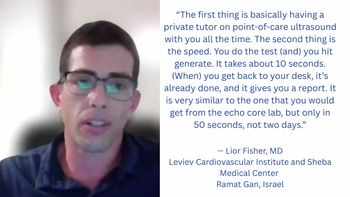
In a recent interview, Lior Fisher, MD, discussed new research findings for AI software that may enable single view ultrasound detection of valvular and ventricular dysfunction by non-cardiologists.
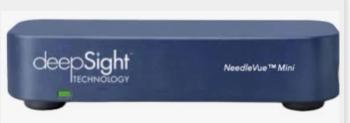
The compact NeedleVue Mini, which reportedly offers advanced guidance for existing ultrasound systems, will be among the NeedleVue platforms showcased at the Society of Interventional Radiology (SIR) Annual Meeting in Toronto.
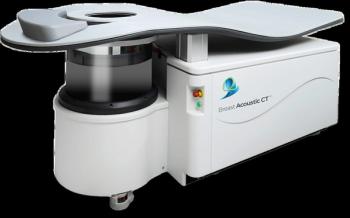
The updated version 4.5.0. software for the Breast Acoustic CT platform reportedly facilitates improved spatial resolution in reflection imaging and enhanced capabilities for imaging of small breasts and breasts with implants.

Over a 10-year period, radiology report turnaround times for Medicare beneficiaries increased 113 percent with a total 87 percent increase occurring in 2022 and 2023, the last two years of a newly published retrospective study.
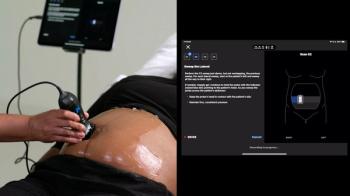
Reportedly trained on over 21 million images, Butterfly Network’s AI-enabled Gestational Age tool reportedly provides reliable automated age assessments between 16 and 37 weeks.
Catch up on the most-well viewed radiology content in March 2026.
Catch up on a variety of new FDA clearances and approvals in radiology from the past week.
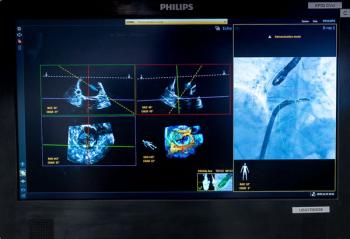
Providing automated tracking and image guidance of the Edwards PASCAL Ace mitral valve repair device, the DeviceGuide reportedly enables integration of live ultrasound and X-ray images into a single view.
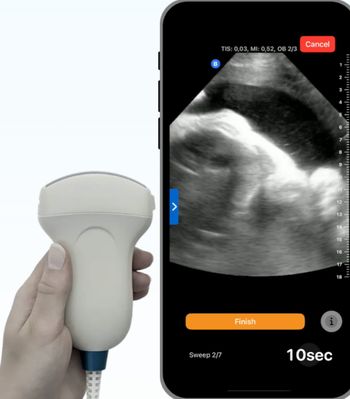
The DeepEcho Blind Sweep Platform reportedly automates a variety of key prenatal ultrasound measurements including fetal heart rate, placental location and gestational age.
Catch up on the top AI-related news and research in radiology over the past month.
Catch up on a variety of new FDA clearances and approvals in radiology from the past week.
Providing 3D ultrasound tomographic views, the Breast Acoustic CT device has an updated configuration that reportedly improves coverage and visualization of posterior breast tissue.
Catch up on a variety of new FDA clearances and approvals in radiology from the past week.

Catch up on the top radiology content of the past week.
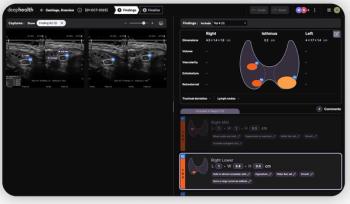
In addition to significantly reduced interpretation time, researchers found that adjunctive AI with ultrasound resulted in accuracy improvements of greater than 7 percent for nodule echogenicity and 16 percent for nodule margin assessments.
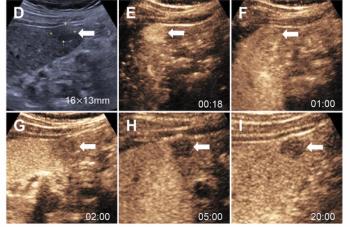
In comparison to LI-RADS version 2018 for MRI assessment, the use of perfluorobutane-enhanced ultrasound incorporating Kupffer-phase findings yielded comparable sensitivity and specificity for detecting hepatocellular carcinoma (HCC) nodules < 20 mm in high-risk patients, according to new research.
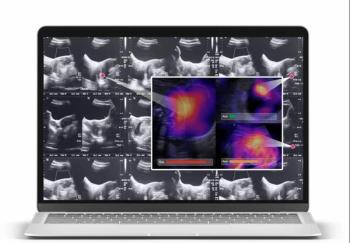
Offering reportedly seamless integration into workflows for prenatal evaluations and real-time decision-making, the cloud-based Delivery Date AI software was trained on millions of ultrasound images from diverse pregnancies.
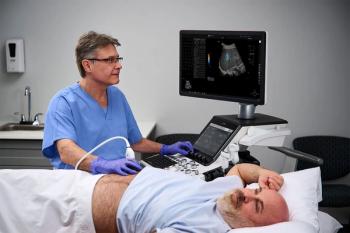
Offering AI-powered automation features and advanced imaging capabilities, the new LOGIQ E10 series, the LOGIC Fortis™ and the LOGIQ Totus™ ultrasound platforms will be introduced at the European Congress of Radiology in March.
Catch up on a variety of new FDA clearances and approvals in radiology from the past week.
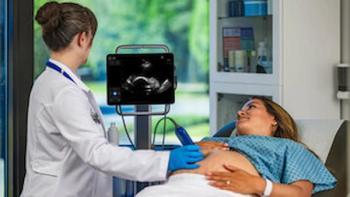
Emphasizing improved quantification, the Kosmos POCUS platform now offers a biometric application for assessing fetal viability, measurements to facilitate evaluation of the uterus and ovaries, and enhanced reporting for vascular exams.
Advertisement
Advertisement
Trending on Diagnostic Imaging
1
Diagnostic Imaging's Weekly Scan: October 18 — October 24
2
FDA Clears Machine Learning Module for Emerging Musculoskeletal Ultrasound Platform
3
Study Shows PCCT Offers Higher Image Quality and Reduced Radiation Dosing than EID-CT in Obese Patients
4
Can MRI-Based AI Have an Impact in Reducing Unnecessary Prostate Biopsies?
5