



Women's Health MRI
Latest News

Advertisement
Latest Videos


CME Content






Advertisement
More News
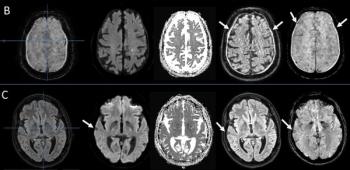
Noting a 7.4 percent incidence of motion artifacts on brain MRI scans for suspected stroke patients, the authors of a new study found that motion artifacts can reduce radiologist and AI accuracy for detecting hemorrhagic lesions.
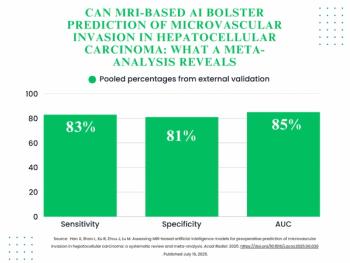
In external validation findings from a 29-study meta-analysis, MRI-based AI had a pooled AUC of 85 percent for preoperative prediction for microvascular invasion in patients with hepatocellular carcinoma.
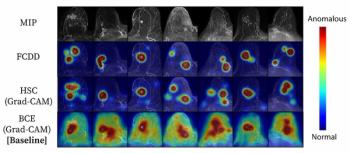
A fully convolutional data description (FCDD) model for identifying anomalies on breast MRI demonstrated an 84 percent AUC for detection tasks in a balanced cohort with a 20 percent malignancy prevalence and a 72 percent AUC for detection tasks in an imbalanced group with a 1.85 percent cancer prevalence.
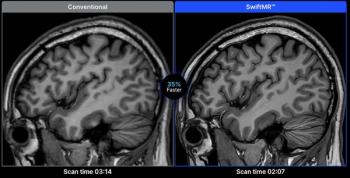
The updated capabilities of SwiftMR include personalized scan settings within the software, artifact reduction and cloud integration.
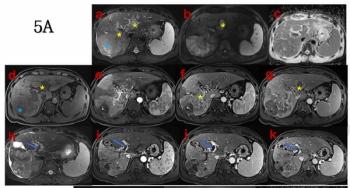
For patients with unresectable hepatocellular carcinoma, a pre-treatment MRI finding of LI-RADS tumor in vein was associated with over an 86 percent lower likelihood of responding to transcatheter arterial chemoembolization (TACE) and targeted immunotherapy.
Stay updated with the latest in radiology, including PET, MRI, and AI research, plus essential insights on mammography and cardiac imaging.
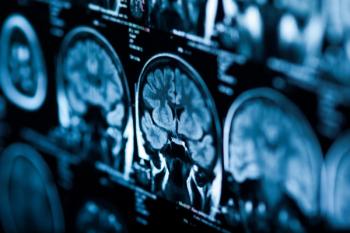
For patients with advanced Parkinson’s disease, the expanded FDA approval of the Exablate Neuro platform allows for the use of MRI-guided focused ultrasound in performing staged bilateral pallidothalamic tractotomy.

Findings from the TRAILBLAZER-ALZ 6 study revealed a 41 percent reduction of the ARIA-E side effect at 24 weeks with the new dosing schedule for the anti-amyloid treatment donanemab-azbt.
Catch up on the top radiology content of the past week.
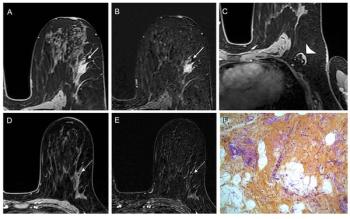
In external testing, a model combining radiological complete response on breast MRI, nodal status and Ki-67 proliferation index yielded an 88 percent AUC for predicting pathologic complete response to neoadjuvant chemoimmunotherapy for patients with triple-negative breast cancer, according to new research.
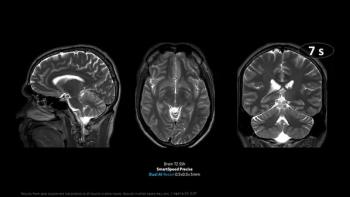
The deep learning reconstruction software reportedly facilitates accelerated MRI scanning and significantly enhanced image sharpness.
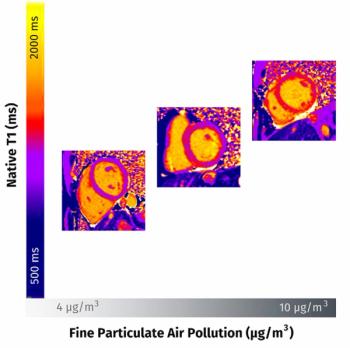
For people with dilated cardiomyopathy and those with initially normal cardiac MRI, each 1 ug/m3 increase in one-year exposure to ambient fine particulate matter with 2.5-um > aerodynamic diameter was associated with significantly more diffuse myocardial fibrosis, according to a recent study.
Catch up on the most-well viewed radiology content in June 2025.
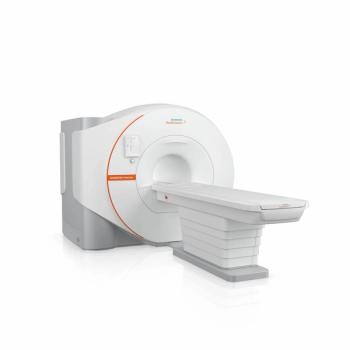
Offering a cost- and resource-saving DryCool magnet technology, the Magnetom Flow.Ace MRI system reportedly requires 0.7 liters of liquid helium for cooling over the lifetime of the device in contrast to over 1,000 liters commonly utilized with conventional MRI platforms.
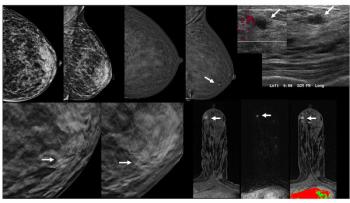
While the addition of contrast-enhanced mammography (CEM) to digital breast tomosynthesis (DBT) led to over a 13 percent increase in false positive cases, researchers also noted over double the cancer yield per 1,000 women in comparison to DBT alone.
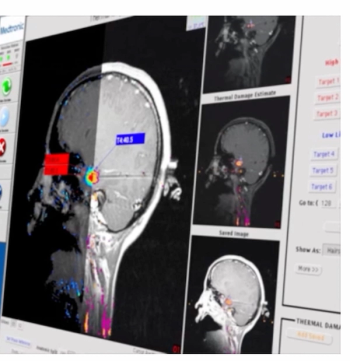
An alternative to an open neurosurgical approach, the Visualase V2 MRI-Guided Laser Ablation System reportedly utilizes laser interstitial thermal therapy (LITT) for targeted soft tissue ablation in patients with brain tumors and focal epilepsy.
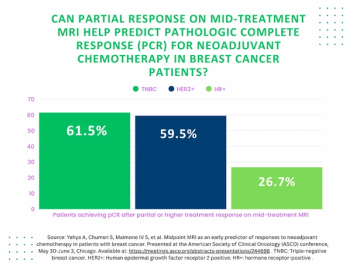
A partial response rate to neoadjuvant chemotherapy on mid-treatment MRI preceded a higher pathologic complete response (pCR) in 61.5 percent of women with triple-negative breast cancer, according to research presented at the American Society of Clinical Oncology (ASCO) conference.
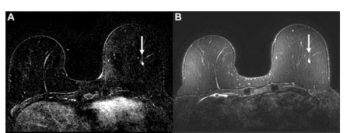
Assessing the simulated use of AI-generated suspicion scores for determining whether one should continue with full MRI or shift to an abbreviated MRI, the authors of a new study noted comparable sensitivity, specificity, and positive predictive value for biopsies between the MRI approaches.
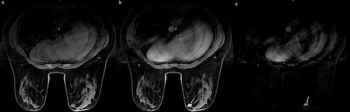
For patients with inconclusive ultrasound results, abbreviated breast MRI offers comparable detection of intraductal papilloma as a full breast MRI protocol at significantly reduced times for scan acquisition and interpretation, according to a new study.
Catch up on the top radiology content of the past week.
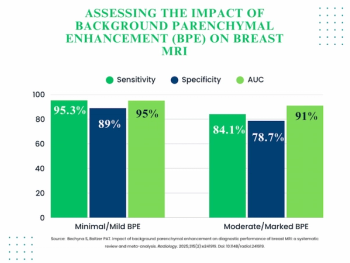
Moderate or marked background parenchymal enhancement (BPE) reduces the sensitivity and specificity of MRI for breast cancer detection by more than 10 percent in comparison to scans with minimal or mild BPE, according to a new meta-analysis.
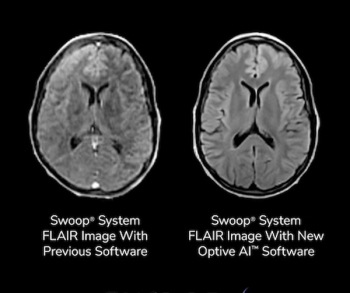
The Optive AI software, the tenth software release for the Swoop portable MRI system, reportedly offers enhanced clarity and anatomical detail for ultra-low-field MRI of the brain.
Catch up on the most-well viewed radiology content in May 2025.
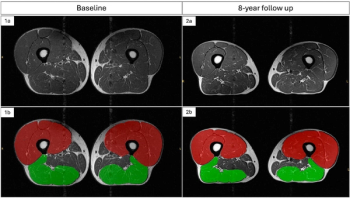
For overweight and obese patients at risk for knee osteoarthritis (OA), eight-year follow-up MRI data revealed a 12.8 percent loss of thigh muscle sub-volume for people who had extensive weight loss in comparison to 5.1 percent for those who retained a stable weight.
Advertisement
Advertisement
Trending on Diagnostic Imaging
1
Emerging Research Insights and New Advances in Neuroradiology
2
MRI, CT or Ultrasound: Which Modality Offers the Most Utility for Imaging of Pancreatic Cancer?
3
FDA Grants Fast Track Designation for Pre-Biopsy Use of PSMA PET and MRI for Prostate Cancer Detection
4
Current Perspectives on Integrating AI into Radiology
5